Share |

THE VIEW FROM WASHINGTON :U.S. officials arrive in Mauritius for trade talks
The 5th Trade and Investment Framework Agreement (TIFA) Council meeting will be held over two days, Jan. 16-17 at the Inter Continental Hotel in Balaclava.The high level U.S. delegation will be led by Ambassador Demetrios Marantis, Deputy United States Trade Representative (USTR). Representatives of the U.S. Department of State, USTR Office and USAID East Africa Trade Hub will also attend. Secretary for Foreign Affairs A.P. Neewoor will lead discussions for Mauritius.
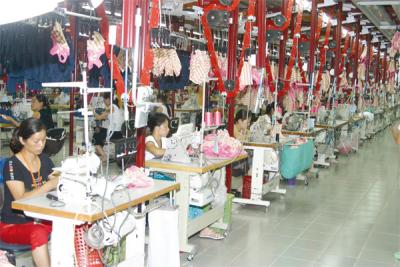
A pressing issue for Mauritius is renewal of the so-called Third Country Fabric Provision of AGOA, especially in light of the inability so far of the U.S. Congress to pass legislation approving an extension.
This provision allows least-developed countries in sub-Saharan Africa, including Mauritius, to receive duty-free access to the U.S. market for apparel that is made from fabric and yarn sourced anywhere in the world, rather than from within those countries or from the United States. The provision, which accounts for about 90 percent of apparel exported from Africa under AGOA, will expire Sept. 30.
The governments of Mauritius and other African countries have been pressing the Congress for the past two years to renew the provision before the end of 20ll because apparel orders are usually placed nine months in advance of delivery date. However Congress failed to act before adjourning in December, leaving the issue for the new legislative session which begins later this month.
Mauritius officials are concerned by recent decisions by U.S. buyers, worried that duty-free status of apparel from Africa may expire, to shift orders slated for delivery after Oct. 1 2012 from African producers to Asian manufacturers.
This could lead to collapse of sub-Saharan Africa's textile and apparel industry, warned the Hon. Somduth Soborun, Mauritius ambassador to the United States. "Time is running out to avoid this collapse," said the ambassador, who has held numerous meetings with congressmen to lobby for the fabric extension and participated in roundtable discussions with private organizations on AGOA issues.
"Both Republicans and Democrats agree on the substance for the extension of AGOA and the Third Country Fabric Provision," Soborun said. "The question now is to avail of a trade vehicle to which the Third Country Fabric Provision can be attached.
"The lobbying efforts are continuing in Washington and are expected to further intensify in the weeks ahead," he added.
The hope is to convince Congress to extend both the general AGOA law and the Third Country Fabric Provision to Sept. 30, 2015, said Paul Ryberg, a Washington attorney who heads the Mauritius-U.S. Business Association. "I am confident (3rd country fabric) will be renewed," Ryberg told Weekend.  
The TIFA, which is the subject of this week's bilateral discussions in Balaclava, sets up a framework to address a variety of trade and investment issues between the United States and Mauritius. According to a work plan developed between the two countries, there are 14 areas of cooperation. In addition to AGOA, these include trade in fish and seafood, strengthening agri-business links and promoting intellectual property rights.
The two governments must meet at least once a year in either Port Louis or Washington to review progress on the work plan and set an agenda for the coming year. The United States has about 50 TIFA agreements, including a dozen with African countries other than Mauritius.
Trade between the United States and Mauritius was up 27 percent from 2009 to 2010, due primarily to an increase in Mauritian exports, according to the Mauritius Central Statistical Office. Leading exports include textile and apparel, precious stones, jewelry, live animals, prepared fish, medical/surgical instruments and leather products.
 
Mauritius now among world's top countries for economic freedoms
For the first time ever, Mauritius has cracked the top ten in the annual rankings of countries that have embraced economic freedoms, according to a study released last week in Washington. The island took 8th place in the world rankings, ahead of more advanced economies such as Ireland (#9) and the United States (#10).
Mauritius also was ahead of all countries in sub-Saharan Africa, and the report notes that the region did more to expand economic freedoms in 2011 than did the countries of any other region of the world.
Launched 17 years ago, the 2012 Index of Economic Freedom evaluates countries in four broad areas of economic freedom : rule of law, regulatory efficiency, limited government and open markets. It is published annually by The Wall Street Journal and the Heritage Foundation, a Washington think-tank.
Mauritius became the first of the 48 countries in SSA to reach the top ten in the annual rankings. Its score of 77.0 - on a 1-100 scale with 100 being the best - marked an improvement of eight-tenths of a point over the previous year and is the highest ever acheived by a Sub-Saharan country. Second place went to Botswana.
« Underpinned by a sound and transparent legal framework that strongly upholds the rule of law, a competitive tax regime and an efficient regulatory environment have encouraged broad-based and diversified economic development in Mauritius,» Index editors wrote.
"Open-market policies that support dynamic trade and investment have bolstered productivity and competitiveness. With only a modest natural resource base, economic prosperity has been achieved through policies that encourage flexibility and empower individuals."
Editors added: "the Mauritius government's continued commitment to structural reforms and policies that promote integration into the global marketplace has positioned the island economy as a world leader in economic freedom."
For more details: http://www.heritage.org/index/country/Mauritius

Mauritius-born chef paves new culinary direction in New Orleans
Dominique Macquet is taking his culinary career to new heights with the opening of two new restaurants in New Orleans, Louisiana.
The Mauritian-born chef opened doors on Dec. 15 to Tamarind,  a creative collaboration of French and Vietnamese food with friend and fellow chef Quan Tran, a native of Vietnam.
The second project, which will be called Dominique's on Magazine, is a larger version of a restaurant he ran of the same name a few blocks away on trendy Magazine Street, a popular restaurant and shopping district in uptown New Orleans. The earlier restaurant, considered among the best in the country by several food magazines, was limited to just 62 seats, so Macquet sought larger quarters in another building nearby to accommodate the high demand for reservations. The new restaurant is now under construction and will open in April.
He chose to name the restaurant Tamarind because the hard, brown shelled fruit  reminds him of his childhood in Mauritius, and also because the tamarind tree is common in Vietnam. «  I remember getting out of school at age nine, and watching the street vendors sell tamarind and we would dip it into salt and piment vert, » he said. « And it Vietnam, it is huge - they use it in broths as it gives a tartness to soup. »
The restaurant is located in the newly renovated Hotel Modern, in the city's warehouse district. The menu uses locally sourced food prepared in a Vietnamese style with French technique. Offerings include dishes like drum fish with risotto and Vietnamese endame, grilled shrimp with tamarind remoulade and fried green hohlrabi, and duck confit with apple cider vinegar and hoisin.
« Growing up in Mauritius, which was a melting pot of cultures, I enjoyed the Chinese culture and Asian flavors, » Macquet said. « I worked with Quan Tran at Dominique"s on Magazine and was impressed by his finesse in preparing Vietnamese dishes. It reminded me of what I missed about (food and flavors) in Mauritius. He gave me a different look at Vietnamese cutlure and cooking and I took some of his ideas and put them into the restaurant. »
When he was asked to oversee the restaurant at the new Hotel Modern, Macquet decided to expand on this culinary approach and make the cuisine there a Vietnamese-French blend. « No one had done this before in New Orleans, » he added.
« I wanted to reinvent myself with my childhood memories while combining a respect for a new culture, » Macquet told me as we toured Tamarind's kitchen a few weeks before the opening. « I"ve been in New Orleans since 1995, and this is the fourth time I have reinvented myself as a chef. It gives you a different outlook on life. »
Wanting to keep a connection to his roots in Mauritius, Macquet said he will be importing several products from Mauritius for use in his restaurant, including jams from Labourdonnais, fleur de sel and Mauritian rum for cocktails in the new hotel bar.
Klaus Ortlieb, developer of the new Hotel Modern that will showcase Macquet's new restaurant, said he is very excited about the idea of bringing products from Mauritius to his contemporary designed, 135-room boutique hotel.
« It"s a wonderful idea, and Dominique is very proud of where he comes from and he wants to bring things from his home country and introduce them to America, » he said in an interview in one of the hotel's minimalist styled guest rooms.
« I love it. I"m for anything that is off the beaten track, » said Ortlieb, who has also developed successful hotels in New York City.
 

A lesson in « seggae » in Washington

Americans are familiar with Reggae music, due to the popularity of singer Bob Marley. But few have had the chance to hear the sound of « seggae », which is a unique blend of reggae with the traditional sega music of Mauritius.
Students and faculty at American University in Washington, DC enjoyed a rare opportunity to listen to this music and learn the story of Kaya, the Mauritian singer who first created seggae in the 1970s.
The presentation on Kaya was part of a conference on « Musique et littératures Francophones et Francasies » organized by American University's Department of Language and Foreing Studies in early November. The speaker was Isadora Vigier de Latour of Mauritius, who is a graduate student at the University and works in the language department.
In her remarks, de Latour outlined the development of seggae music on the island and described the musical instruments used in sega and the costumes worn by sega dancers.
« The words of sega transport a message of peace, justice and liberty, but also address problems of corruption and racial problems in Mauritius, » she said.
Using photos and music recordings, she explained that Kaya, whose real name was Joseph Reginald Topize, was born to a poor family in Roche Bois and early in his life « was a victim of racism, which influenced his music. »
With American raggae singer Bob Marley as his idol, Kaya began to learn the guitar. He gathered a group of young musicians in Roche Bois, and began to mix reggae and sega music, « adopting the concept of roots culture. »
Soon after being discovered by producer Percy Yip Tong, Kaya's seggae music was launched in Mauritius. He produced albums such as Seggae nu lamizik and Seggae Man, Racine pé brillé, and became very popular - « a true hero thoroughout the Indian Ocean. »
On Feb. 16, 1999, the « Mouvement Républicain Mauricien » organized a concert in Réduit to advocate the legalization of marijuana. Kaya was present, de Latour explained, and was later arrested for having smoked marijuana at the concert. His family and friends raised the RS 10,000 bond required for his release from prison, but administrative delays kept him there longer than expected. On the morning of Feb. 21, Kaya was found dead in his cell. Riots broke out across the island and lasted several weeks after it was learned that his death was not a suicide, but «it was the police who had beaten Kaya to death. »
Kaya's death exposed racial problems in Mauritius, which had been otherwise reputed for « its unity and multiculturalism, » she said.
The singer is still an idol among Maurician musicians and young people, de Latour added. « He will never be forgotten. »

Paris museum honors work of J.M.G. Le Clézio

Writers are not often featured in museums, which primarily showcase the works of painters, sculptors and photographers. But the Louvre in Paris has come up with a very "novel" way to combine these two artistic worlds with an exhibit that takes its inspiration from the writings of J.M.G. Le Clézio, who won the Nobel Prize for Literature in 2008 and has family ties to Mauritius.
The exhibition, called "Museums are Worlds," presents popular and academic art from Mexico, Haiti, Africa and Vanuatu, reflecting the cultures and places on which Le Clézio has based many of his writings.
The variety and selection of art, which includes historic, folkart, paintings from the French Revolution, Ife heads from Nigeria, hand-woven mats from Vanuatu and contemporary pieces, underscore Le Clézio's belief that there's no hierarchy when it comes to art. The goal is to break down boundaries between historic periods and civilizations.
As the author said in his acceptance speech for the Nobel Prize: "In this era following decolonization, literature has become a way for the men and women in our time to express their identity, to claim their right to speak, and to be heard in all their diversity. … Culture on a global scale concerns us all."
The Louvre has designated Le Clézio as its honored guest for the season and has included a lecture series as part of the exhibition. Le Clézio kicked off the series with remarks on opening day on Nov. 3.
Mauritian-born author Ananda Devi, who now lives in Switzerland, spoke on Nov. 7, followed by writers from Mexico, the Congo and Haiti.
The exhibition runs through Feb. 6, 2012.