
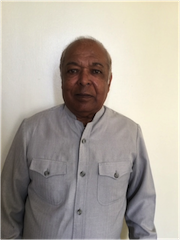
Mr.Vijaye Kumar Beeharry
Member, Arya Veer
India has a population of about 1.4 billion inhabitants, out of which, over 50% belong to the female sex. Despite being the largest democracy of the world, the tragedy is that only 15% women are members of the Parliament and only 10% are members of the state assemblies. It is also good to note that, in the 75 years of independent India, Indira Gandhi has been the only woman who has served as Prime Minister (1966-1977).
Several attempts have been made to redress the situation. The first attempt was made in 1996 by Deve Gowda, the Prime Minister to introduce the Women’s Reservation Bill; but he couldn’t succeed because of the strong opposition mainly from some orthodox Parliamentarians. The bill was reintroduced several times by successive governments but in vain. A last trial was made in 2014, which sadly met failure.
Prime Minister Shri Narendra Modi came with the Nari Shakti Adhiniyam – Women’s Reservation Bill on Tuesday 19th September 2023 during a Special Session of Parliament. According to the bill, one third of its seats in the lower house and the State Assemblies will be reserved for women. 454 Parliamentarians voted in favour and only 2 voted against the bill on Wednesday 20th September 2023.The bill was voted unanimously by the Rajya Sabha on Thursday 24th September 2023.
Prime Minister Modi considers it a historic moment on the country’s democratic journey. He further added that, with the passing of this bill, the representation of women power will be strengthened and a new era of their empowerment will begin. Through this bill, PM Modi sent a powerful message of gender equality across the world.
Passing this bill, it doesn’t mean that the implementation will come overnight. There is a long way to go for the realization of gender parity in India. It will be effective only after a delimitation exercise where boundaries of constituencies are fixed based on changes of population in light of the population census report. The next population census will be carried out most probably after the 2024 general elections. Hence, the implementation may come for the 2029 general elections.
Definitely, credit goes to the present government for its sincere concern shown for women’s empowerment but Indian history bears testimony to the valuable contributions of Dr Ambedkar and Swami Dayanand who were the torch bearers and pioneers in women’s empowerment.
Dr. Ambedkar, father of the Indian Constitution, Chairman of the Drafting Committee of the Constitution of India, tried to include some women’s rights in the constitution in the form of Hindu Code Bill and presented the same to Parliament on 11.4.1947. He couldn’t withstand the opposition. On the other hand, the then PM J.Nehru, prior to the 1951 election dropped the bill. Dr.Ambedkar, Savior of Women’s liberation, being a man of principle, resigned as Law Minister. He wrote several books on the status of women-The rise and fall of Hindu Women etc.
Swami Dayanand founder of the Arya Samaj movement is the pioneer of Women’s Liberation. The then orthodox society, deprived the female sex from education. The major Concepts of the Arya Samaj are based on gender equality in all fields. Women emancipation was an integral part of its programme. The reform movement laid stress on education for the female sex. The Arya Samaj opened schools and colleges for one and all, irrespective of caste and colour, in different parts of the country. The real education of women started with the coming up of the Arya Samaj. This brought a revival among the female sex. It is an undeniable fact that if Indian ladies are occupying high posts at different levels, it is, to a very great extent, the seeds sown by the Arya Samaj movement nearly two centuries back.
