
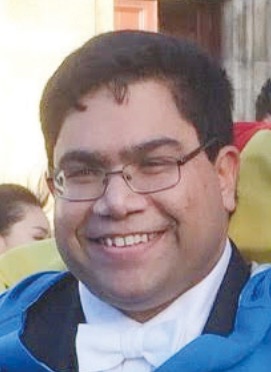
Dr François Gaël Sarah
Researcher
At the third reading of Diego Garcia Military Base and British Indian Ocean Territory Bill in the House of Lords on Monday the 12th instant, the members considered a motion which regrets that the UK-Mauritius Agreement: (i) does not secure the long-term future of the Diego Garcia Military Base; (ii) creates uncertainty over the continuing unrestricted use of the Base; (iii) imposes £35 billion of costs on UK taxpayers: (iv) was signed without consultation with the Chagossian people. The motion to regret was passed alongside amendments that aimed at strengthening legislative scrutiny of the treaty agreement process between the two states, after which the bill was returned to the House of Commons. 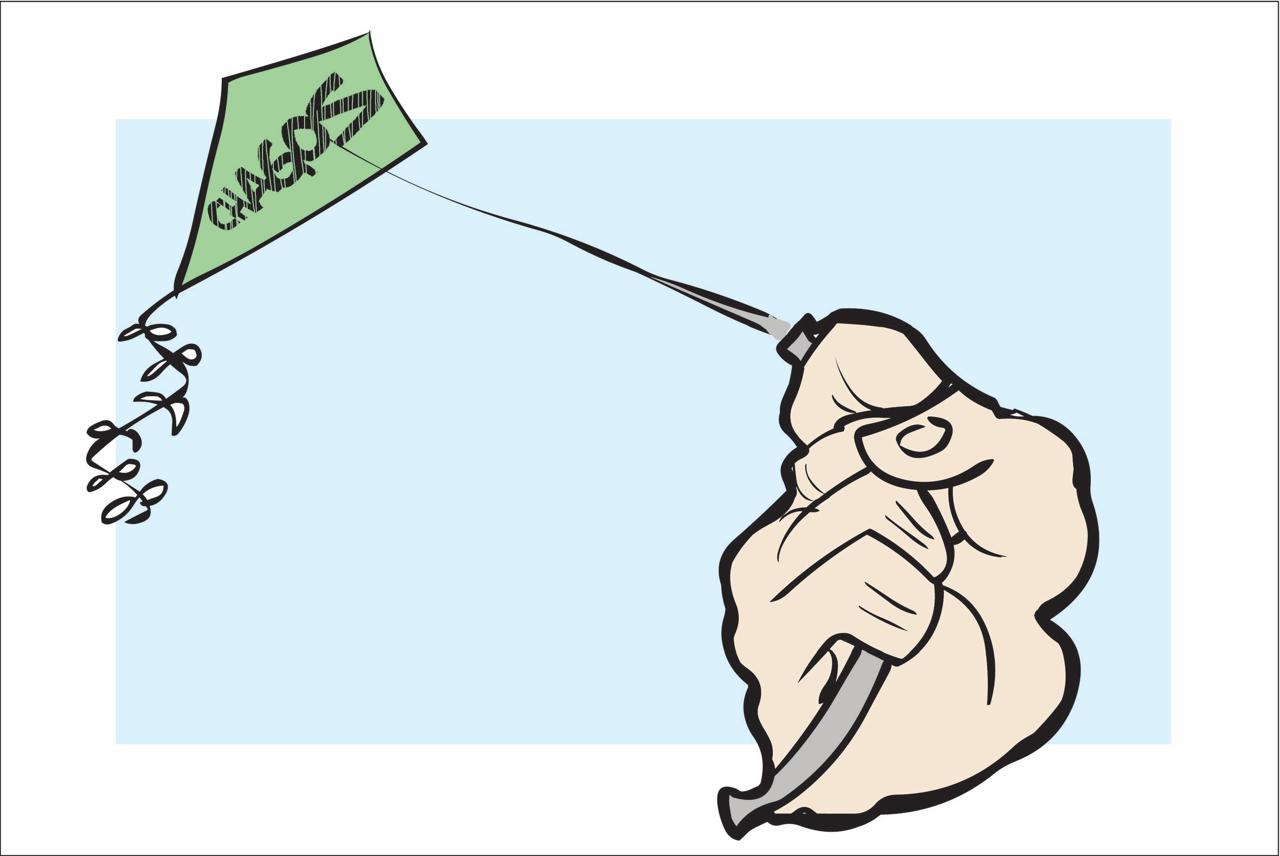
My point here is not to comment on the British legislative process as far as the Bill and the Agreement are concerned. Rather, I would like to dwell on the 4th point of the motion to regret, namely, that the Agreement between the United Kingdom and Mauritius was signed without consultation of the Chagossian people. I deliberately italicise the word “people” to draw attention to one central strategy designed to delegitimise Mauritian claims, in direct contradiction of the ICJ’s 2019 Advisory Opinion, which is now part of international law.
To talk of a “Chagossian people” instead of a “Chagossian community” is to tacitly negate the rights of Mauritian sovereignty over the islands. It is to invoke precisely the notion of a separate and distinct right of self-determination and territorial sovereignty. It is crucial to stress that the relevant “people” whose right to self-determination was violated is the Mauritian people as a whole – including the Chagossians.
That said, there are a number of painful facts that we should not ignore. The reality is that the Chagossian community, in its entirety, is divided in manifold ways.
First of all, and we cannot but wonder whether the colonial authorities did so intentionally, it is divided between those who were settled in the Seychelles and those who were settled in Mauritius. It is a division which bespeaks the tragedy of expulsion from the land and forcible kin-sundering.
Secondly, and this has been consistently documented by various authors, the succeeding Mauritian governments have not been intentional and consistent in integrating the Chagossian community into the Mauritian national community. While the legal claims to the islands were stressed and upheld, the integration of the islanders into the bosom of the Mauritian state was marked by crisis, trauma, defiance, practical separatism, and factionalism.
This political factionalism came to the fore in the first decade of this century in two groupings of Chagossians: one upholding the Mauritian claims and the other upholding the British status quo. An emanation of the latter has gone so far as to create a “government-in-exile” operating in apparent concert with actors (Farage, GBNews, to name but two) within the British political and media ecosystem who are openly hostile to Mauritian claims.
The tragedy of Chagos today is thus twofold. Legally, Mauritius is on firm ground. International law vindicates its sovereignty, and the ICJ, the UN General Assembly, and maritime law rulings reinforce this position. Politically, however, the state has failed to turn legal victory into durable social and political integration.
Mauritius could have preempted internal divisions and external manipulation by establishing representative institutions for the Chagossian community, such as a Chagossian Consultative Council. Such structures would have allowed the community to exercise voice as Mauritian citizens, affirming their identity while consolidating national unity. In the absence of these measures, the space has been filled by external actors who seek to prolong British control and frame the debate as a choice between “Mauritius” and the “Chagossian people,” rather than between Mauritius and colonial illegality.
This outcome is not merely the legacy of colonial injustice; it is also the consequence of a post-colonial failure of political imagination. This failure is sadly rooted in the communal character of Mauritian politics, where everything is reduced to courting and rewarding ethnocultural vote-banks in order to ensure the perpetuation of the same political elites. Political imagination does not go further than the lampoons, taunts and jibes lustily relayed and amplified.
To ask the question “What should have been done?” is to query the nature of our decolonisation, which as the ICJ has noted with the respect to the Chagos was incomplete. But it is also incomplete in other areas, namely, when it comes to the recognition of the true make-up of the Mauritian polity. The division of the Mauritian people into the four communities of the First Schedule of our Constitution was only meant for electoral purposes, for allegedly safeguarding minority rights. We know all too well the ugly and scarcely hidden racialist purport of that safeguard. We do not want such divisions anymore.
We want to be nothing more than the citizens of the main island of the Mauritian polity. We want to be the Mauritian community of the nation, as much as there are Rodriguan, Agalean, and, indeed, Chagossian communities of the one Mauritian nation. All those communities together compose and constitute the Mauritian people.
It cannot be stressed enough why the various British actors opposed to the Agreement have been very deliberate in using “Chagossian people” rhetoric. It is because it allows them to argue that Mauritius and the Chagossians want different things, that sovereignty cannot be transferred without Chagossian consent, and that Britain is protecting the indigenous self-determination of Chagossians. This is an example of strategic reframing that seeks, I repeat, to delegitimise the Mauritian rights. Once the sovereignty claim is reframed as a dispute between “Mauritius” and “the Chagossian people”, Britain recasts itself from violator of decolonisation law into arbiter of indigenous rights. Those East India Company habits die hard…
The “Changement” Government of Navin Ramgoolam and Paul Bérenger must act promptly and decisively. Mauritius must now again reaffirm that there is only one people entitled to self-determination: the Mauritian people, of which the Chagossians form an integral and distinct community.
Indeed, the Chagossian community is entitled to recognition, participation, restitution, and protection. To strengthen national cohesion, the state should constitutionalise the status of the island communities, granting each representative assemblies (a model already in place for Rodrigues) and full participation in national governance.
In this context, the remit and powers of the Outer Islands Development Corporation must also be reviewed to ensure alignment with the proposed constitutional communitarian model.
This approach offers a vision for an archipelagic Mauritian state, united across the central and southern Indian Ocean. It is a state that asserts sovereignty, protects its communities, and embraces its maritime and strategic potential, including the eventual creation of a national fishing fleet and the development of naval capacity necessary to safeguard its islands. Such a vision moves Mauritius beyond symbolic legal victories toward substantive, sustainable self-determination.
The Chagos question is no longer about law; it is about political will. Integration, inclusion, and institutional recognition of the Chagossian community are the missing pieces. Unless these steps are urgently taken, the injustice of Chagos will persist, not because Mauritius lacks sovereignty, but because political responsibility has been deferred.
….
To talk of a “Chagossian people” instead of a “Chagossian community” is to tacitly negate the rights of Mauritian sovereignty over the islands. It is to invoke precisely the notion of a separate and distinct right of self-determination and territorial sovereignty. It is crucial to stress that the relevant “people” whose right to self-determination was violated is the Mauritian people as a whole – including the Chagossians.
…
