

The recent incident involving Senior Counsel Me Désiré Basset, a distinguished member of the Mauritian Bar with more than fifty years of legal experience, has generated considerable public attention and national discussion. As one of the country’s most respected legal practitioners, his reported experience has prompted reflection that extends far beyond the circumstances of a single incident.
This article is not intended to determine the facts of the matter, attribute responsibility or comment on issues that may still be subject to clarification. Those are matters for the appropriate authorities and, where necessary, the judicial process. Rather, the incident provides an opportunity to reflect on a broader issue of national importance: equal access to justice for persons with disabilities in Mauritius.
If a Senior Counsel with more than half a century of experience, whose professional life has been devoted to the administration of justice and the rule of law, can reportedly encounter barriers in accessing one of the country’s highest judicial institutions, what might be the experience of an ordinary citizen seeking justice?
More importantly, what does this mean for a person with a physical disability, a person with a visual impairment, a person with a hearing impairment, a person with an intellectual disability, a person with a psychosocial disability, a person with autism, a person with Down syndrome, or a person with multiple disabilities, who may face additional physical, communication, procedural or attitudinal barriers when engaging with the justice system?
These are practical and important questions that go to the heart of equal access to justice in Mauritius. They invite us to reflect on whether our justice system is truly accessible, inclusive and responsive to the needs of every citizen, including persons with disabilities.
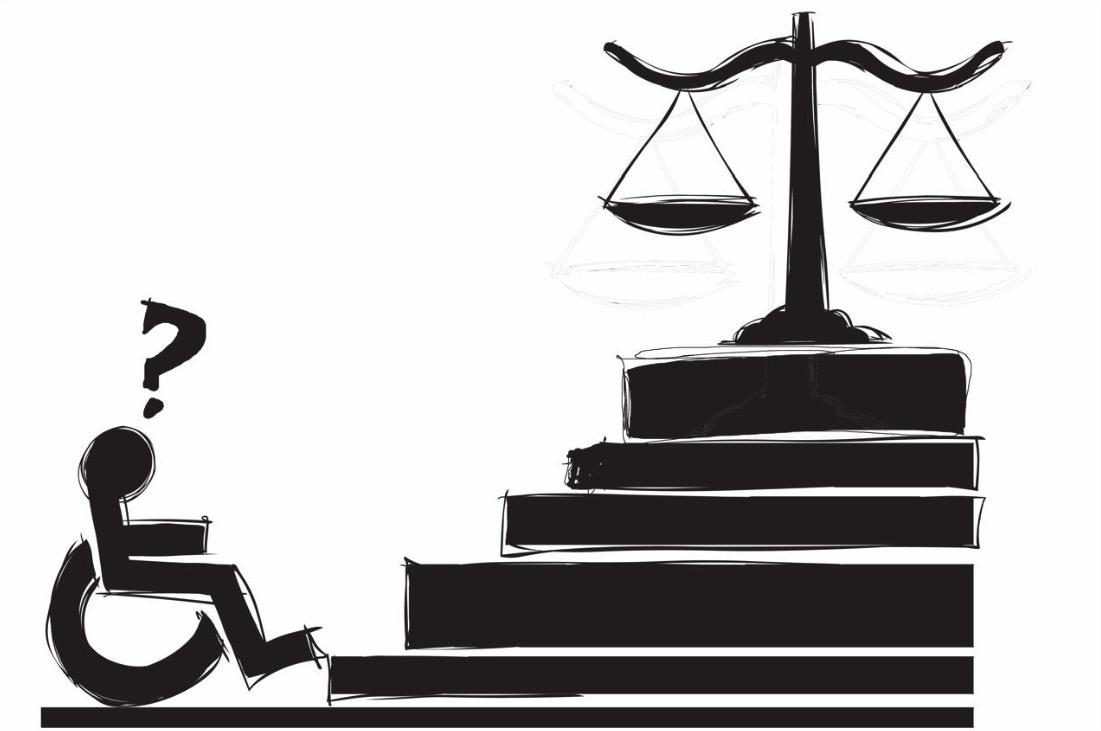
Justice is not measured solely by the quality of legislation or the independence of the courts. It is also measured by whether every individual can enter a public institution with dignity, understand legal proceedings, communicate effectively, participate meaningfully and enjoy the equal protection of the law without discrimination.
Mauritius demonstrated its commitment to human rights by signing the United Nations Convention on the Rights of Persons with Disabilities (UNCRPD) on 25 September 2007 and ratifying it on 8 January 2010. In doing so, our country reaffirmed its commitment to promoting, protecting and ensuring the full and equal enjoyment of all human rights and fundamental freedoms by persons with disabilities, while respecting their inherent dignity.
The UNCRPD represents a profound shift from viewing disability through a purely medical or charitable lens to recognising it as a human rights issue. It acknowledges that disability often arises not only from an individual’s impairment but also from physical, communication, institutional and attitudinal barriers created by society. Governments and public institutions therefore have a responsibility to remove those barriers and ensure that persons with disabilities participate fully and equally in every aspect of society, including the administration of justice.
These principles are reflected throughout the Convention. Article 3 establishes respect for inherent dignity, individual autonomy, non-discrimination, full and effective participation and inclusion in society, equality of opportunity and accessibility as fundamental principles. Article 4 requires States Parties to adopt appropriate legislative, administrative and other measures to implement these rights.
Article 5 guarantees equality and non-discrimination, while Article 9 recognises accessibility as an essential prerequisite for persons with disabilities to live independently and participate fully in society. Accessibility extends far beyond ramps and lifts. It also includes access to information, communication, technology, transportation and public services.
Article 12 recognises that persons with disabilities have the right to equal recognition before the law. Article 13, which is particularly relevant to this discussion, requires States Parties to ensure effective access to justice on an equal basis with others by providing appropriate procedural and age-appropriate accommodations and by promoting training for those working in the administration of justice.
The Convention also recognises, through Article 16, the need to protect persons with disabilities from exploitation, violence and abuse. Article 19 reinforces the right to live independently and be included in the community, while Article 33 requires effective implementation and monitoring of the Convention with the full participation of persons with disabilities and their representative organisations.
These are not merely international commitments on paper. They are practical obligations intended to influence legislation, public policy and the everyday operation of our institutions.
Mauritius has also taken an important legislative step through the Protection and Promotion of the Rights of Persons with Disabilities Act. While the Act has received Presidential Assent, it has not yet been promulgated. Once brought into force, it has the potential to strengthen the protection of the rights of persons with disabilities and further align our national legal framework with the principles of the UNCRPD.
However, legislation alone cannot guarantee inclusion.
The true measure of progress lies in implementation.
For many persons with disabilities, access to justice continues to be affected by practical barriers. These may include inaccessible public buildings, limited access to information in accessible formats, inadequate communication support, insufficient procedural accommodations and varying levels of disability awareness among professionals working throughout the justice system.
A person with a visual impairment may require legal documents in accessible formats.
A person with a hearing impairment may require sign language interpretation or other appropriate communication support.
A person with an intellectual disability may require information presented in plain and easy-to-understand language.
A person with a psychosocial disability may require procedural adjustments that enable meaningful participation throughout legal proceedings.
A person with autism may require reasonable adjustments to communication methods or sensory environments.
Persons with multiple disabilities may require a combination of accommodations that reflect their individual circumstances.
These are not special privileges. They are measures that ensure equality by enabling every person to participate in the justice system on an equal basis with others.
Equal access to justice begins long before a court delivers judgment. It begins when a person can enter a public building independently, obtain accessible information, communicate effectively with public officials, understand legal procedures, present evidence, participate meaningfully throughout proceedings and have confidence that they will be treated with dignity and respect.
An inclusive justice system benefits everyone.
Our elders, persons with temporary injuries, pregnant women, parents with young children and many others also benefit from environments and services designed to be accessible. Accessibility therefore strengthens institutions for the benefit of society as a whole.
The recent incident should therefore not be viewed solely through the lens of one individual or one institution. Instead, it should encourage constructive national reflection.
It provides an opportunity to review whether our courts, police stations and other public institutions are fully accessible.
It invites reflection on whether disability rights training should become an integral part of the professional development of police officers, magistrates, judges, lawyers, prosecutors, court personnel and all those involved in the administration of justice.
It encourages consideration of whether procedural accommodations are consistently available whenever they are needed.
It also reminds us of the importance of meaningful consultation with organisations of persons with disabilities in developing, implementing and monitoring reforms affecting the justice system, in keeping with the principle of « Nothing About Us Without Us. »
Strengthening equal access to justice requires more than legal reform. It requires leadership, commitment, adequate resources, continuous training, effective monitoring and, above all, the determination to remove barriers wherever they exist.
Ultimately, this discussion is not about one reported incident.
It is about the kind of society Mauritius aspires to be.
A society founded on equality must ensure that every person, regardless of disability, can exercise the same rights, enjoy the same legal protections and participate fully in public life.
The true measure of a justice system is not how it serves those who possess legal knowledge, influence or professional standing. It is how it protects those who face the greatest barriers to exercising their rights.
If this discussion encourages Mauritius to strengthen accessibility, improve procedural accommodations, reinforce disability rights awareness and continue implementing the principles of the UN Convention on the Rights of Persons with Disabilities, then it will have served a purpose far greater than the individual circumstances that first brought these issues to public attention.
Equal access to justice is not an act of charity. It is not a privilege to be granted at discretion. It is a fundamental human right.
A justice system earns public confidence not simply because it delivers judgments, but because every person can enter it with dignity, participate on an equal basis with others and leave knowing that the law has respected their humanity.
That is the standard to which Mauritius must continue to aspire and against which our commitment to justice should always be measured.
Ali Jookhun
O.S.K.
Disability Rights Activist since 1993
Executive Council Member African Disability Forum

