
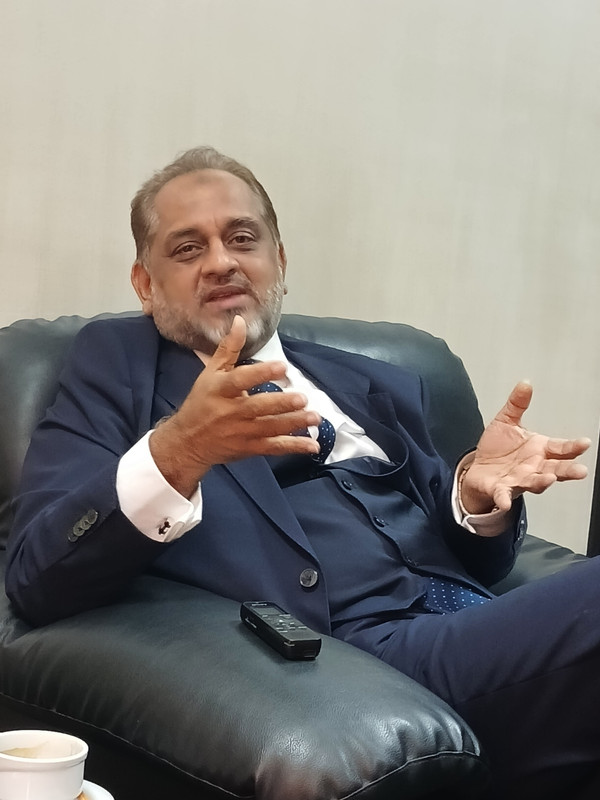
Le ministre du Travail et des Relations industrielles, Reza Uteem, a donné le ton lors de l’ouverture de la première édition du forum annuel de la Finance and Tax Academy (Rogers Capital), organisé en collaboration avec l’International Bureau of Fiscal Documentation (IBFD). Face à une audience composée de près d’une centaine de professionnels de la fiscalité, d’avocats, de comptables et de représentants de Management companies, entre autres, il a tenu à rassurer le secteur des services financiers sur les réformes fiscales, notamment en ce qui concerne l’introduction du Qualified Domestic Minimum Top-up Tax (QDMTT) : « Our government will not impose any regulations without consultations.»
L’intervention du ministre a été marquée par une réflexion sur l’évolution de la fiscalité mauricienne et internationale depuis les années 1980. « Nous n’aurions pas connu le boom économique des années 80 sans l’Export Processing Zone et sans Zero Tax. Nous n’aurions pas pu lancer le secteur TIC en 2000 sans le Tax Holiday de 8 ans », a-t-il dit, ajoutant que : « today, if you have a zero tax regime, it is considered as a harmful tax regime. »
Sous pression
Cette réalité, imposée par les standards de l’OCDE et le projet BEPS (Base Erosion and Profit Shifting), oblige désormais le pays à se réinventer. La mise en œuvre du QDMTT en est l’exemple le plus concret. Introduit dans le Finance Bill bien avant l’arrivée au pouvoir de l’actuel gouvernement – mais jamais appliqué –, ce mécanisme devient aujourd’hui incontournable. « A lot of concerns have been expressed when the government in the budget introduced the Qualified Domestic Minimum Top-up Tax… But now we are under pressure to implement it. Because 140 countries now have committed to the global anti-base erosion rules.»
Entre obligations internationales et souveraineté fiscale
Reza Uteem n’a pas caché son scepticisme face à la complexité des règles fiscales internationales, allant jusqu’à déclarer : « We all know about Pillar 1 and Pillar 2. Well, we think we know. Because frankly I still don’t understand what is Pillar 1. Because it keeps changing… » Il a fait comprendre que, malgré la pression internationale, Maurice doit préserver un espace de souveraineté fiscale, même restreint. « The only thing that we can do at the level of a government now is to come up with tax incentives. Again, that tax incentive should be compliant with the OECD’s Pillar 2. Because if you start giving tax breaks… they can deem it not compliant. Even the tax break that we are going to introduce, to kind of preserve a semblance of tax sovereignty in Mauritius, will still need to be checked off by the OECD… »
Il a réaffirmé la volonté du gouvernement de travailler main dans la main avec le secteur privé : « In the budget, we announced that we are going to come up with regulations. The only commitment I can tell you, and I’m happy to give it now, is that our government will not impose any regulations without consultation. So you will be consulted, and in fact, more than consulted, we are looking for you to come up with a proposal that… will help us maintain our competitive advantage. »
Le forum a permis de replacer ces débats dans un contexte international plus large. Prof. Victor van Kommer, Director of Capacity Building and Tailored Services et membre du conseil exécutif de l’IBFD, a livré une présentation détaillée sur les mutations fiscales mondiales. Expert reconnu et auteur du Handbook on Tax Administration, il a insisté sur la rapidité des changements et sur les risques qu’ils représentent pour la souveraineté des États. « For the first time we see that sovereignty itself is being played with », a-t-il déclaré, en soulignant l’importance de la consultation et de la mobilisation de l’ensemble de la société dans ce processus. Prof. van Kommer a ensuite animé une session technique sur les développements fiscaux internationaux, suivie de deux panels consacrés au Transfer Pricing et au règlement des différends.
Créée en février 2024 par Rogers Capital, la Finance and Tax Academy s’est donné pour mission d’élever le niveau de formation fiscale à Maurice. Le Chief Financial Officer de Rogers capital, Yashinn Bhoyroo, a rappelé l’importance de cette initiative pour le groupe : « For more than 120 years, the ER Group has contributed to the economic development of the country. Rogers Capital carries values such as trust and innovation. Since our modest beginnings, we wanted to create long-term value for our clients and communities. Today, the environment is moving at great speed. A culture of learning, unlearning and relearning is necessary. » Il a ajouté que : « Knowledge serves as a true currency of progress, an investment in the future. The Academy is not only about technical mastering, but also about creating a community of professionals. » Cette vision est partagée par Shameemah Abdool Raman, Head of the Finance & Tax Academy : « Prof. van Kommer’s participation ensured that our inaugural event was both insightful and impactful. We are confident this first edition has equipped participants to navigate global tax challenges and seize new opportunities for Mauritius. »
L’événement, qui a réuni près de cent participants, était soutenu par ER Group, Rogers Capital – Fiduciary et Swan comme Gold sponsors, ainsi qu’APEX en tant que Silver sponsor. En marge du forum, Gilbert Espitalier-Noël, CEO d’ER Group, a insisté sur la nécessité d’une approche collective : « This inaugural forum provides a platform to address factors that shape Mauritius’s ability to compete globally. As international tax frameworks evolve and influence our local context, building knowledge, rigour, and collaboration becomes essential. We are proud to stand alongside both public and private actors in shaping a more resilient and forward-looking economic future. »

