MARK JOHNSON
This month marks ten years since I left my career as a CEO and as lead for sustainable development in London. I moved half way around the world to Mauritius in order to pursue time and value instead of money which in hindsight was a good move, and one that eventually lead me into teaching. Perhaps now, more than ever, I still keep track of developments in the business world, but as an investor rather than a participant. In this article I explore what’s coming next for both business and society, or more aptly what is already here and how this will and perhaps should influence education over the next few years. The conclusions like the matter itself provides more questions than answers and perhaps, as always the answers lay somewhere in the middle.
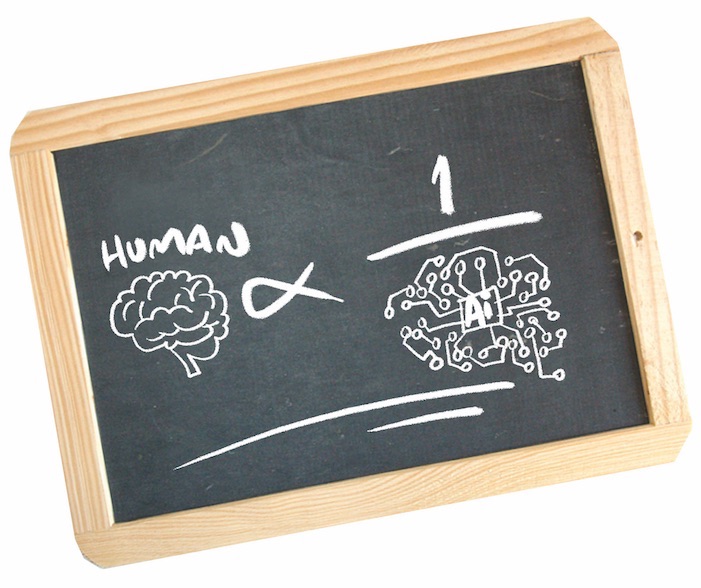
Even the best schools are grounded and perhaps at times blinded by educational ideology, a debate in which both sides can be equally right and wrong, due to the disconnect between the subjects and skills taught and the true realties of how society, economy and the work place function. Education in general looks at the infant AI models through the lens of plagiarism, or how to simplify lesson planning, but the bigger picture is that up to forty percent of current jobs will be replaced by AI within the next ten years leaving schools and their students where? The agricultural and industrial revolution solved the issue of human scarcity and by doing so drove economies and societies forward. The one advantage humans had over machines during the past 200 years was intelligence, that monopoly is now over with AI is making intelligence free, accessible and infinitely scalable.
Five to eight years from now most taxis, buses and delivery services will be driverless in most major economies. TV and film will use augmented reality presenters and actors. Medicine, financial services, teaching, law and business administration have already moved into this space, of which Chat GPT was only the publics first insight into to what is coming down the pipeline.
Most younger students will not be going to universities in their traditional format. Universities which away from their research side are already archaic, expensive and ineffective, as the information taught is already accessible and free from mobile devices. The reality is that over next decade we will witness the greatest technological transformation in human history, as five major new technologies merge to change the way both society and business operate. These are block chain technology, artificial Intelligence, genome sequencing, robotics and energy storage.
This is the world we need to prepare ourselves and our children for, and in truth nobody really knows what it will look like and who the winners and losers will be. All this will happen against the backdrop of both an environmental and personal health crisis.
Whilst, this change presents many risks, as ever, such challenges also provide opportunities and solutions. Block chain may finally provide the world with incorruptible money allowing billions access to the global financial system, whilst digitising and democratising every assets class on Earth. Conversely, it could be used by governments to control populations via the use of Central Bank Digital Currencies, this battle is being played out as we speak. New energy generation and storage will mitigate and even reverse damage to our biosphere, as in the not to distant future energy costs will move towards zero. Recent medical discoveries, such as the full role of our microbiome and true benefits of exercise already make physical and mental health accessible for those who wish to look. This understanding will further increase both global health and life spans.
Artificial Intelligence has the potential to fix much of the western world’s demographic problem by raising both productivity and GDP without the need for an abundant youthful workforce, and by doing so address the current burdening debt crisis. The path to this however, is not clear or guaranteed. Many countries are piloting the idea of a universal basic income on the basis that AI will create enough wealth and productively that we can spend our time being creative and artisanal. The question as to whether this is utopian or dystopian will be based on direction and application. Michael Saylor in his keynote speech at this year’s Bitcoin conference has warned that millions of unhealthy people, will sit a home all day alone on their one plastic chair, wearing their Augmented Reality headsets living their perfect lives in cyberspace. This is not far from Huxley’s Brave New World. Too often however, technologies aimed at making our lives easier have disconnected us from the outside and inside worlds. The natural diets, sleep and physical movement which evolution honed over millions of years to repair and maintain our own systems go inactivated as people over consume processed substances fall into metabolic ill health, addiction and depression all at their own and societies cost.
Curriculum designers have placed a lot of focus on the skills and social interactions that for most of human history were our birth right and achieved via free play and exploration. Leaders, thinkers and communicators were built in the playgrounds, football pitches, woods and fields, later in pubs and bars, but not in the classroom. Today’s most cutting edge curriculums only really seek to replace that which has been lost.
The question is where do these changes leave education. Schools have a role to play in develop lifelong learners who can adapt to new situations and acquire a Growth Mind-set, but institutions also need to understand that education is not the only driver of learning often far from it. Families, businesses, wider communities, as well as individual thought and experience all make up one’s development and life’s skills. Most adults would credit less than 10% of their knowledge and learning to their formal education, many much less. Schools certainly need to develop learners interest and provide the right balance between content, concepts and skills. This however, is not an easy path and if not done well with clear leadership, support and training within a clear whole school framework then the risk is learners will get the worst of all worlds.
Teachers and school leaders also need to inspire and motivate, whilst making ever increasing relationships and connections to and with the outside world in order education is not allowed to drift into its own disconnected bubble. Creativity, Activity and Service beyond the classroom based on personal interest is a step in the right direction. Inquiry Based learning is key, but not at the detriment of essential content, the two areas are not mutually exclusive. Inquiry, experimentation and hands on learning however, require more time and space than the memorisation of facts, making timetable management essential. Schools that attempting to do too much of societies work however, will suffer from mission creep, overcrowded timetables which in-turn will reduce space for the deeper thinking required to ignite the energy and enthusiasm needed to navigate, lead and ultimately be happy in a fast changing unpredictable world.