

Dr. ZAHEER ALLAM
The aftermath of a typhoon in Hebei province, China, and the pollution-filled streets of London’s suburbs are setting the stage for a story of international significance. Even though these events may appear unrelated at first glance, they are woven together to reveal our interconnected world’s social, political, and ethical challenges. The recent floodwaters in northern China, unleashed by Typhoon Doksuri, wreaked havoc on an astonishing scale, affecting an estimated 5% of the province’s population and causing more than 40,000 houses to collapse.
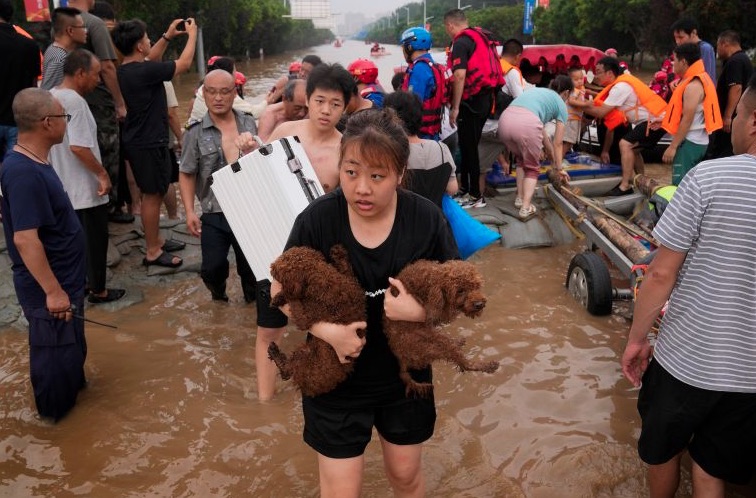
This disaster laid bare the harsh reality of nature’s fury, compelling a contentious decision to divert water from overflowing reservoirs into populated areas, all to protect Beijing. The fallout from this decision was catastrophic, impacting millions of lives, annihilating property, and severely eroding trust between authorities and the people they serve. Complicating matters further, the development of China’s Xiong’an New Area has fundamentally altered the dynamics of flood management, unmasking more profound, underlying issues within the socio-political landscape.
Half a world away, residents of London’s suburbs, especially in Uxbridge, are trapped between the necessity of convenient travel and the menace of air pollution. Once celebrated for its embrace of the automobile, Uxbridge is now grappling with toxic air that contributes to thousands of deaths annually. A solution attempted by London’s mayor, Sadiq Khan, is the Ultra-Low Emission Zone (ULEZ), imposing a daily fee on polluting vehicles.
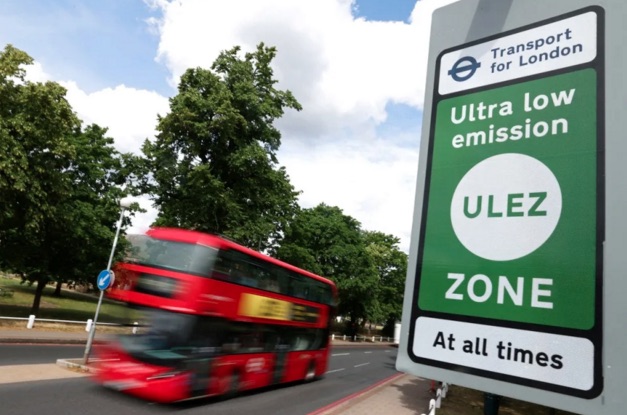
While most air pollution-related deaths occur in outer London, where more people live and toxicity is falling more slowly, resistance to this initiative in a recent by-election illustrates the frustrating challenge of finding the right balance. The situation has led to a dilemma that has caused thousands of preventable deaths, leaving the ideal solution frustratingly out of reach. The parallels between these two situations are not coincidental; they reveal a common thread weaving through our world’s environmental challenges. Whether it’s the immediacy of floodwaters or the slow creep of pollution, the tapestry they form is one of urgency and inertia, ambition and failure, pragmatism and idealism. These localized dilemmas scale up to the global arena, where giants like the United States and China are locked in a battle for supremacy in clean technology, like electric vehicles, batteries, and renewable energy.
This high-stakes rivalry risks provoking dangerous divides reminiscent of the Cold War nuclear arms race, potentially fracturing global supply chains and technological collaboration. Meanwhile, Europe’s ambitious green regulations are stalled by substantial costs, and even seemingly simple initiatives, such as weather warning systems for developing nations, become mired in bureaucratic hurdles, juggling funding, governance and political will. Good intentions crash against complex political and economic realities. The business landscape is no less complex. Firms seek ethical gains but face accusations of woke posturing or empty greenwashing.
They aim to show moral leadership yet also avoid backlash like that faced by emissions restrictions in car-dependent suburbs. Partnerships with governments seem essential, yet bring tensions around issues like competition, regulation, and sacrifices for national interest. These U.S. policies, aimed at boosting domestic industries, were viewed by some European and Asian allies as protectionism. The incentives led to a shift in production to the U.S., causing a competitive reaction, with countries like Germany and South Korea introducing their own subsidies to counter the U.S. impact, reflecting a global realignment around these economic measures.
Companies then find themselves navigating a precarious balance between progress and controversy, with government partnerships essential, yet fraught with challenges – amidst the larger geopolitical context. But complexity does not excuse inaction. The path forward, although filled with uncertainty and pressure, requires a shared sacrifice, candid conversations, and a courage to face reality. Leaders must focus on viable compromises rather than idealistic perfection, seeing the solution in the hands of open-eyed pragmatists rather than ideologues.
