
On the 23rd February, Japan celebrates its reigning Emperor Naruhito’s Birthday.
On this auspicious occasion, Junko Iwaya and Jovin Hurry reflect on the ties between Japan and Mauritius, and what Mauritian companies can learn about their Japanese counterparts so as to build mutually beneficial business relationships.
In this two-part series, in Part 1 today, they outline Junko’s perspective on how to influence society while being an employee in a company. In Part 2, they outline Jovin’s ideas on how to apply these Japanese business insights to the Mauritian corporate ecosystem.
I chose to stay in the company.
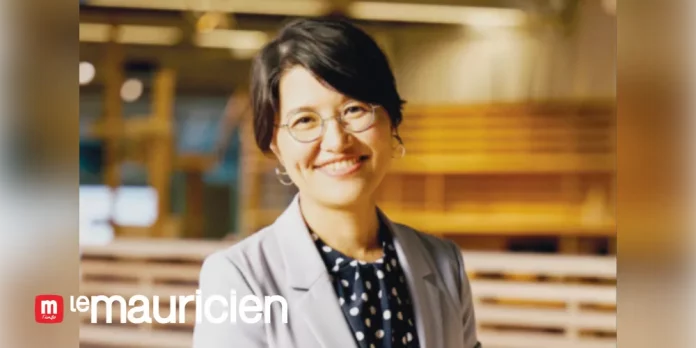
Junko is an Architect and a Project Manager at the Innovation Design Center in Nikken Sekkei in Japan. Nikken Sekkei is an architectural, planning and engineering firm from Japan, ranking as the sixth largest architectural practice in the world, according to UK Building Design’s annual survey in 2026.
For much of her professional life, Junko believed that meaningful social change happened outside companies, i.e. in NGOs, startups, or public institutions.
Like many professionals in Japan, she was trained to prioritise stability, excellence in execution, and loyalty to the organisation. Social impact, if it existed, was something indirect, i.e. a by-product of good work, not a central objective.
That assumption began to change when she encountered a simple but unsettling question:
What if companies are not obstacles to social change, but the most powerful vehicles for it?
This question reshaped her career and, more importantly, her understanding of what work can mean in the 21st century. It led her to choose a path that is now often described as social intrapreneurship, i.e moving society forward while remaining inside the company.
Junko shares her reflections not as a theory, but as a lived experience, for business leaders and professionals in Mauritius, a country whose enterprises are deeply interwoven with society, and therefore, uniquely positioned to lead purposeful transformation.
Work can be re-designed.
Junko’s turning point came not through dissatisfaction, but through exposure. In 2022, she participated in the NELIS (Next Leaders’ Initiative for Sustainability) 4Revs Programme, an innovation and learning platform that connects corporate employees with social entrepreneurs from around the world.
What struck her was not the brilliance of any single idea, but the mindset of the people involved. They did not separate “work” from “impact.” They spoke naturally about environmental challenges, inequality, and community resilience, and just as naturally, about business models, organisations, and systems.
One concept from that experience stayed with her: job crafting, i.e. one does not need to leave an organisation to find meaning. One can reshape one’s role from within.
In Japan, where career paths are often linear and predefined, this idea was quite radical. It suggested that loyalty does not mean passivity, and that purpose does not require resignation.
Junko then began asking herself difficult questions, e.g. “If I could design my ideal work – one rooted in my passion and aligned with Nikken Sekkei’s mission to create social impact – what would it look like?”
Architecture gives place to social
design.
Soon after, Junko transferred to the Innovation Design Center at Nikken Sekkei and became involved in PYNT, a co-creation platform. PYNT was designed as a space where architects, urban planners, engineers, and external partners could collaborate on societal challenges that do not fit neatly into traditional project frameworks.
At first, PYNT felt ambiguous for Junko. It was not quite a department, and not quite a project. However, that ambiguity was precisely its strength. It allowed ideas to emerge organically, driven by people rather than procedures.
Through PYNT, Junko encountered individuals who were quietly transforming their companies from within, these employees who saw social challenges not as distractions from business, but as starting points for innovation.
This was her first real encounter with social intrapreneurs.
What social
intrapreneurship really means.
A social intrapreneur is often misunderstood. This is not someone who “does charity at work” or runs side projects unrelated to the business, nor is it someone who rejects commercial logic.
Rather, a social intrapreneur starts with a social or environmental issue and then asks:
How can my organisation’s capabilities, assets, and influence contribute to a solution, sustainably and at scale? This distinction is crucial for business leaders.
In traditional intrapreneurship, innovation often begins with technology or market opportunity. In contrast, in social intrapreneurship, it begins with a societal need, but the response is still strategic, disciplined, and commercially aware.
For companies, this means that social issues are no longer externalities to be managed, but signals pointing toward future relevance.
Impact happens when the right forces align.
From interviews and collaborations through PYNT, one lesson became clear. Lasting impact emerges when individual passion, organisational systems, and societal needs move together in one direction. When any one of these is missing, initiatives stall.
Junko saw this vividly in the example of a colleague from a Japanese manufacturing company. He loves sport and cares deeply about inequality in children’s access to opportunity. By aligning his personal motivation with his company’s brand and resources, he was able to build a programme that benefited communities and reshaped how the company was perceived.
For business leaders, the implication is profound: Employees’ personal concerns are not distractions, they are early indicators of future business relevance.
In Mauritius where companies are closely connected to education, employment, and community life, this alignment may be even more powerful. If Mauritian employees feel the permission to connect who they are, with what their company does, energy and innovation will multiply.
No organisation solves complex
problems alone.
Another insight became equally clear: complex social challenges cannot be solved by one organisation acting in isolation. Through PYNT, collaborations often began informally, i.e. in a workshop, a conversation, or a shared concern. Over time, these interactions grew into ecosystems involving multiple companies, NGOs, and individuals.
What mattered was not hierarchy or ownership, but a shared intent. For many Japanese companies, this represented a cultural shift. Traditionally, firms prided themselves on internal excellence. However, today’s challenges, i.e. climate resilience, demographic change, urban sustainability, cross organisational boundaries.
For Mauritian businesses, this lesson is especially relevant. Small market size and close networks are often seen as constraints. In reality, they can be advantages, enabling faster trust-building and cross-sector collaboration. Mauritius could be then seen as a living lab, one deemed fit for experimental initiatives, built on trust.
Trust is the invisible infrastructure.
One of the most underestimated forces in innovation is trust. Many PYNT initiatives began with trust-based collaboration, formalizing contracts only as projects matured. This was not recklessness; it was recognition that trust accelerates learning when outcomes are uncertain.
Trust allowed people to say, “Let’s try this together,” without needing to predict the end result. In Japan, where risk aversion is culturally embedded, this was challenging, but transformative. It shifted motivation from compliance to commitment. For business leaders, the message is clear: Contracts manage risk, but trust creates momentum.
Mauritian enterprises, with their relational business culture, are well positioned to leverage this insight, provided trust is nurtured deliberately, not taken for granted.
The meaning of purpose of a company is changing.
These experiences forced Junko to reconsider a foundational question: What is a company for? The traditional answer, to maximise shareholder value, feels increasingly insufficient. Companies shape cities, labour markets, environments, and futures. Whether intentionally or not, they are social actors.
Social intrapreneurs do not reject profitability. They expand its meaning. They ask leaders to consider long-term value, resilience, and legitimacy, especially in societies where businesses are visible, influential, and expected to contribute.
Mauritius, like Japan, faces structural challenges that no single sector can solve alone. In such contexts, companies that embrace social intrapreneurship are not being idealistic, they are being realistic – about the future, their future.
This insight matters beyond Japan.
These reflections are being shared not because Japan has all the answers, but because its journey may resonate with others navigating similar questions.
Mauritius has something Japan sometimes lacks: proximity, i.e. proximity between leaders and employees; between companies and communities; between economic decisions and social consequences.
This proximity not only creates responsibility, but also opportunity. If Mauritian businesses can combine this closeness with intentional structures that support intrapreneurship, co-creation, and trust, they can move faster than larger economies burdened by distance and complexity.
The nature of business is changing.
In this Part 1, Junko’s journey as a Japanese professional demonstrates that staying inside the company does not mean standing still. In Part II, the perspective will shift outwards, examining how these lessons translate into concrete insights for Mauritius: how Mauritian firms can institutionalise intrapreneurship; how leadership must evolve, and how business purpose can become a competitive advantage rather than a moral add-on.
The future of business will not belong to those who choose between profit and purpose, but to those who understand how deeply the two are now intertwined.
(End of Part I)
