
Joe-Ann Chavry
PhD Researcher in Media and Communications
London School of Economics and Political Science (LSE)
“If you can’t beat them, join them.” This is the answer I often get when asking self-proclaimed leftists why they join big neoliberal corporations or far-right political parties. “It’s the only way to effect positive change” is usually what follows. While I cannot infer if such choices are the result of apathy, pragmatism or shrewd strategising, these conversations have led me to reflect on Audre Lorde’s work; particularly on her landmark piece ‘The master’s tools will never dismantle the master’s house.’ While commentators of Lorde’s speech often discuss ‘the master’s tools’ and their potential for engendering change, I suggest casting light on the masters’ houses, as transnational sites of oppression. Doing so can be productive to understand feminism in new ways.
The Second Sex Conference
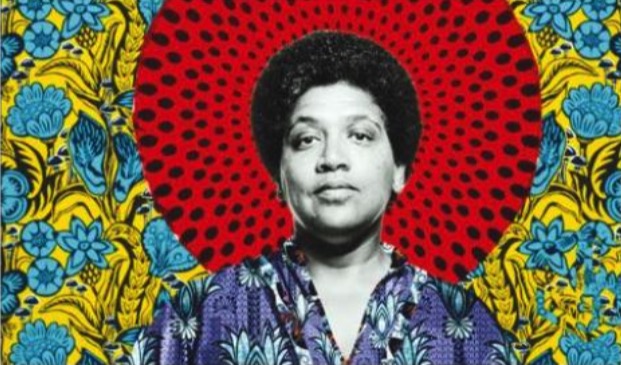
Audre Lorde’s 1979 speech, ‘the master’s tools will never dismantle the master’s house’, was first delivered at the Second Sex Conference, organised to pay tribute to Simone de Beauvoir’s work. Broadly, de Beauvoir critiques the construction of women as ‘others’, positioned in opposition to men – representing the so-called ‘master’. De Beauvoir also draws a parallel between the condition of women and that of the ‘Negro’ (the enslaved man). She suggests that women, like slaves, are oppressed by masculinity. By comparing her position to that of an enslaved man, de Beauvoir offers a reading which is blind to her relative privilege as a white woman situated in the metropole, and fails to address enslaved women’s experiences, hence limiting her, otherwise sophisticated, analysis.
During her provocative speech Lorde then complicates de Beauvoir’s argument. Drawing on her own positionality as a black lesbian woman, she argues that de Beauvoir, like many white feminists, tend to ignore questions of race, class, and sexuality in their analysis and praxis. In doing so, they position black women, like her, as ‘others’. So, while Lorde describes the master’s tools as the ways and tactics used by feminists to engage with patriarchal domination, the master’s house, in essence, refers to the site where power, judgement, and privilege are exercised, and the products of such deeds.
To Lorde, white feminism reproduces the master’s arbitrary domination through the erasure of dispossessed, racialised, and queer women, and whoever is ‘othered’ within the white heteropatriarchal matrix of 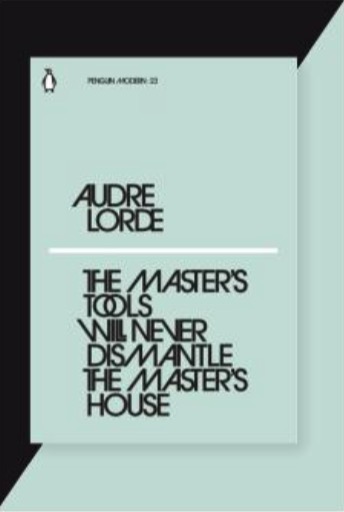 domination. By dismissing these subjects and their lived experiences, not only does white feminism get closer to the master’s power and entitlement, but it also reifies it. Based on this, Lorde convincingly argues that any feminism relying on the imaginary, tactics, and strategies of white heteropatriarchy is bound to fail.
The Masters’ Houses
Extending Lorde’s critique beyond a US context, I suggest understanding the heteropatriarchal matrix of domination as operating through the masters’ houses, i.e., as multi-layered, and multi-scalar transnational sites of oppression.
For that, I engage with the rise of the internationalist far-right movement. In the West, the recent conservative and ethnonationalist resurgence is evidenced by the rise of neoconservative figures like Donald Trump, Rishi Sunak and Giorgia Meloni, to name a few. The other side of the globe has likewise seen the rise in power of fundamentalist leadership. This is exemplified by the ascension of Narendra Modi and the Bharatiya Janata Party (BJP) into power. Echoing Western ideologues like Mussolini and Hitler, Modi incarnates the ethnonationalist Hindutva project aiming at establishing a total Hindu hegemony in India. Supported by the Rashtriya Swayamsevak Sangh (RSS), a Hindu nationalist volunteer paramilitary organisation, the Modi government is notorious for directly or indirectly encouraging the destruction of Muslim, Dalit, and Christian livelihoods, persecuting whoever dares to critique his regime, and building strategic alliances with media houses and neoliberal corporations to extend his necro-liberal project. As such, many suggest that it is impossible to overstate the scale of fascist power in India today.
To journalists, political commentators, and academics the far-right leaning between the West and India is not surprising, nor a coincidence. Whether it is a historical commitment to preserving the ‘Aryan race’ in Nazi Germany, the strong diasporic ties with places like the UK, Canada, or the cooperation with the US and France when it comes to the so-called ‘defence industry’, white and Hindu supremacies are two sides of the same coin. Together, they operate as ‘masters’ (re)appropriating uses of power to inaugurate an unprecedented era of fascism mediated by remarkable flows of capital, military power, and technology.
The result of this global fascist wave is already with us. It includes the daily deportation of immigrants, the killings of Palestinians, the proliferation of hate speech and crimes, the untimely death of refugees escaping warzones, the shootings of black and brown bodies by police officers in the US and France, transphobic crimes in the UK and countless pogrom lynching Muslims, Dalits, and Christians in India. We are witnessing the ceaseless dehumanisation and murder of racialised, poor, non-heteronormative bodies, engineered by transnational institutional violence. It is these transnational sites of oppression shaped by historicity and spatiality that I call the ‘masters’ houses’.
Although tempting, it would be ludicrous to believe that Mauritius remains untethered by movements in the masters’ houses. Suffice to observe how Mauritius’ geopolitical alliances intersect with, and shape, internal relations to nip this idea in the bud.
While the masters’ houses may appear to change their façade – to the extent that many may misrecognise them as being part of a ‘decolonial project’ – deep down they are the same. They represent the rehashing of power relations based on the destitution, exclusion, and killing of those whose livelihoods have historically been endangered.
Reinvigorating feminism(s)
Unsurprisingly, violence against racialised women is consubstantial of this global state of violence. From dispossession, land theft and ecosystem degradation, sex trafficking, modern-day slavery, censorship, genocide, torture to pseudo-civilising missions, violence against women and girls remains central to the masters’ houses. As such, engaging with those multi-layered and multi-scalar sites of oppression can provide a window to rethink and complicate feminism today.
Again, Audre Lorde provides a potential avenue to help us do so. A thread running through her speech denotes two types of feminisms: a reformist and a radical one. Broadly defined, reformist feminism favours upper-middle class respectability and sensibilities, and advocates for women to enter spheres such as the army, the world of finance, active politics and so on – all dependent on the material and symbolic oppression of players like the state, corporations, and political political parties. In this regard, the various iterations of feminism in Mauritius have predominantly reflected a reformist approach in advocating for more women to, often single-handedly, incorporate boardrooms, become politicians and be at the forefront in the media. While such efforts are important, they reflect a major weakness: the reiteration of exclusion.
Following Lorde, reformist feminism is often characterised by the erasure and silencing of underprivileged, black, and global south women. Likewise, mainstream feminism in Mauritius largely evades black creole women, for instance, by simply making them invisible or by using them as tokens of progress and/or as beneficiaries of charity. To paraphrase Lorde, this suggests that black (creole) women would have nothing to contribute to feminist theorisation and advocacy – which, of course, points to sexism and racism. As Mauritian reformist feminism is made to revolve around such politics, it often reproduces the master’s tactics through the historical, symbolic, and material exclusion of women deemed ‘other’, including those who identify as working-class, creole, disabled, queer and so on.
To address this, Lorde proposes a radical understanding of feminism – or feminisms – based on ‘differences’. She contends that the only way to engage with oppression is to fight sexism, racism, ethnocentrism, classism, heteronormativity etc. in an integrated way. Far from fragilising feminist politics, she argues that a genuine acknowledgement of different lived experiences and positionalities understood through historicity can inform the politics of knowledge production, and radicalise actions towards political, social, and ethical transformations.
What this reading of Audre Lorde’s speech therefore offers is twofold. First, it complexifies the idea of the master’s house by adding dimensions of time and space, to understand the renewed dynamics and interconnections between (trans)national sites of oppression, domination, violence, and exclusion. Second, it demands that we rethink feminism(s) through our differences. Taken together, these can broaden our fields of theorisation and action to engage with different aspect of the masters’ houses, reinvigorate feminism(s), and engender new radical, and perhaps transnational, solidarities.
Lorde, A. (1984), ‘The Master’s Tools will never dismantle the
Master’s House’, in Sister Outsider, Penguin Classics, pp.103-116.
