

Ashveen Kutowaroo FCG PMP® LLM MSc
Chief Editor of Aryodaye, the Mouthpiece of the Arya Sabha, Mauritius
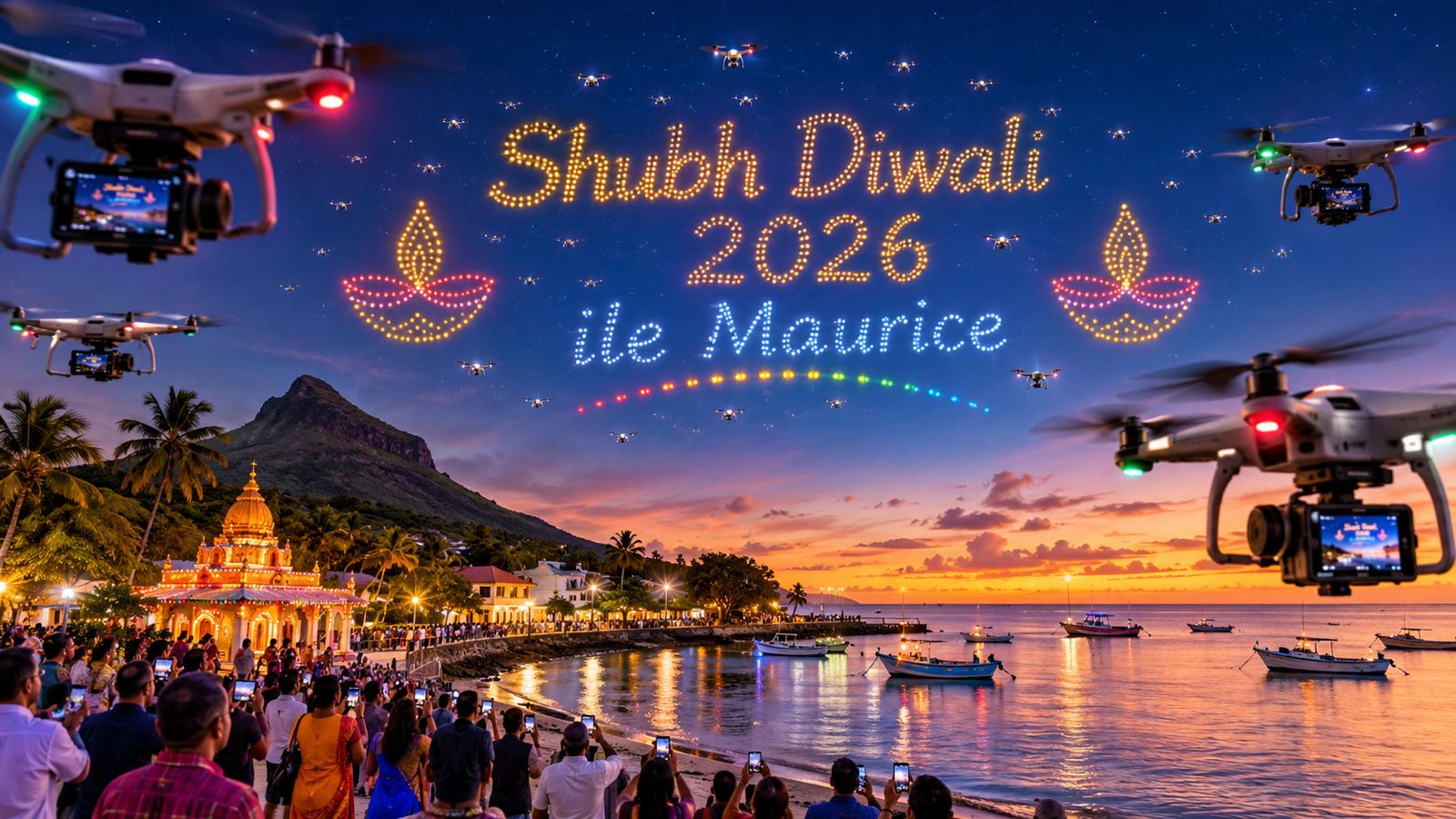
Every year, as Diwali approaches, Mauritius begins to glow. Homes are cleaned, doorways decorated, families gather, prayers are offered and lamps are placed where their light can be seen. For many, the festival is a deeply cherished religious occasion. Across the island, a small flame in a window carries a message that reaches beyond one household: hope.
Diwali is often explained through the familiar story of Lord Rama’s return to Ayodhya after defeating Ravana. Yet the significance of Diwali need not be confined to one episode from the Ramayana. We can also approach it through a wider idea: the human desire to bring light into places where darkness, uncertainty or indifference have taken hold. This is an idea that can speak to every Mauritian, whatever their faith or background.
Light is among humanity’s oldest and most powerful symbols. It helps us see, find our way, recognise one another and feel less alone. Darkness is not always evil, just as brightness is not automatically goodness. But in our moral language, light has come to represent knowledge, truth, compassion and the courage to begin again. The lamp is therefore more than a decoration. It is a reminder that even a modest source of light can change the character of a room. A lamp, whether fashioned from a plant, shaped from clay or switched on electronically, is a human gesture: someone has chosen to make darkness less complete for another.
Mauritius understands the value of that reminder. Our national story has been shaped by people who crossed oceans, endured hardship and built lives in an unfamiliar land. They brought different languages, customs, prayers and memories. They also brought the simple practices through which families preserved identity and passed values to their children. Festivals became part of that inheritance. They helped communities remember where they came from while making a home in the place they had chosen, or been compelled, to call their own.
The lamps of Diwali have their own story of change. Before earthen diyas became commonplace, our ancestors used what was available in their surroundings. Among the traditional forms remembered in our community were lamps made from ponga, the red tip of the banana plant. A piece of the plant could be fashioned to hold a small flame. It expressed resourcefulness and intimacy with the land: celebration did not require expensive objects when nature offered what was needed.
Over time, the earthen lamp became familiar: a small vessel, oil, a cotton wick and a flame protected from the breeze. Its simplicity is part of its beauty. It asks little, yet gives light. The ponga lamp and earthen diya belong to different moments, but express the same instinct: our ancestors worked with what they had and made the occasion meaningful.
Today, the scene is changing again. Electric strings illuminate buildings and public spaces. Smart systems can control colour, intensity and timing. Artificial intelligence can help coordinate displays, while drones can form patterns and images across the night sky. These advances in engineering and creativity can make celebrations spectacular. We need not reject progress to honour tradition. The technology may change, but the purpose can remain: to illuminate, to gather and to inspire.
Still, we should ask what kind of light we are celebrating. A thousand electric bulbs cannot dispel prejudice, and a drone display cannot replace a hand extended to someone in distress. The most meaningful illumination happens when we make room for others, speak truthfully, educate a child or help a family in hardship. The light that matters most is the one expressed through our conduct.
This wider meaning is not foreign to other faiths. In Islam, the idea of divine light is expressed through the Arabic word Noor, a symbol of guidance, spiritual clarity and the presence of the Divine. In Christianity, candlelight has a profound place in worship and devotion. Candles are lit in churches, during prayer and at moments of remembrance; the flame can signify Christ as the light of the world, faith, hope and the enduring presence of God.
These traditions are not identical, and their differences deserve respect. Yet their use of light offers a point of human connection. It reminds us that people may approach the sacred through different beliefs while sharing a longing for guidance, peace and goodness. In a plural society such as Mauritius, recognising that common language should not dilute anyone’s faith. It should deepen our respect for one another. We do not have to celebrate in the same way to understand the value of another person’s celebration.
There is also a particular significance to Diwali in the life of Swami Dayanand Saraswati, the nineteenth-century religious and social reformer who founded the Arya Samaj in 1875. He pursued truth and challenged practices he believed obscured the Vedic teachings. He advocated education, social reform, human dignity and freedom from superstition.
Swami Dayanand attained nirvaan on 30 October 1883 in Ajmer, on the day of Diwali. For Arya Samajis, the occasion is also a moment to remember a reformer who urged people to seek truth and live by it. His passing is commemorated as Nirvaan Diwas, a day of reflection on his teachings and the unfinished work of reform.
In February this year, I had the opportunity to visit Ajmer and the place associated with the final chapter of Swami Dayanand’s life. The visit brought history closer: a name and date in a book became connected to a physical place. It reminded me that a reformer’s legacy survives not merely through ceremonies or portraits, but when later generations examine and apply ideas relevant to their own society.
For Mauritius, that challenge includes the responsibility to keep education, equality and social harmony at the centre of national life. Dayanand’s emphasis on learning and reason can encourage us to question ignorance without humiliating those who hold different views. His call to social reform can remind us that inherited customs should be examined with conscience and compassion. We may not agree with every position taken by a historical figure, but we can still engage seriously with the questions that person placed before society.
Diwali also invites us to think about the homes and communities that are not brightly lit. Some families face financial pressure, grief or loneliness. Some children need additional support, older people live alone, and persons with disabilities still encounter barriers. A national celebration becomes richer when these realities are not forgotten. The spirit of the festival should move us from decoration towards inclusion.
Perhaps this is where the lamp offers its clearest lesson. A flame does not ask who deserves its light. It shines where it is placed. We can take inspiration from that simplicity. A neighbour’s difficulty should matter to us. A child’s potential should not be limited by disability or poverty, and dignity should never depend on origin, language, religion or social position. These responsibilities last all year.
As Mauritians, we have a special reason to protect this spirit. Our diversity is a national asset, but it does not maintain itself. It requires patience, fairness and daily goodwill. We must not treat religious occasions as competing claims for recognition. When one neighbour celebrates, another can offer a greeting. When one family prays, another can respect the moment. Such gestures may appear small, but they build trust over time.
The evolution from a ponga lamp to an earthen diya, from an oil wick to an electric display, and from a traditional procession to drones in the sky tells a story of human ingenuity. Each generation finds a new way to illuminate the night. Yet the deeper task remains unchanged. We must illuminate our judgement with knowledge, our public life with integrity, our homes with affection and our country with mutual respect.
This Diwali, let the lamps remind us not only of a victory remembered in sacred tradition, but also of the victories still required in everyday life: truth over falsehood, understanding over prejudice, generosity over indifference and hope over despair. Let the brilliance in our streets be matched by compassion in our actions. And when the lights are switched off and the festival has passed, may something of their warmth remain in the way we treat one another.
For the light that matters most is not the one we display for a night. It is the one we choose to carry, together, into the future of Mauritius.
