


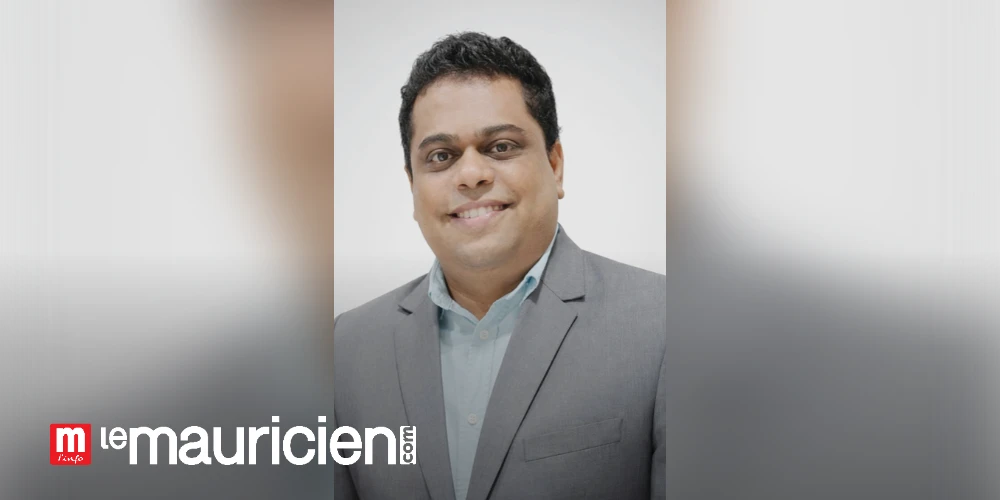
By Ashveen Kutowaroo FCG PMP® LLM MSc
Chief Editor Aryodaye Mouth Piece of Arya Sabha Mauritius
Founder and Policy Adocate JP Narayan Centre for Sustainable Development and World Peace
Every year, as the full moon of the Hindu month of Ashadha rises over the Indian subcontinent and the wider Hindu diaspora, millions pause to celebrate Guru Purnima. Temples organise special prayers, schools pay tribute to educators, and disciples honour their spiritual teachers with flowers, gratitude and acts of service.
Yet beyond the ceremonies lies a question that deserves deeper reflection in our increasingly complex world: who is a Guru today?
In an age dominated by artificial intelligence, social media influencers, instant information and shrinking attention spans, knowledge has become more accessible than at any other point in human history. Ironically, genuine wisdom appears to have become harder to find.
Perhaps Guru Purnima has never been more relevant.
The Supreme Guru
The Vedic tradition begins with a profound principle. The ultimate Guru is not a human being but God.
This is the understanding upheld by the Arya Samaj, founded by Maharshi Swami Dayanand Saraswati, whose life’s mission was to restore society to the timeless wisdom of the Vedas. Since God alone is omniscient, eternal and free from error, only God can be regarded as the perfect teacher.
The Yajurveda (40:8) describes the Supreme Being as pure, flawless and untouched by imperfection. Human beings, regardless of their learning or achievements, remain students throughout their lives.
This distinction is important.
Throughout history, societies have sometimes elevated charismatic personalities to almost divine status. While great teachers deserve admiration, reverence and gratitude, the Vedic tradition reminds us that they remain human. They inspire, they educate and they guide, but they too continue to learn.
The highest Guru remains the Creator Himself.
Our First Classroom
If God is the eternal Guru, then who becomes our first teacher on earth?
Long before a child enters a classroom, opens a textbook or logs into an online lesson, someone has already begun teaching.
That person is usually the mother.
She teaches language before grammar, affection before philosophy and values before laws. The first stories, the first lullabies, the first prayers and often the first lessons in kindness come from her.
Modern neuroscience confirms what ancient civilisations intuitively understood thousands of years ago. The earliest years of childhood profoundly shape emotional intelligence, behaviour and lifelong learning.
Yet modern society often measures success by professional achievement while overlooking the countless invisible sacrifices mothers make every single day.
Guru Purnima gently reminds us that gratitude begins at home.
The Silent Guru
Standing beside the mother is another teacher whose contribution frequently goes unnoticed.
The father.
Unlike mothers, whose affection is often openly expressed, fathers are frequently remembered for discipline, responsibility and quiet sacrifice.
Many work long hours, suppress personal ambitions and shoulder financial burdens without complaint. They seldom ask for recognition.
They simply continue.
In today’s world, where public appreciation often favours visible achievements, fathers have become the silent heroes of family life.
The Vedic worldview never intended for one parent to eclipse the other. Together, mother and father form the child’s first Gurukul, laying the foundations upon which every future teacher builds.
From Home to the Classroom
Eventually, every child walks into another world.
The school.
Teachers, tutors, lecturers and mentors gradually transform curiosity into understanding. Mathematics, literature, science, history and philosophy become stepping stones towards adulthood.
The Taittiriya Upanishad beautifully captures this progression:
“Matru Devo Bhava. Pitru Devo Bhava. Acharya Devo Bhava.”
Honour your mother.
Honour your father.
Honour your teacher.
The passage does not ask us to worship human beings as gods. Rather, it teaches gratitude towards those who shape our lives.
Education has never been merely about passing examinations.
Its true purpose is to build character.
The Gurus Who Shaped Civilisation
Indian civilisation offers remarkable examples of teachers whose influence continues centuries after their passing.
For anyone interested in yoga, the name Maharshi Patanjali stands above all others. Through the Yoga Sutras, he transformed spiritual discipline into a systematic philosophy that today inspires practitioners across every continent.
Long before yoga became a global wellness industry, Patanjali taught that mastery begins not with the body but with the mind.
Then there is Guru Dronacharya, perhaps the most famous military instructor in Indian history.
As teacher to both the Kauravas and the Pandavas in the Mahabharata, Dronacharya symbolised excellence in discipline, strategy and martial education. Although some episodes surrounding his life continue to provoke ethical debate, few question his extraordinary influence as an educator.
Equally significant is Maharshi Veda Vyasa, traditionally recognised as the compiler of the Vedas and the author of the Mahabharata, one of humanity’s greatest literary achievements. His work preserved philosophical, ethical and historical traditions that continue to guide millions.
Centuries later came Maharshi Swami Dayanand Saraswati.
At a time when ritualism and superstition threatened to overshadow the original teachings of the Vedas, Dayanand courageously called upon society to return to truth through reason, education and scriptural study.
His famous call, “Back to the Vedas”, remains as relevant today as when it was first proclaimed.
His greatest legacy was not the creation of followers.
It was the creation of independent thinkers.
The Meaning of Guru Dakshina
The relationship between teacher and student was once among the most sacred bonds in society.
Students lived with their gurus for years, learning not only academic subjects but honesty, discipline, humility and self-control.
At the completion of their education, they offered Guru Dakshina, a token of gratitude rather than a payment for services rendered.
One of the best-known stories appears in the Mahabharata, where Ekalavya offers his thumb to Dronacharya.
Modern readers often debate the morality of that episode. Regardless of differing interpretations, it reflects how deeply students once valued knowledge and respected those who imparted it.
Today’s Guru Dakshina need not involve extraordinary sacrifice.
Perhaps the greatest offering a student can give is sincerity, integrity and the determination to use education for the benefit of society.
A Changing Educational Landscape
Unfortunately, the teacher-student relationship has undergone profound change.
Classrooms today operate under pressures unimaginable a generation ago.
Teachers navigate demanding curricula, administrative responsibilities, behavioural challenges and the constant scrutiny of parents and social media.
A disagreement that once remained within the school gates can now become a viral video viewed by millions within hours.
Respect for the teaching profession appears to have weakened in many societies.
Parents increasingly challenge teachers publicly.
Students sometimes confuse freedom with indiscipline.
Social media rewards confrontation far more readily than dialogue.
Yet the picture is not entirely one-sided.
Respect Must Flow Both Ways
Recent years have also exposed troubling incidents involving teachers themselves.
Videos showing educators shouting at pupils, humiliating children or even physically assaulting learners have shocked communities across the world.
Such conduct betrays the very essence of education.
A teacher’s authority should arise from knowledge, fairness and compassion, never from fear or intimidation.
Children deserve classrooms where curiosity flourishes rather than where confidence is crushed.
Respect cannot be demanded solely because one holds a position of authority.
It must also be earned.
Likewise, parents carry responsibilities.
Defending a child should never mean undermining every disciplinary decision made by educators.
Nor should schools become environments where teachers fear public humiliation every time difficult conversations become necessary.
Successful education depends upon partnership rather than conflict.
Parents, teachers and students all have duties as well as rights.
When one side forgets its responsibilities, everyone loses.
Who Are We Learning From?
Perhaps the greatest challenge facing the twenty-first century is not the absence of teachers.
It is the abundance of voices.
Young people now receive advice from YouTubers, podcasters, celebrities, influencers, algorithms and artificial intelligence systems.
Information arrives continuously.
Wisdom does not.
Guru Purnima invites us to pause amid this constant noise and ask a simple but powerful question:
Who is shaping my thinking?
Is it someone driven by truth?
Or by popularity?
By integrity?
Or by commercial success?
The answer matters because every society eventually becomes a reflection of the teachers it chooses to follow.
Becoming Worthy Students
Guru Purnima is often described as a celebration of teachers.
Perhaps it is equally a celebration of students.
The finest Guru cannot teach someone unwilling to learn.
Humility remains the beginning of knowledge.
Curiosity remains its fuel.
Character remains its highest destination.
Whether we are five or ninety-five, we remain students of life.
Every conversation teaches us something.
Every failure becomes a lesson.
Every mistake becomes an opportunity for growth.
The Vedic tradition reminds us that learning never truly ends.
More Than a Festival
Guru Purnima is therefore far more than a religious observance.
It is an invitation to rediscover gratitude.
To honour parents while they are still with us.
To appreciate sincere teachers before it is too late.
To expect excellence from educators while offering them the respect they deserve.
To reject blind hero worship while remaining open to genuine wisdom.
Above all, it reminds us that every human teacher is only a guide pointing towards a greater truth.
The highest Guru remains the eternal source of knowledge, justice and wisdom.
In an era overflowing with information yet searching desperately for meaning, perhaps that ancient lesson is precisely what the modern world needs most.
As another Guru Purnima passes beneath the light of the full moon, we may wish one another the traditional greetings associated with the festival.
But perhaps the greatest tribute we can offer our Gurus is not flowers, gifts or ceremonies.
It is to become better human beings.
For in the end, the finest students are those who one day inspire others, not merely through what they know, but through how they choose to live.

