

Pearlishka Burrun
The railways run by the Mauritius Government Railways (MGR) did not service exclusively the transportation of sugar and harvested canes. They were also at the disposal of commuters who wished to use them for their movement from one place to another. However, we should not forget that the railways were primarily designed to support the activities of the sugar industry by conveying, for example, the sugar produced from the factory to the harbour.
In addition, the train proved useful to carry waggons loaded with harvested canes to the sugar-mills. In between 1880 to 1910 the railway conveyed up to 100 000 tons of sugarcane to the various sugar-mills every year.(1) This practice continued well between the Wars until lorries took over the transportation of sugarcanes. “Whereas in the closing years of the Railways the traffic consisted very largely of milled sugar from the Mills to the Port for shipment, in earlier days and well into the period between the Wars substantial quantities of sugar cane were carried from the fields to the Mills – often over relatively long distances. The process of closing factories and concentrating on fewer and larger centres of sugar milling had brought more cane to the Railway but it was not entirely welcome. The rates were very low and it was necessary to purchase more wagons which were used only during the Crop season. Up to 100,000 tons in the season was the normal carrying at that time.”(2)
The railway existed primarily for the sugar industry
Undoubtedly, the railway contributed substantially to the development of the sugar industry, then the backbone of the Mauritian economy, by serving as the indispensable intermediary between the sugarcane fields, the mills and the port where the shipment of sugar for foreign markets was ensured. As a matter of fact, the sugar industry and the developments of communications have reinforced each other. “Improvements in communications were a feature of the nineteenth century and in turn helped to boost the industry in various ways. The coming of the railways in the 1850’s and 1860’s coincided with the most rapid period of expansion for the sugar industry. To a large extent they were constructed to meet the need of the industry for quicker and easier transportation of the processed sugar from the factories to Port Louis from which regular shipping services by British companies began to operate to Europe from 1852.”(3)
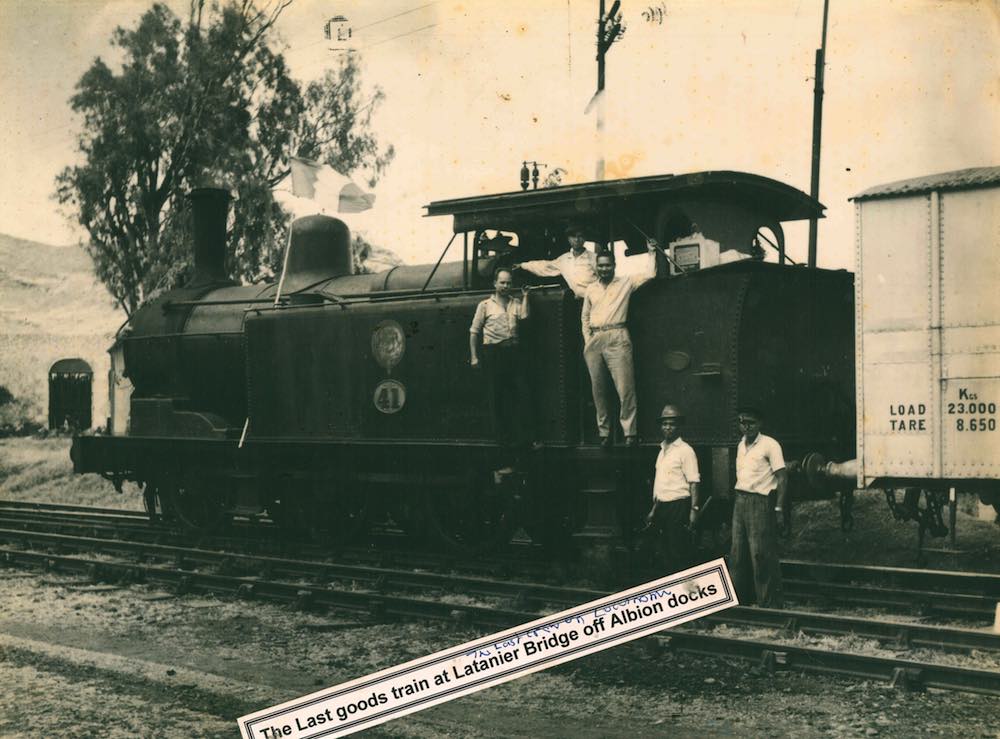
In addition to the transportation of harvested canes and processed sugar, the train carried what was termed as ‘General Goods’ (fertilisers, machinery, etc.) and which were largely connected to the sugar industry. So much so that A.J.F. Bunning, adviser on inland transport to the Secretary of State for the Colonies, could affirm in a most emphatic way: “Do the Railway goods services exist for the sugar industry? The answer is, yes.”(Ibid) The same authority made the following observation about the economic importance of the railway. “The railway was built before motor transport existed. It developed the island, particularly the sugar industry, and was a prosperous undertaking until shortly after the end of the First World War.”(Ibid)
The passenger and other services of the Railways
In parallel to its goods services, the Mauritius Government Railways (MGR) serviced the transport of thousands and thousands of passengers. Towards 1950, the railway was still carrying 9,000 passengers every working day. The passengers included a large number of students and workers. The mobility of the island’s labour force, so vital to the economic development of the country, was thus guaranteed by the railway. Again, through its Parcels Traffic, the train facilitated the transportation of various commodities among which “a fair volume of fresh foodstuffs” (Ibid), thus servicing other sectors of the economy apart from sugar sector.
Another contribution of the railway towards the economic development of the country has been at the level of employment creation. It must be borne in mind that the MGR employed hundreds of people at various levels: at the railway stations, at the headquarters of the Mauritius Government Railways in Port Louis, on the trains, at the Plaine Lauzun and Rose-Belle workshops, etc. No doubt, the closure of the railways in the 1960’s was much regretted by all the members of the personnel of the MGR. So much so that in the General Elections of 1963 a ballot paper was handed in with the words scrawled over it: “You have taken away the railway jobs that Queen Victoria gave us.”(2)
The closure of the railway service dispensed by MGR
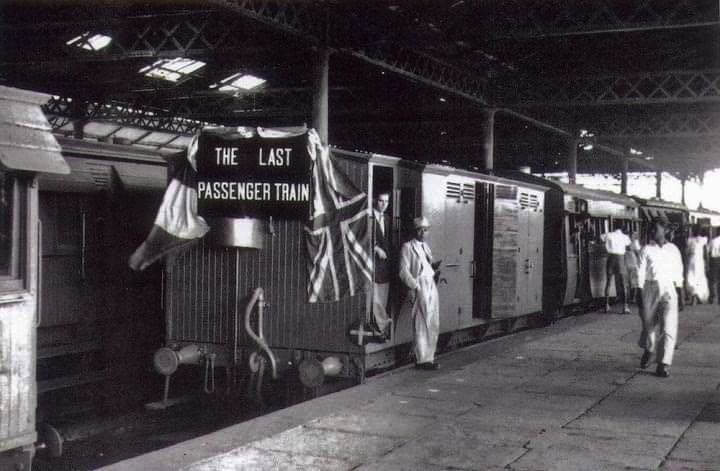
The railway served the country (carrying sugar, goods, machinery and people) under the aegis of the MGR for a hundred years until 1964, but had to close down for reasons of profitability. Overall, the railway was beneficial to the island economically and socially. Régis Closel, the last managing director of the MGR, summed up the advantages of the railway for Mauritius in these terms: “The railway has had its uses and has certainly rendered great services to the country. First, the transport of canes to the factories, sugar to Port-Louis, and fertilizers and other heavy goods to the heart of the countryside. Secondly, passenger transport. The railway made the countryside accessible and enabled the rapid development of the Plaines Wilhems and Curepipe region into residential areas. Let us not forget another service rendered by the railways: the telegraph and the transport of mail. The telegraph was first introduced to transmit signals and messages between stations. It was eventually picked up by post and opened to the public. There was throughout the existence of the railways, a close collaboration between the rail and the post office. There is no doubt that without the railways, the development of Mauritius would have been considerably delayed. »(4)
References
1. Paturau, J. Maurice, ‘Histoire économique de l’Ile Maurice’, 304 pages, août 1988, Henry & Cie Ltée, Pailles.
2. Jessop, Arthur, ‘A History of the Mauritius Government Railways: 1864 to 1964”, 27 pages, Government Printing, Port Louis, Ile Maurice, octobre 1964.
3. Addison, John & Hazareesingh, K., A New History of Mauritius, Editions de l’océan Indien, 1993.
4. Closel, Régis, ‘L’histoire des Chemins de fer à l’Ile Maurice’ in ‘Le Bulletin de la Société de l’Histoire de l’Ile Maurice’ (Vol. VI, 1970-1982)