

One winter day I flew from TAMPERE in northern FINLAND to HELSINKI the capital. The University of TAMPERE had organised for us (UN) a series of courses in 30 African states on HOW TO cover the environment in the media, especially in radio and the printed press.
The weather was awful: completely cloudy, driving snow, hurling wind, dark early, below zero temperatures. The small plane (an ATR?) shook like a rattle, visibility was close to nil. On arriving back to the capital I asked, like a real foreigner ignorant of Finnish customs: “are schools closed today?”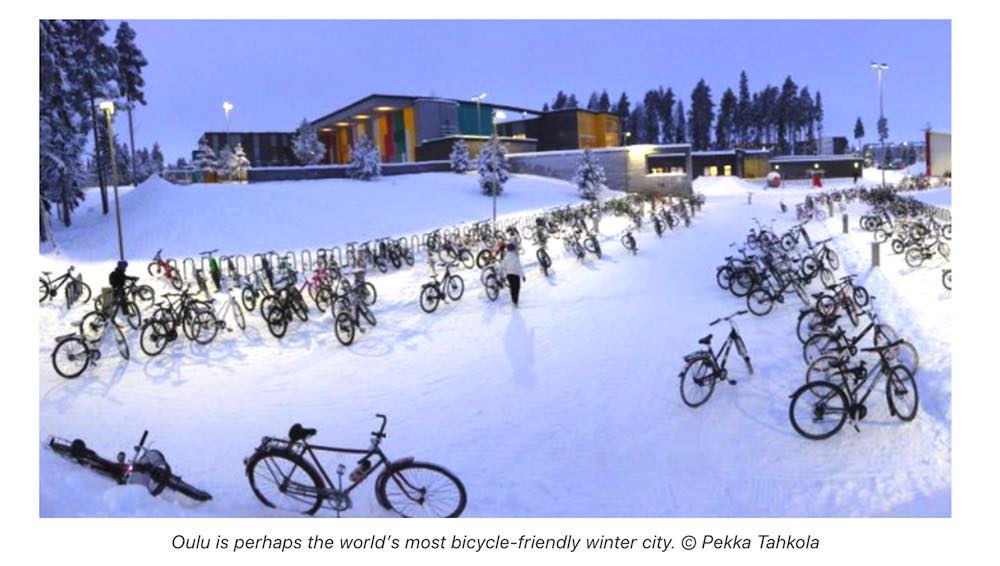
My host took the surprise question and answered “Why? Of course they are open” (I was due to visit a secondary school and address the upper school students later that afternoon). And then I learnt that everything else (public transport, airplanes, industries, shops, offices, schools and universities) WERE ALL OPEN and FUNCTIONING at 100%.
“What else can we do, Michael” my host said. “If we say at home for such weather it could mean that for 3 or more winter months (December to February) THE COUNTRY WOULD COME TO A STANDSTILL”
NO WAY!!
The only day we change activities completely is on Christmas Day but you should see what activities we do on that Day!!
“We of course ADAPT our ways of walking in streets, travel and driving vehicles, go to work or school, heating and lighting, times of opening etc. And in particular the way we dress (footwear, ice skates, skis, head gear, ice skating and swimming, overalls, warm and waterproof clothes, visible from far, white or colourful ) etc ALL ADAPTED to the WEATHER CONDITIONS”
And FINLAND continues to operate NORMALLY !!
1,000 out of 1,200 PUPILS in this Finnish school arrive, in winter, by bicycle. Others by ski!
MAURITIUS AND THE ISLANDS
We must as from NOW become determined and learn how to continue living, studying & working and producing, trading and so on, despite extremes in climate such as:
Class 1 or 2 cyclone,
Heavy to Torrential rain, flooding
Pandemic
Unusually Low winter temperatures (4-10 degrees C)
Unusually High summer temperatures (35-42degrees C), fires
Very high seas, in lagoons and high seas
Etc
Today we are taking all precautions needed in case of extreme weather (as the PM and Minister of Education exhort us to protect our children, elderly people and population in general, from harm), BUT NOW we must now learn to live with such weather.
Why? So as not to lose days of work and study (In schools so far 5 days lost in 2023 and we are only in early February!).
Because, and this is crucially important, with climate change which is with us, these events are likely to increase in frequency and in many cases persist.
So closing MAURITIUS each time is not an option.
We must learn to adapt and keep Mauritius running!
We can learn from Finland!

