Sheila Bunwaree
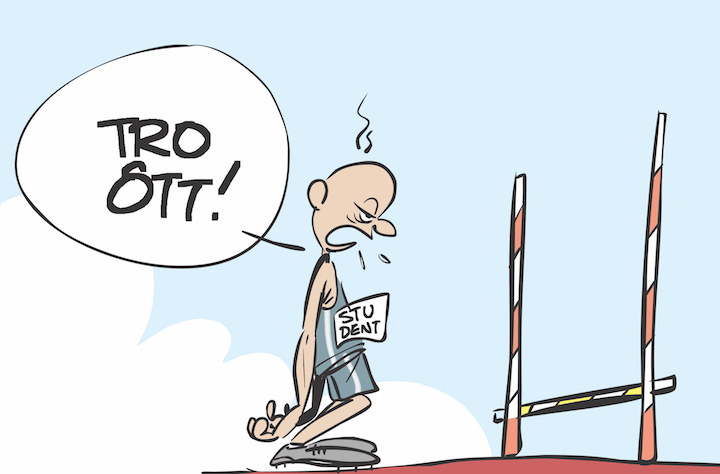
As the nation prepares to celebrate its 55th independence anniversary in the context of a Volatile, Uncertain, Complex and Ambiguous (VUCA) world, it is imperative that we ask a few questions and give a new direction to our educational arena. The latest disturbing element of the system is the drastic lowering of standards to ensure a pass mark/a credit in certain subjects. Appalling! For some, these marks reflect a lack of effort by the students. People belonging to this camp often see the children and their parents as largely responsible for such underachievement.
The children are in fact the ‘victims’ of a system decried as ‘diseased’’ in a well documented report by the NGO -Think Mauritius. In a most interesting and reflective interview, (Le Mauricien, 3 March, 2023) the artist Emilien Jubeau, commenting on the education system notes:
«…si j’avais le choix de prendre Rs 40 millions pour l’investir dans le système éducatif, je l’aurais fait. Mais à quoi ça sert d’investir dans un système aussi pourri ? »
He then goes on to argue :
«…soutenir une éducation équitable envers tous permettra à tous de relever leur niveau de vie par eux-mêmes. Le pays serait alors moins pauvre… »
Emilien Jubeau is absolutely right. Mauritian education is accessible but remains inequitable. Hegemonic knowledge production and distribution can hardly ever lead to equitable outcomes. The numbers of young people who are ‘victims’ of ill thought-out policies and measures, irrelevant curricula, poorly resourced schools, lack of effective and motivated teachers, an elite imposed cultural and linguistic capital, a private tuition industry, an excessively exam and results oriented system, is aberrant. They form part of a significant pool of the country’s human capital, going to waste. Does anyone know and/or care about what happens to the children of the Republic who are excluded by the system?
In his Lettre pastorale (2023), Cardinal Piat aptly reminds us that: « …Une proportion importante de jeunes Mauriciens rejetés, sans aucun diplôme, par un système scolaire incapable de s’adapter à leurs besoins, est une injustice qui de plus, ralentit beaucoup le rythme de notre développement socioéconomique… »
Has post colonial Mauritius provided genuine opportunities for all, permitting diverse talents and multiple intelligences of our children to flourish? Is it a Republic which makes its children and youth truly independent? Allowing our children to be pushed out of the education circuit, funneling them out, ending up with a pyramidal system with very few making it to the top does not ensure the enhancement of capabilities and the independence of the masses. The different mechanisms of exclusion, along the educational continuum – the PSAC, the NCE, The Extended Stream, the 5-credit bar to access HSC are all contributing to the wastage of our human capital – the only resource we possess, let alone the cumulation of frustration and alienation amongst the youth. The quick and short response of those in authority is that quality and excellence have to be ensured. I leave it to those with an open mind to ask themselves how we can possibly speak of quality and excellence when our schools have become sifting and sieving machines. SDG 4 is about ensuring « inclusive and equitable quality education and promote lifelong learning opportunities for all…» but given the way that those holding the reins of power navigate the educational arena, it would be very difficult to meet this SGD and intersecting ones.
Preceding Cardinal Piat’s Lettre Pastorale, we heard from an experienced teacher, who under anonymous cover, explained how: « La réforme n’a rien changé en profondeur… ». This was during an interview, featuring in WeekEnd of 26 February 2023, in which the shortcomings of the system were examined.
The world has become a scary place but at the same time full of opportunities. Scary because of the climate crisis which is wrecking lives and livelihoods in the same way that the pandemic did, persistent wars and conflicts, the food crisis, technologies invading our lives without us being necessarily prepared for them, the Anthropocene and the ongoing destruction of the environment, the security crisis, the inflation crisis. Linked to all of this, we have a moral crisis, often reflected in the behaviours of certain people in society, including those managing the affairs of the country, thus leading to institutional malfunctionings. Paradoxically, we see great strides being made across nations, testifying to the creativity and innovations of human beings but also to new power rivalries with implications for small states such as ours. Can small Mauritius carve a niche for itself and participate in the new world order in a meaningful and dignified manner? Can it grow the national economic pie while ensuring that there is effective redistribution, thus preventing poverty and inequality from expanding? 55 years down the road, is it not time for Mauritius to overhaul its archaic education system, so as to give a true chance to the children of the Republic to use their creativity, innovate and plan their futures more effectively. Recent images of children from Agalega demonstrating with banners, crying for teachers are still fresh in our memory! Hundreds of children are not attending school in certain regions. (Joana Ramasamy, Le Mauricien, 6 March, 2023). The right to education is a fundamental human right, isn’it? What has happened to the Compulsory Education Act?
As long as we have an education system which throws out so many students in the most uncaring manner, encourages compartmentalization of knowledge, with little possibility of transcending disciplinary boundaries, as well as allowing students to be informed by the history of the place, there is little hope for a better future. The philosopher Edgar Morin writes « …The inability to organise scattered compartmentalized learning leads to atrophy of the natural mental disposition to contextualise and globalise…». We must act fast and do everything we can to prevent such atrophy.
It is indeed a tall order to reform an education system, to make it responsive to the various emerging challenges and aspirations of a nation. The incapacity of certain decision and policy makers to think multidimensionally and to interrogate the education system in relation to the human condition is cause for deep concerns and worry. The manner in which education is organised and delivered, leaving so many behind, is also an indicator of something simmering. I reiterate: « We are sitting on a time bomb. » Indifference cannot become the norm. We must act fast!
The student protests of May 1975 brought fundamental changes to the system but we are now in 2023, in a different context altogether. The protests symbolised the struggle for greater equality of opportunity. The protest revolved around a multiplicity of themes: the glaring inequalities between private colleges and the state schools, the cry to shift from Eurocentric dominant knowledge to a more mauritianised one, inappropriate and outdated pedagogical methods, lack of cultural and sports activities, exorbitant fees etc.
Free education was introduced in 1976 by SSR, the then Prime Minister, resulting in several positive impacts, particularly as regards girls’ education and advancement. Many of his adversaries saw that as a political bait, some form of electoral bribery. Commenting on the students protests of May 1975, Servansingh (2015) in the Mauritius Times of 22 May, notes:
« …Although the cynicism of such opportunism was decried by all his adversaries, there is no doubt that this measure has been one of the most progressive taken by any government since independence. For all its faults, free education has further consolidated the Welfare State in the island…»
Free education in the late 70s meant greater democratization of education, thus making Charles Tilly’s notion of ‘hoarding of opportunities”, irrelevant in the aftermath of colonialism. But have we learnt to build on such democratization to ensure the inclusion and betterment of all, thus promoting the common good, is a question worth asking?
Can we sit together as a nation and rethink our education system in the best interests of our children and perhaps also contribute to stopping the brain drain? It is perhaps incumbent upon civil society to call for « les assises de l’Education » since those holding the reins of power are convinced that they are doing an excellent job. Edgar Morin reminds us that « If knowledge is to be pertinent, it should contextualize the subject… ».