

 Prof. Ashleigh K. Chanakya
Mauritius is a small island, but it possesses a remarkable talent. We can transform almost anything into a national obsession. A football match becomes a constitutional matter. A pothole becomes a geopolitical crisis. A minister’s sneeze becomes breaking news. And when a safe enters the conversation, the entire nation suddenly acquires the investigative instincts of Sherlock Holmes.
For years, our political life has resembled a long-running television drama. There are heroes, villains, unexpected plot twists, dramatic exits, emotional comebacks and enough rumours to keep every barber shop, taxi stand and family WhatsApp group occupied until the next election.
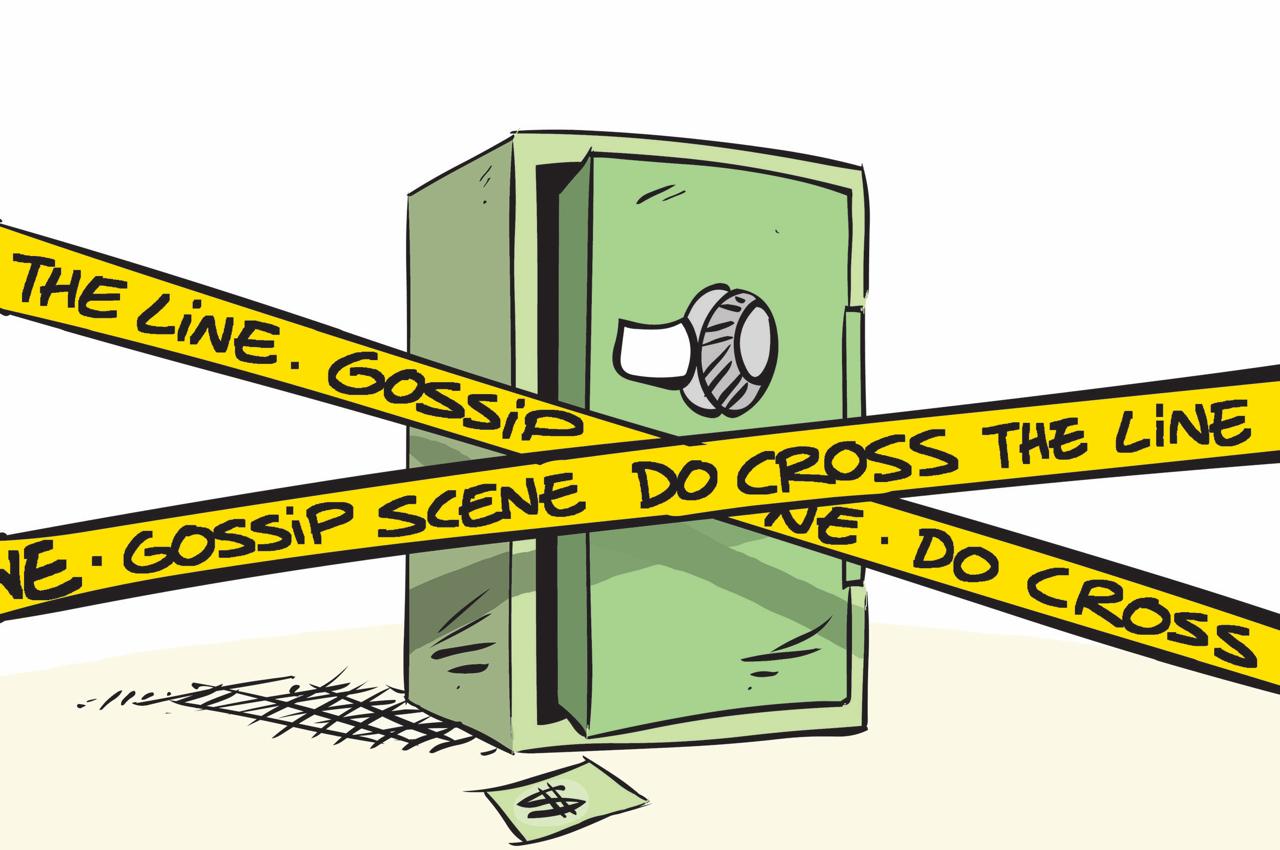
In the latest season of our national soap opera, the star attraction was not a politician, a judge, a prosecutor or even a party activist. No. The leading character was a safe.
Not a particularly charismatic safe.
Not a safe capable of giving speeches.
Not a safe likely to stand for election.
Just a large metal box.
Yet this humble object managed to receive more public attention than many parliamentary debates.
For months, perhaps years, the average Mauritian citizen became an amateur expert in subjects previously considered rather specialised. People who could not explain compound interest suddenly became authorities on criminal procedure. Citizens who had never entered a courtroom developed strong views on evidential rules. Everyone became a legal scholar overnight.
One could walk into any snack and hear passionate discussions.
«What happened to the safe?»
«What happened to the contents?»
«What happened to the case?»
«What happened to the appeal?»
Nobody knew the answers with certainty, but that never prevented anyone from expressing them confidently.
Indeed, confidence is one of Mauritius’ most abundant natural resources.
The legal proceedings generated endless fascination. Court appearances became major events. Journalists gathered. Cameras appeared. Commentators analysed every facial expression. Political supporters interpreted each development as proof of ultimate victory. Political opponents interpreted the very same development as proof of ultimate defeat.
It was a masterclass in national contradiction.
The same court ruling could apparently represent both triumph and disaster depending on which side of the political divide happened to be explaining it.
Meanwhile, ordinary citizens attempted to decipher the legal vocabulary.
What exactly is a ruling?
What exactly is an appeal?
What exactly is a stay?
What exactly does «case dismissed» mean?
Most importantly, why do lawyers always manage to speak for thirty minutes without answering a question that was asked in ten words?
These mysteries may never be solved.
The situation became even more entertaining because Mauritius possesses a unique political culture. Every politician is either described as the saviour of the nation or the destroyer of civilisation. There appears to be no middle ground.
A politician may spend forty years in public life.
Supporters will remember every school, road and bridge.
Opponents will remember every controversy, rumour and awkward photograph.
Both groups will insist they are being entirely objective.
The courts, however, are expected to operate differently.
A courtroom is not a political rally.
A judge does not count applause.
A legal ruling is not supposed to be decided by Facebook reactions.
Justice, at least in theory, is intended to be blind.
In practice, many citizens seem disappointed by this arrangement.
People often want courts to confirm what they already believe.
When a ruling aligns with their expectations, they celebrate judicial wisdom.
When it does not, they suddenly discover constitutional concerns.
Such is the rhythm of democratic life.
Perhaps the most amusing aspect of the entire affair has been the public’s fascination with hierarchy.
Whenever a high-profile individual enters court, many people assume extraordinary procedures must be taking place.
Surely there must be secret doors.
Surely there must be private corridors.
Surely there must be a special judicial red carpet.
The reality is usually far less exciting.
A courtroom remains a courtroom.
A judge remains a judge.
A lawyer remains a lawyer.
And a witness remains a witness.
Titles may command attention outside the building, but inside the legal process everyone eventually encounters the same stubborn requirement: evidence.
Evidence is rather inconvenient because it refuses to respect political loyalties.
It does not care whether a person is rich, poor, famous, unpopular, beloved or controversial.
It simply exists or it does not.
This explains why legal proceedings often frustrate spectators seeking dramatic conclusions.
Real justice is usually slower, less glamorous and considerably less entertaining than television.
Yet perhaps there is a lesson hidden beneath all the noise.
Mauritians often complain that powerful people receive special treatment.
At the same time, when a powerful person appears before legal institutions, the event becomes front-page news for months.
The contradiction is fascinating.
We want equality before the law, but we remain irresistibly attracted to political celebrity.
Maybe that is why the public never tires of these stories.
The names change.
The governments change.
The slogans change.
The alliances change.
But the national appetite for political drama remains wonderfully constant.
One day it is a leaked document.
The next day it is a confidential report.
Then it is an investigation.
Then it is a court appearance.
Then it is a ruling.
Then it is an appeal.
Then someone announces another appeal.
At that point, even the appeals begin appealing.
Through it all, the Mauritian citizen watches patiently, occasionally shaking his head while ordering another cup of tea.
Perhaps that citizen understands something the politicians do not.
Governments come and go.
Parties rise and fall.
Leaders enjoy victories and suffer defeats.
But institutions endure.
Courts continue hearing cases.
Judges continue writing rulings.
Lawyers continue producing documents large enough to threaten the structural integrity of office shelves.
And somewhere, in the midst of all this activity, the public continues searching for clarity.
The travelling safe may eventually disappear from headlines.
New controversies will emerge.
Fresh scandals will compete for attention.
Future politicians will provide future entertainment.
Yet the greatest irony remains unchanged.
The object that generated so much excitement was never really the safe itself.
The real attraction was what the safe represented.
Power.
Politics.
Mystery.
Speculation.
And humanity’s timeless belief that somewhere, hidden behind a locked door, lies the answer to everything.
Usually, when the door finally opens, the answer turns out to be considerably less exciting than the rumours.
But by then, of course, the nation has already moved on to the next episode.
The legal proceedings generated endless fascination. Court appearances became major events. Journalists gathered. Cameras appeared. Commentators analysed every facial expression. Political supporters interpreted each development as proof of ultimate victory. Political opponents interpreted the very same development as proof of ultimate defeat.
