
While launching the 67th session of the General Assembly of the United Nations Organisation (UN) on the18th of September, its President, Vuk Jeremic, Foreign Minister of Serbia, elected from the Eastern European Group, the smallest of the UN regional groupings, set forth the theme of this year’s session as : “Adjustment or settlement of international disputes or situations by peaceful means”. Rightly so, one would say, considering the state of the world today. Life has become but a less than casual matter, to be dispensed with at will depending on the whims, caprices, and agenda of so-called rulers, terrorist organisations, or even coalitions of states, often using the larger interests of humankind as justification for their deadly incursions. Wanton killings, destruction of property and infrastructure, displacement of entire communities are the result of the evil man can do to each other, all in the name of some dogmatic objective. We have just crossed the first decade of the twenty-first century and it is a matter of great shame that in this era of advanced civilisation we find it expedient to settle our differences by resorting to armed and life-depriving interventions.
But then, since the first session of the UN was inaugurated in the immediate aftermath of the Second World War, the international community has witnessed umpteen other wars, albeit regional in dimension. From Asia, to Africa, to Latin America through Eastern Europe, man has demonstrated the capacity to epitomise cruelty in its most despicable form. The UN was set up as a result of the failure of its predecessor, the League of Nations, to ensure peaceful coexistence in the world. However, though more elaborately conceived, covering a wide spectrum of fields of intervention and action, the UN hardly possesses the might, brass and teeth to pass the test of capacity to maintain peace and security in the world. For sure, it has registered a certain degree of success in certain conflicts but unfortunately, so often it has had to face the humiliation of witnessing with helplessness and impotency the destruction of life and property, to the extent of even being bypassed, in violation of its Charter, in military actions by so-called coalitions of states. Indeed, in certain cases, the UN has shown the extent to which it is toothless and can be used and abused as a cover for military interventions.
Be that as it may, the UN is still the singular forum grouping all 193 states of the world where each of these members has a voice and a vote on all issues brought to the floor, however vexatious these might be, from poverty to environment and development, human rights to international law, disarmament to peace and security, among others. The UN provides for the existence of blocs, very often on geographical and regional basis but also on the recognised status of the states, least developed, developing and developed for example. The Small Island States are also recognised as a group, though much work is still required for it to be able to impact on the deliberations of the UN, be it in the General Assembly, its various Committees and above all within the Security Council. It should also be highlighted that the UN also recognises a number of non-member states with observer status which gives them the right to address Assembly meetings but no voting rights. Such is also the case for a number of regional intergovernmental and civil society organisations which use the platform thus provided to lobby and campaign member states in support of their cause. This year, the Palestinian Authority has announced it would seek a ‘non-member observer state’ status after its bid for recognition as a member state last year was stalled in the Security Council when the United States vowed it would use its veto.
The question that has been the nucleus of all obstacles that have arisen in the efforts towards a reform of the UN system is precisely the veto power of the five permanent members of the fifteen-member composition of the Security Council. Various propositions have been tabled to review the system to accommodate more permanent as well as non-permanent members to reflect the increased membership of the UN since its inception. In this perspective, it would be opportune for the Small Island States, in view of their specificities, to seek a seat in the Council on a rotational basis. The issue of extending the veto power to the prospective new permanent members of the Security Council or its abolition altogether is a major stumbling block. There is also a strong feeling that the General Assembly should be given more power and be further democratised instead of sometimes being a mere rubber stamp, as in the case of the election of the Secretary General of the UN. So far this is the preserve of the Security Council where often the right of veto is exercised to prevent the emergence of a candidate who may not curry favour with one or more of the big five. Thus, only one candidate is sent down to the General Assembly for endorsement ! So much for freedom of choice !
The yearly ritual of speeches from the prestigious rostrum of the Assembly in New York which started on 25 September will run through to 1 October with an impressive alignment of Monarchs, Presidents, Prime Minsters and Foreign Ministers holding the floor, discoursing on their countries’ positions on a variety of issues, including on this year’s theme. The General debate will itself last until December.
Meanwhile, the scourges afflicting the world go on unabated ! Can our leaders hear the wail of the oppressed of the world and of the victims of atrocities and rise to the occasion within the UN and do what it takes to alleviate their sufferings ?
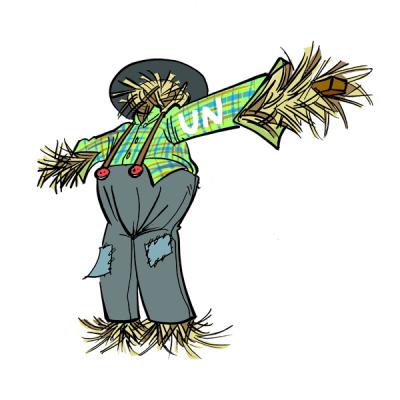
Yes, it is time to reinvent the UN !
Is it time to reinvent the United Nations ?
- Publicité -
EN CONTINU ↻
- Publicité -