
What the Fourth, Fifth and Sixth Samullas of Satyarth Prakash Can Teach Young Mauritians
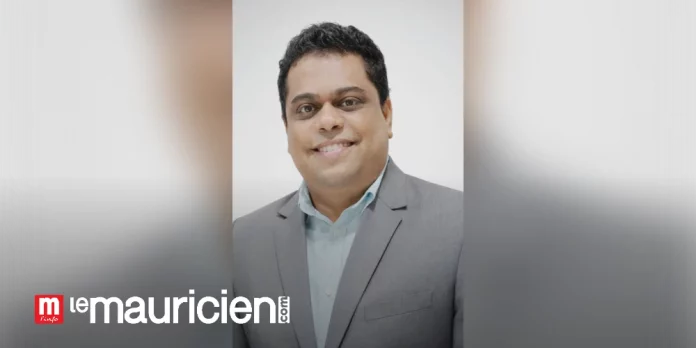
Ashveen Kutowaroo FCG PMP® LLM MSc Editor Aryodaye, Arya Sabha Mauritius – Founder and Policy Advocate JP Narayan Centre for Sustainable Development and World Peace
Throughout the month of June, Arya Samaj mandirs across Mauritius, together with television and radio programmes, echoed with discussions of Satyarth Prakash, the monumental work of Maharshi Swami Dayanand Saraswati. The annual observance of Satyarth Prakash Samoolas has become a cherished tradition, bringing together scholars, devotees, students and curious listeners to reflect upon a text that has shaped generations of thinkers.
Yet amidst the lectures and discourses, a question deserves greater attention: what is the practical takeaway for a young Mauritian living in 2026?
The answer begins with understanding the meaning of the very word “Samullas”.
Swami Dayanand did not divide his masterpiece into chapters. Instead, he used the Sanskrit word Samullas. While a chapter merely divides a book into sections, a Samullas represents something far deeper. It signifies enlightenment, joyful awakening and the illumination that arises from the discovery of truth. Each Samullas is intended to shed light on a particular aspect of human life.
This distinction is important.
The purpose of Satyarth Prakash was never simply to provide information. It was to transform the individual through knowledge.
For Mauritius today, especially in an era dominated by Artificial Intelligence, rapid technological change and social transformation, the Fourth, Fifth and Sixth Samullas offer remarkable insights into how individuals and nations can flourish.
These three Samullas deal respectively with family life, self-development through the stages of life, and the principles of governance. Together they present a powerful roadmap for building not only successful individuals but also a stronger Mauritius.
The Fourth Samullas: Why Family Still Matters
We live in an age where knowledge is available at the touch of a screen.
A teenager in Flacq or Port Louis can access more information in a single day than previous generations could access in an entire year. Artificial Intelligence can explain mathematics, draft essays and answer questions within seconds.
Yet despite all this technological progress, societies across the world are facing growing challenges related to loneliness, anxiety, social fragmentation and declining trust.
Why?
Because information alone cannot replace values.
The Fourth Samullas focuses on family life and the responsibilities associated with it. Swami Dayanand viewed the family as the first and most important institution in society. Before children encounter teachers, employers or governments, they encounter parents and family members.
It is within the family that character is first formed.
Honesty, respect, discipline, responsibility and compassion cannot be downloaded from an application. They must be learned through human interaction and personal example.
For young Mauritians, this teaching is particularly relevant.
Today, success is often measured through examination results, professional qualifications, income or social media influence. While these achievements have their place, the Fourth Samullas reminds us that true success begins with character.
A nation is ultimately a collection of families.
If families are strong, communities become resilient. If communities are resilient, institutions become stronger. If institutions are stronger, the nation prospers.
Mauritius has often been praised for its social harmony despite its diversity of cultures, languages and religions. This harmony did not emerge by accident. It was built through generations of families transmitting values of respect, tolerance and responsibility.
The Fourth Samullas therefore offers an important reminder: as we embrace technological innovation, we must never neglect the human foundations upon which society rests.
The Fifth Samullas: Self-Mastery in
a Distracted World
The Fifth Samullas discusses the later stages of life, including Vanaprastha and Sanyas. At first glance, modern readers may regard these concepts as distant from contemporary reality.
After all, how relevant can ancient ideas of renunciation be in the digital age?
The answer is surprisingly relevant.
Swami Dayanand’s message is not about escaping society. It is about mastering oneself.
This may be one of the greatest challenges facing young people today.
Never before have human beings faced so many distractions. Notifications compete for attention every minute. Social media platforms are designed to capture focus. Consumer culture constantly encourages people to desire more possessions, more status and more validation.
In such an environment, self-discipline becomes a superpower.
The essence of the Fifth Samullas is learning to govern one’s own mind.
A person who cannot control impulses becomes vulnerable to every passing temptation. Conversely, a person who develops self-control acquires the ability to pursue meaningful goals.
This lesson has enormous implications in the age of Artificial Intelligence.
As AI automates routine tasks, the labour market will increasingly reward qualities that machines cannot easily replicate. Creativity, judgment, ethics, empathy and critical thinking will become more valuable than ever.
These qualities emerge from disciplined minds.
A student who develops concentration will learn faster. An entrepreneur who develops resilience will overcome setbacks. A professional who develops integrity will earn trust.
A leader who develops self-awareness will make better decisions.
The Fifth Samullas teaches that true freedom does not come from doing whatever we want. It comes from having sufficient mastery over ourselves to choose what is right.
This wisdom may prove more valuable in the twenty-first century than it was in the nineteenth.
The Sixth Samullas: Governance Begins
with Character
The Sixth Samullas focuses on Raj Dharma, the duties and responsibilities of governance.
In a democratic nation such as Mauritius, discussions about governance often revolve around politicians, ministers and public institutions. Yet Swami Dayanand’s understanding of Raj Dharma extends beyond government.
It concerns leadership itself.
The central idea is simple but profound: power should always be exercised for the welfare of society.
Leaders must be guided by justice rather than personal interest. They must be accountable to those they serve. They must place truth above convenience.
These principles remain highly relevant in every modern democracy.
Around the world, citizens increasingly demand transparency, accountability and ethical leadership. Public trust is often tested by economic pressures, political divisions and social challenges.
Mauritius is not immune to these realities.
The Sixth Samullas reminds us that good governance cannot be separated from good character.
No constitution, law or institution can compensate indefinitely for a lack of integrity.
Equally, strong ethical values can strengthen institutions even during difficult times.
For young Mauritians, the lesson is clear.
Raj Dharma is not reserved for elected officials. A teacher practises Raj Dharma when acting fairly towards students. A manager practises Raj Dharma when treating employees with respect. A civil servant practises Raj Dharma when serving the public honestly. A citizen practises Raj Dharma when contributing positively to society.
Leadership begins long before a person holds office.
It begins with the choices made every day.
The Hidden Formula for National Prosperity
What is particularly remarkable about the Fourth, Fifth and Sixth Samullas is how naturally they connect with one another.
The Fourth Samullas develops strong families. Strong families nurture responsible individuals. The Fifth Samullas develops self-disciplined individuals. Self-disciplined individuals become ethical leaders. The Sixth Samullas develops ethical leadership. Ethical leadership creates strong institutions.
Strong institutions generate prosperity and stability.
In modern language, this could be described as a model of sustainable development centred on human values.
Many nations invest heavily in physical infrastructure. Roads, ports, airports and digital networks are undoubtedly important. Mauritius has rightly devoted considerable effort to modernisation and economic diversification.
However, no amount of infrastructure can replace integrity.
No technological innovation can substitute for responsibility.
No artificial intelligence can manufacture wisdom.
The most successful societies are those that combine material progress with moral development.
This is precisely the vision that emerges from these three Samullas.
A Message for the AI Generation
The generation growing up today will inherit a world transformed by Artificial Intelligence.
Many existing jobs will change dramatically. New professions will emerge. Economic competition will become increasingly global.
This reality understandably creates excitement as well as uncertainty.
Yet perhaps the greatest lesson from the Fourth, Fifth and Sixth Samullas is that while technology changes, human nature remains remarkably constant.
People will still need trust.
Families will still need values.
Communities will still need cooperation.
Institutions will still need integrity.
Nations will still need ethical leadership.
Artificial Intelligence can help solve technical problems, but it cannot determine what is morally right. It can generate information, but it cannot replace wisdom. It can process data, but it cannot substitute for conscience.
The future therefore belongs not only to those who master technology but also to those who master themselves.
The Real Meaning of Samoolas
As Mauritius observes Satyarth Prakash Samoolas, perhaps the greatest tribute we can pay to Swami Dayanand is not merely to read or discuss the text.
It is to apply its teachings.
The Fourth Samullas reminds us to strengthen our families and values.
The Fifth Samullas reminds us to cultivate self-discipline and inner strength.
The Sixth Samullas reminds us to lead with integrity and serve society with honesty.
Together, these teachings form a timeless blueprint for personal growth and national development.
In an era where the world is captivated by artificial intelligence, these Samullas remind us of something equally important: the development of human intelligence, moral intelligence and spiritual intelligence.
That is the true enlightenment that Swami Dayanand sought to inspire.
And that may be the most valuable lesson that Mauritius can carry forward from this year’s observance of Satyarth Prakash Samoolas.
