
Ashveen Kutowaroo FCG PMP® LLM MSc
Chief Editor Aryodaye (the Mouthpiece of Arya Sabha Mauritius)
Founder and Policy Advocate JP Narayan Centre for Sustainable Development and World Peace
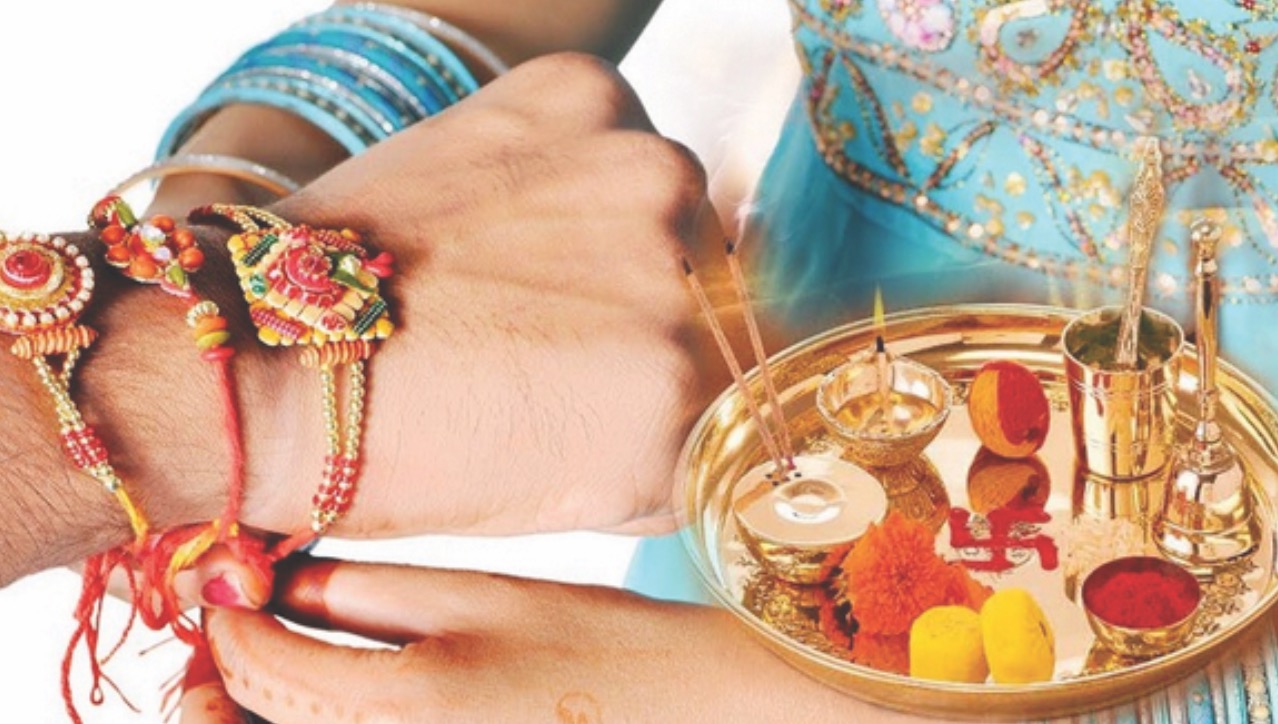
Mauritius is a country that knows how to turn a calendar date into a shared experience. Festivals arrive with prayers, family gatherings, music, food, memories and, often, a generous dose of nostalgia. Yet some festivals contain an idea much larger than the rituals that surround them. Raksha Bandhan, celebrated this year on 28 August, is one such occasion.
For many Mauritians, Raksha Bandhan is familiar as the day when a sister ties a rakhi around her brother’s wrist. There may be sweets, a tilak, a gift and the affectionate promise that brothers will always stand by their sisters. It is a beautiful expression of family affection. But that is only one doorway into the festival.
Within the Vedic outlook of the Arya Samaj, Raksha Bandhan can be understood more broadly: as a reminder that human beings are bound to one another by responsibility, care and protection. The thread is not important because of its material value. What matters is the promise it represents.
That distinction becomes especially meaningful in Mauritius, where Shravan Mas, the sacred month of Shravan, is observed through religious reflection, Vedic study, yajna, community activities and acts of devotion. The month begins as a period of spiritual renewal and reaches its full-moon conclusion with Shravani Purnima, the day on which Raksha Bandhan is observed. This year, on 28 August, the thread becomes a fitting symbol with which to close a month devoted to reflection and recommitment.
The popular stories associated with Raksha Bandhan are numerous. Some are linked to kings and queens, others to friendship, loyalty and moments when one person sought protection from another. These stories have travelled across generations and have helped make the festival emotionally powerful. But a festival does not have to be confined by the story most commonly told about it.
The word itself offers the clue. Raksha means protection, while bandhan means a bond or binding. Protection, therefore, is not automatically a sibling issue. It is a human issue.
A rakhi can be tied by a sister to a brother, certainly. But the underlying principle can extend to two people who recognise a responsibility towards one another. A man can tie a rakhi to another man. A colleague can make a pledge to a colleague. A mentor and a student can renew their commitment to knowledge and integrity. In a corporate environment, two professionals might treat the occasion as a reminder that trust, ethical conduct and mutual support are forms of protection too.
Imagine a workplace where Raksha Bandhan is not reduced to sweets on a desk and a photograph for social media. Imagine colleagues tying a simple thread and saying, in effect: I will not allow your dignity to be compromised; I will support you when you are vulnerable; I will act fairly when your interests depend on my integrity. Suddenly, an ancient festival speaks a very modern language.
This is where the Arya Samaj perspective is particularly relevant.
The Arya Samaj, rooted in the teachings of Maharshi Dayanand Saraswati and the authority of the Vedas, places considerable emphasis on reason, ethical living, education, social responsibility and the pursuit of truth. Its approach allows religious observances to be understood not merely as inherited customs but as opportunities for moral reflection.
Seen through that lens, the rakhi is almost like a personal contract. It creates an obligation. It asks the person who receives it: what will you do with the trust placed in you?
The answer cannot simply be, “I will protect my sister.” It can be much bigger: I will protect those who depend on me. I will protect truth from convenience. I will protect knowledge from ignorance. I will protect the vulnerable from exploitation. I will protect my workplace from dishonesty. I will protect my community from division. I will protect the environment from careless destruction.
This broader understanding becomes even more fascinating when Raksha Bandhan is considered alongside the Vedic idea of rina, or duty arising from debts.
Vedic thought speaks of human beings as inheriting fundamental responsibilities, traditionally expressed through three forms of rina: Deva Rina, Rishi Rina and Pitri Rina. These are commonly understood as responsibilities towards the forces and resources that sustain life, towards sages and the inheritance of knowledge, and towards parents and ancestors.
The idea is profound because it changes the question from “What am I entitled to receive?” to “What am I responsible for giving back?”
Shravan Purnima has traditionally been associated with Upakarma, a renewal connected with Vedic learning and, in traditions that observe it, the changing of the yajnopavita, or sacred thread. The thread serves as a visible reminder of duty. In Vedic interpretation, its strands can be contemplated as reminders of the different responsibilities carried by a human being.
The symbolism is powerful. One thread can remind us that life is not lived in isolation. We inherit knowledge. We inherit values. We inherit relationships. We inherit a natural world that we did not create. And with every inheritance comes responsibility.
The raksha sutra extends that philosophy into the sphere of human relationships. If the sacred thread reminds an individual of obligations towards knowledge, family and the wider order of life, the rakhi can be seen as a social expression of responsibility towards another human being.
In that sense, Raksha Bandhan is not simply about being protected. It is equally about becoming trustworthy enough to protect.
That is a message Mauritius can understand remarkably well.
We live in a society where people routinely cross religious, cultural and linguistic boundaries. The person sitting beside us at work may pray differently. The neighbour across the road may celebrate different festivals. The person who helps our child at school, treats us at a clinic, serves us in a shop or works with us on a project may have an entirely different religious vocabulary.
Yet everyone understands kindness. Everyone understands loyalty. Everyone understands what it means to have someone stand beside you when circumstances become difficult.
That is why Raksha Bandhan need not be placed behind a religious wall. Its language is sufficiently human to travel.
For young Mauritians especially, this could be an opportunity to rediscover the festival without treating tradition as something frozen in the past. A rakhi could become a conversation about bullying, workplace harassment, elder care, disability inclusion, online abuse, professional ethics or the protection of children. A thread costing a few rupees can provoke a question worth much more: whom am I responsible for?
There is also a lesson here for leadership. In business and civil society, protection should never mean creating dependence or exercising power over another. Genuine protection means creating conditions in which another person can flourish with dignity. A manager protects a team by refusing favouritism and intimidation. A director protects an organisation by insisting on governance. A professional protects a client by safeguarding trust. A citizen protects society by refusing to remain silent when injustice becomes normal. These are modern forms of raksha, and they require courage rather than ceremony.
This interpretation also gives Raksha Bandhan a distinctly Mauritian character. Our island has always depended on interdependence. We celebrate together, work together and, in moments of crisis, discover that our differences become much less important than our shared humanity itself. The rakhi can therefore be read as a symbol of that national instinct: I may not share your background, but I recognise your worth, and I accept a responsibility towards you.
Shravan Mas, therefore, should not end merely because the calendar turns. Its conclusion can become a beginning.
The sacred month invites introspection. Raksha Bandhan then asks us to take that introspection into our relationships. What have we learnt? What must we repair? Whom have we neglected? Whose trust have we received? Where must we become more responsible?
Perhaps this is the most beautiful way to understand the festival in contemporary Mauritius.
A brother may promise protection to his sister. A sister may promise steadfast support to her brother. Two friends may reaffirm loyalty. Two colleagues may commit themselves to fairness. A teacher may renew a pledge to educate with integrity, while a student promises to honour knowledge through discipline. A community may decide to protect its vulnerable members.
The thread remains the same. The relationship changes. The principle does not.
And perhaps that is the real strength of Raksha Bandhan. It does not ask us merely to celebrate who belongs to our family. It asks us to think about whom we are willing to stand beside.
As Shravan Mas reaches its full-moon conclusion on 28 August, Mauritius can therefore look beyond the colourful thread itself. The rakhi is small, but its message is not. It reminds us that protection is a reciprocal duty, that trust creates responsibility, and that every bond becomes meaningful when it produces action.
In a world increasingly anxious about loneliness, division and mistrust, that is hardly an old-fashioned idea.
It may be one of the most modern ones we have.