

SURESH RAMPHUL
Piracy is “an act of robbery or criminal violence by ship or boat-borne attackers upon another ship”. The International Maritime Bureau reports: “Sixty-five incidents of piracy and armed robbery against ships were recorded in the first half of 2023, an increase from 58 incidents for the same period in 2022.” Of the 65 incidents, 57 vessels were boarded, 4 had attempted attacks, 2 were hijacked and two were fired upon. Perpetrators successfully boarded 90% of targeted vessels. The report mentions that violence towards crew continues with 36 taken hostage, 14 kidnapped, 3 threatened, 2 injured and 1 assaulted.
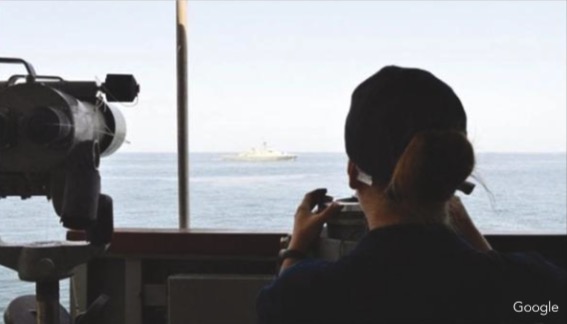
In 2021, 132 ships were attacked and in 2022 the number was 115. Vessels attacked (bulkers, tankers, containerships, smaller ships, commercial fishing boats) were either anchored or underway. The IMB notes an “increase in piracy in the Gulf of Guinea, the Callao anchorage in Peru, and the Singapore Strait and Southern Asia, the three primary hot spots of piracy”.
To succeed in their mission, pirates (others might call them terrorists) are going high-tech today. Attacking a ship on the high seas is no child’s play. It demands preparations and planning, apart from guts. They painstakingly study the details of the targeted ship and gather important information about it, for example, the best time to carry out an attack. The aim is to steal. It may be cash or anything useful from the stores. They may kidnap for ransom. They demand extortion money. They may even take control of a vessel. All this may appear improbable. They may seem like stunts in an action film. The reality is that piracy and armed robbery are not something new.
Ships are often damaged by explosions either through remote control or alongside the ship. Money remains a major factor in acts of piracy. According to BBC News Channel (30 June 2005), a ship was carrying United Nations’ food aid to Somali victims of the Indian Ocean tsunami and it was hijacked. It struck on 26 December 2005, leaving 20,000 people homeless. The hijackers demanded $500,000. This shows how merciless they can be. The tsunami in the north-eastern coast of Somali had killed 200 people, smashed 2,400 fishing boats and displaced about 30,000 people.
Piracy and armed robbery put human life in danger and cause immense distress to hostages. Non-cooperation can lead to a hostage being put to death. Piracy impedes shipment delivery and this incurs a considerable financial loss. According to Oceans Beyond Piracy, increased shipping expenses cost an estimated $6.6 – $6.9 billion a year in global trade.
Deterrents
Training of the crew is important in the fight against piracy. Actually, the crew is duly briefed and drills are conducted well before arriving in areas of risk. Authorities believe that “Many attempted piracy and armed robbery attacks are unsuccessful, countered by ships’ crew who have planned and trained in advance.” The IMB’s Piracy Reporting Centre is a contact point to send reports about piracy and related crimes. It supports ships under threat, providing quick reactions, coordination with response agencies, and sends out warning broadcasts and email alerts to ships. The aim is to “bolster security”. The IMB Director believes that what is called for is continued, robust regional and international naval presence as a deterrent. He regrets that “late reporting hampers the efforts of the authorities”.
Other protective measures are anti-boarding gadgets like razor wire or electric fences. But why are attacks still going on? Why are they increasing? Where are the flaws? Could it be at the level of communication or faulty security measures? Is optimum use of satellite images and drones being made to combat piracy?
Other potentially hazardous and illicit activities in the sea are drug trafficking, arms trafficking, military activities, terrorism, human trafficking, counterfeit articles (shoes, shirts, jeans, cigarettes, perfumes, alcohol and so on), and illegal fishing. For the traffickers, they are all lucrative business. It is said that the world’s top illicit business is drugs. Cocaine reaches distant shores through the sea. UN Office on Drugs and Crime estimates that 18 million people use cocaine globally. Criminal organizations deal in illegal trade of contraband small arms, explosives and ammunition as a means to make money and particularly to fund large-scale crimes.
Referring to illegal fishing, the Financial Transparency Coalition released a report in 2022. It said, “states are losing up to $50 billion per year to illegal trade, with almost half of all vessels involved in illegal, unreported and unregulated fishing plundering African waters”. Illegal fishing harms the environment and affects the livelihood of thousands of fishermen.
Both the pirates and the traffickers are aware that they operate in total violation of existing regulations. Yet they take the risks and are ready to kill in order to protect their business. The sea has already become a place of criminality. The real challenge is to find more effective means to address the problem.
ACCROCHE
In 2021, 132 ships were attacked and in 2022 the number was 115. Vessels attacked (bulkers, tankers, containerships, smaller ships, commercial fishing boats) were either anchored
or underway.
