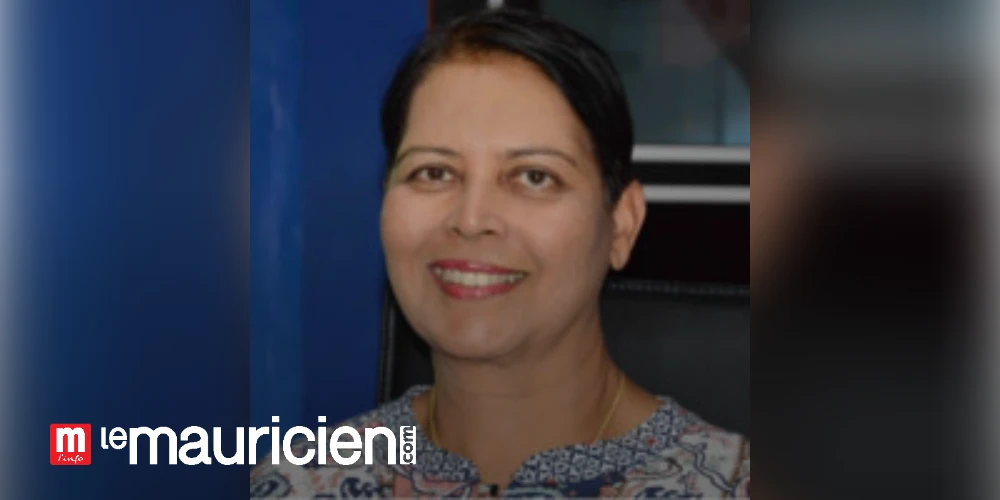
Sheila Bunwaree
Mauritius is often cited as an example of harmonious inter-ethnic relations, a model of multiculturalism and peaceful coexistence. The latter is captured by the slogan ‘Unity in Diversity’. This narrative tends to hide the many structural inequalities and latent discriminations which are slowly destroying the Mauritian social fabric, thus posing a serious threat to our social cohesion. It is perhaps this very threat, amongst other reasons, which led to the setting up of the Truth and Justice Commission in 2009.
The Commission had, as its main objectives, the investigation of the historical and socioeconomic consequences of slavery and indentured labour. The Commission made several recommendations, with the view of healing the wounds of history and reconciling the nation but most of them have been left unattended. The Truth and Justice Commission notes:
“There appears to be social cohesion in Mauritius, but this is at the surface level only. At a deeper level, Mauritius is an openly racist and bigoted country. It was found that there is a discourse of ‘comfort zone’ and fair discrimination in promoting communalism and ultimately racism under the guise of protecting institutional cohesion…”
Can we therefore really pride ourselves as a model of multiculturalism and peaceful coexistence? More so, when discriminations of diverse kinds persist, with those in power often turning a blind eye and/or even finding all sorts of subterfuge, to camouflage certain ‘uncomfortable’ realities. Responses such as what we saw recently in parliament, regarding the discriminatory recruitments by the LGSC only go to show how hypocritical and immature our democracy can be. Instead of allowing citizens’ grievances to be channeled through the political system, recourse to the law to shut people out on grounds of privacy have been adopted. Ensuring a harmonious multiethnic society remains a very delicate balancing act but without the TRUTH, the balancing act becomes even more difficult.
Excessive legalism and/or failing to understand that certain issues and circumstances call for a broader approach, can sadly help to reproduce the status quo. The latter then means that diversity accommodation based on principles of inclusion, fairness and equity, cannot make the necessary inroads for greater social justice and peace. An appreciation of the spirit of the law rather than the letter of the law is also required at times.
Favouritism & Discrimination – ‘Breach of the Data Protection Law”?
The discriminatory nature of the appointments for the post of refuse collectors and General Workers by the LGSC, raised by Annabelle Savabaddy, backbencher of the majority, as well as the leader of the opposition resonates with some of us, who continue to strive to make Mauritius a more just and inclusive society.
Unjust, differential and unequal treatment based on characteristics such as ethnic/racial, class, gender, age or sexual orientation constitutes discrimination. When such variables intersect, oppressions and exclusions are compounded as originally explained by Kimberlé Crenshaw, Professor of Law/Theorist of Intersectionality. Institutional racism impacting on the fundamental rights of communities carrying overlapping identities, constitutes a tinder box that can easily flare up. The riots of February 1999 are a stark reminder of how fragile peace can be. No one wants to see such violence erupting again.
The argument that the list of names of LGSC recruits coming from a particular constituency, submitted by the leader of opposition in parliament last week, may constitute a ‘breach of the data protection law’, is within the current context shameful. It may even be perceived as « intellectually dishonest ». The Speaker’s ruling that followed, in accordance with the standing orders, reinforces the initial argument around the breach of the data protection law. This, however, exacerbates the difficulties that the nation faces to get rid of the culture of opacity that is entrenched in the system. Isn’t it high time to revisit the standing orders in the name of transparency and national interest? Such a ruling constitutes disservice to those fighting for information flows, transparency, accountability, equitable opportunities and inclusivity for all. Will we ever obtain the long-promised Freedom of Information Act? The latter could have spared us some unnecessary debate about so called ‘privacy’. We could have had a better grip on what is happening in the institutions of our country and who is favouring who, why and how? Some have no hesitation in circumventing the law to achieve their ends, to claim that there is nothing ‘’illegal’’ in what is being done. It is rather unfortunate that the ‘Right to Recall’’ one’s MP, also promised during the 2024 electoral campaign, has not been introduced yet. It may never be introduced for that matter.
A lot of hope was pinned on ‘L’Alliance du Changement’’ but clearly the latter is rapidly losing its credibility. Almost 2 years have gone by since the current regime is in power but delivery in the interest of each and all remains dismal. Growing pains can be felt in every nook and corner. When such pains are overly concentrated within a community, it means something is fundamentally wrong in our society’s functioning.
Marginalization and Exclusion
of the Creole community
The Creole community does not constitute a homogenous, monolithic bloc. The community has several strata and hierarchies within it, but the Creole community also holds a disproportionate representation of marginalised and excluded groups. The latter are often discriminated against, with many of them remaining at the bottom of the pile, as pointed out by scholars such as Boswell, Schnepel, Jolicoeur and Bunwaree, to mention but a few. The poor and the disadvantaged are often told that there exists institutions such as the Equal Opportunities Commission, the Public Appeal Bodies Tribunal where they can seek redress. No rocket science is however required to understand that Powerless,Voiceless and Assetless citizens will rarely, if ever, be able to effectively find redress. Blatant favoritism surrounding the LGSC recruitments leading to the further exclusion of some, could have been avoided if the system of governance was truly infused with ethics and values such as meritocracy, inclusivity and justice for all.
The Right to Work and Livelihoods
Whether one is Creole, Indo Mauritian, Sino Mauritian, Franco Mauritian, one is entitled to a job/decent livelihood. Late Pope Francis, on several occasions, has drawn the attention of the world on 3 big Ts- (Tierra – Terre (land), Techo – Toit (Roof), Trabajo – Travail (Work) and how these 3Ts are central to combating exclusion and marginalisation. Having a decent job is key to one’s dignity, to combating intergenerational poverty and to promoting social mobility. What happened at the LGSC echoes the « malaise creole » as evoked by Father Cerveaux in the nineties. This malaise has remained largely unaddressed until today. The TJC report’s findings is reflective of this. The report notes that participants at the commission’s hearings indicated that:
“… creoles were underrepresented in both public and private sector positions and education was not seen as the only issue for their unemployment but also their skin colour and names….”
Jonathan Chatigan’s Legitimate Action – Levelling the Playing Field
Jonathan Chatigan’s solo peaceful demonstration: « Aret Boycott Kreol » and « Moris pou tou Morisien », in front of parliament last week can be interpreted from different perspectives. Some would describe him as racist/ communal/or a stooge of some political party, but doing so would be tantamount to misinterpreting Chatigan’s action. Injustices can and must no longer be tolerated. The UN Second International Decade for people of African descent reminds us of this. Our brothers and sisters of African descent have for far too long been subjected to diverse forms of exploitation and oppression. Jonathan Chatigan’s positioning is therefore most legitimate – calling for a levelling of the playing field. Keeping quiet means becoming complicit. Mahatma Gandhi aptly reminds us: « Silence becomes cowardice when the occasion demands speaking out the whole truth and acting accordingly ». Speaking out the whole truth is absolutely necessary in these challenging times but certainly not sufficient. Citizens should mobilise and work hand in hand with all those wanting a better, safer and more inclusive Mauritius.
Avoid Anarchy and Chaos – The Urgency of Reparations
When democracy does not meet the aspirations of the people and pluralism is not managed adequately, to allow every section of the population see that their fundamental human rights are being fulfilled, frustration is bound to cumulate. Such frustration carries within it the seeds of anarchy and chaos. The transgenerational consequences of slavery calls for urgent reparations. The latter do not necessarily have to be financial. Sectors where reparations can more easily take place include education, housing, the labour market and the political system itself. For this to happen we need a true politics of recognition, redistribution and some form of affirmative action. A ‘Reparation Consciousness’’ must be entrenched amongst all stakeholders. A good place to start is the 1972 census. Relying on the latter in 2026, when we have to navigate all sorts of complexity and justified claims, defies all logic. We need a new Census, reflective of current ground reality.
It is only when citizens feel that they are treated on an equal footing, that the multicultural space we constitute can become a zone of peace and truly convivial. Martin Luther King once said: ‘’There can be no peace without justice’’. How very true! We ALL have a responsibility.