
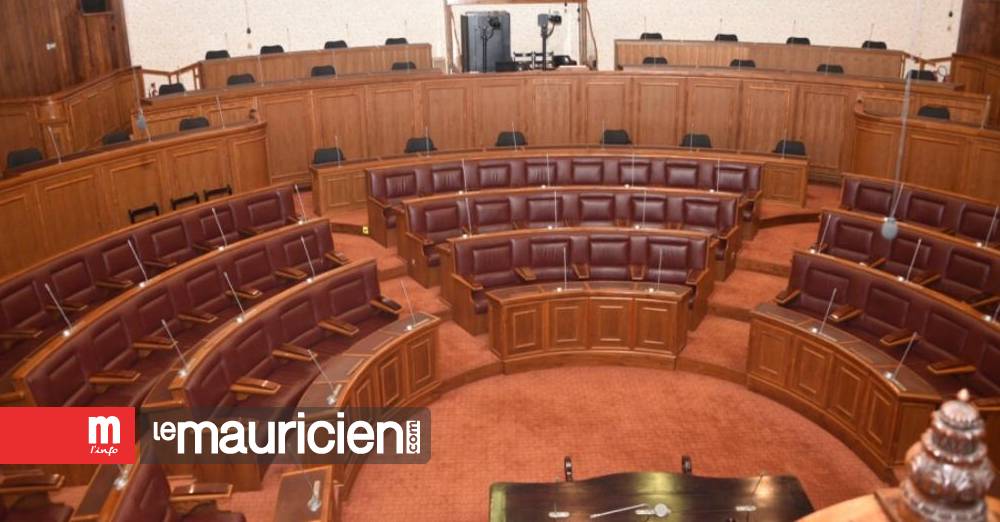
Le Premier ministre, Navin Ramgoolam, a donné hier le coup d’envoi des débats sur le Constitutional Review Commission Bill à l’Assemblée nationale, un projet de loi qui marque selon lui une étape fondatrice dans la reconstruction du cadre démocratique du pays. Loin d’être un simple texte technique, ce projet de loi institue une dynamique nouvelle : celle d’une révision constitutionnelle structurée, participative et indépendante, appelée à redéfinir à moyen terme les fondations institutionnelles de Maurice. Les débats devraient se poursuivre vendredi prochain.
Le texte de loi vise a donné force de loi à la création d’une Commission indépendante de révision constitutionnelle chargée de repenser les fondations mêmes de l’État mauricien. D’emblée, le Premier ministre a voulu donner la mesure de l’enjeu. « The bill we are presenting today is not an ordinary bill. It concerns the supreme law of the land. The very constitutional architecture upon which our democracy, our institutions and the rights of our citizens rest », déclare-t-il.
Pour le chef du gouvernement, Maurice arrive à un moment charnière de son évolution démocratique. Longtemps considérée comme un modèle institutionnel dans la région, la République aurait vu émerger, selon lui, des fragilités profondes. « We have often been cited as an example of constitutional stability, institutional continuity and respect for the rule of law. But recent years have also exposed vulnerabilities in our constitutional framework that can no longer be ignored », concède-t-il.
L’une des particularités majeures du texte est qu’il ne propose aucun amendement constitutionnel direct. Le gouvernement a choisi une approche progressive et structurée : mettre en place un organisme indépendant qui préparera les futures réformes. « We are not amending the Constitution itself today. We are establishing an independent Constitutional Review Commission », précise-t-il.
Le Premier ministre a évoqué le caractère inclusif de la démarche. « The Commission will have the responsibility of hearing all views, engaging experts, civil society, institutions, political parties, the legal profession, academics and citizens from all walks of life », laisse-t-il entendre. Il revient à la charge à l’effet que « Constitutional reform cannot and must not be the monopoly of politicians alone. It concerns the entire nation. »
Le gouvernement entend également garantir la crédibilité institutionnelle du processus en confiant la présidence de la commission à un ancien chef juge en la personne de Bernard Sik Yuen. Ce choix vise clairement à placer le chantier constitutionnel sous le sceau de l’indépendance judiciaire et de la neutralité institutionnelle.
« A Constitution cannot remain frozen in time while society evolves around it. The Constitution is a living instrument », reconnaît le Leader of the House, tout en émettant une mise en garde : « Like any living instrument, it can either protect democracy or be exploited. »
Une large partie du discours de Navin Ramgoolam d’une quarantaine de minutes a pris la forme d’un réquisitoire contre ce que le gouvernement décrit comme une détérioration progressive des institutions publiques au cours de la dernière décennie. « History has shown us with painful clarity that a Constitution alone does not save democracy », exhorte-t-il.
Et il a poursuivi : « What saves democracy is the strength of institutions and civil society, the independence of the judiciary, the freedom and independence of the press. The people of this country have had enough of darkness in the governance of our nation. Furthermore, when the media does not have access, very often they speculate and very often wrongly and false perceptions are created. This is not conducive to the proper functioning of a democracy. »
Le Premier ministre a affirmé que le gouvernement avait reçu un mandat populaire clair lors des élections générales. « This government was elected on a clear mandate to restore trust in our institutions, strengthen democracy, reinforce the rule of law and modernise the constitutional framework », sermonne-t-il. Dans cette logique, la future Commission devra examiner les mécanismes de nomination, l’équilibre des pouvoirs et le fonctionnement des grandes institutions de l’État.
Oxygen of democracy
Le thème de la transparence a occupé une place centrale dans la présentation du texte de loi. « Access to information is fundamental in a democratic way of life. Transparency is not merely a governance ideal. It is the oxygen of democracy », proclame-t-il.
D’autre part, le Premier ministre a dénoncé une culture du secret dans la gouvernance publique. « When government decisions on procurement, appointments, contracts and concessions are wrapped in secrecy, corruption can flourish in darkness. The people of this country have had enough darkness in the governance of our nation. Furthermore, when the media does not have access to be checked against delivery information, very often they speculate and very often wrongly and false perceptions are created. This is not conducive to the proper functioning of a democracy », estime-t-il.
Le discours a également pris une tournure très politique lorsque le Premier ministre a évoqué la question de la “capture institutionnelle”. « We have witnessed the devastating consequences when heads of supposedly independent institutions owed their positions not to merit, competence or integrity, but to political servility », s’indigne-t-il en énumérant que « the police too often became a political instrument. The MBC became a taxpayer-funded propaganda machine, the former Independent Commission Against Corruption was transformed into a toothless watchdog. »
Le projet de loi ouvre également la voie à une réflexion plus large sur le système judiciaire. Le Premier ministre a placé une prime sur la nécessité de préserver non seulement l’indépendance judiciaire, mais aussi la perception d’impartialité. « If there is even the smell of a perception of bias, there can be no justice », fait-il ressortir.
Autre sujet majeur : la réforme électorale. Le Premier ministre a dénoncé les distorsions créées par le système actuel lorsqu’un parti obtient l’intégralité des sièges malgré un vote populaire plus nuancé. « When a system gives all seats to one party and zero seats to the opposition, that is a form of dictatorship », dénonce-t-il, en revenant sur les conséquences des trois 60/0 avec « twenty-five percent of the people’s voice was ignored, silenced. »
Le futur chantier constitutionnel devra également examiner l’extension des droits fondamentaux. « Chapter II of our Constitution was drafted in 1968… at a time when the Internet did not exist », indique-t-il en situant les enjeux contemporains. « We are asking a 1968 document to protect citizens whose rights are violated through digital surveillance, environmental destruction and denial of adequate healthcare and education », dit-il encore.
La Commission devra ainsi examiner « the right to a clean environment, the right to healthcare, the right to education. » Au-delà des aspects techniques, le gouvernement présente clairement cette initiative comme une réinitialisation institutionnelle. « Every mechanism we have outlined is a direct response to the documented failures of the last decade. »
Dans une dimension presque historique, le Premier ministre a affirmé « Mauritius was once the beacon of democracy in Africa. It slipped. November 2024 was the moment when the Mauritian people stood up to reclaim that distinction », a-t-il conclu sur une formule solennelle : « Let this bill be the beginning of ensuring that it will never be the same again. »