
A coherent and integrated water strategy, not fragmented responses
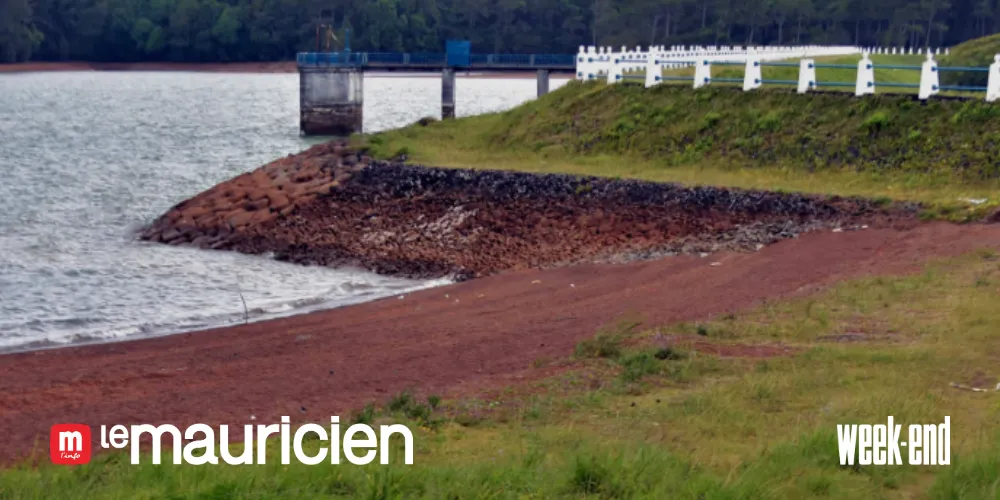
The decision by Government to establish a High-Level Ministerial Committee chaired by the Prime Minister and comprising eight other Ministers is both timely and necessary. Mauritius is confronting one of the most severe water emergencies in its post-independence history. Reservoir levels have fallen sharply, water cuts have intensified and public concern is growing. This emergency extends well beyond the remit of the Minister responsible for water as its causes and consequences are interconnected and cut across multiple sectors.
The central challenge facing the Committee is clear. Mauritius must move away from a series of fragmented measures and adopt an integrated national supply-and-demand strategy that treats all water resources as part of a single national system. Every available source of water must be identified, mobilised and managed within a coherent national framework.
Start with a national water balance
The Committee should establish a comprehensive national water balance between supply and demand . Before deciding how to address the crisis , Government must know exactly how much water is available in the country and how it is being used . This inventory should cover all reservoirs, rivers, groundwater aquifers, public boreholes, private boreholes, treated wastewater resources and desalination facilities. In emergency conditions, water should be treated as a strategic national resource rather than fragmented assets under different owners and institutions. It should also identify the major uses of water across the economy. Without a reliable water balance, policy makers are effectively operating in the dark. Sound decisions require a clear understanding of available resources, losses, competing uses and future demand.
Five immediate actions to strengthen supply and reduce vulnerability
To achieve water security, Mauritius must adopt a coherent and integrated approach that simultaneously targets circular reuse, decentralized production, emergency supply consolidation, demand reduction, and immediate infrastructure improvements. As time is of the essence , Government should immediately reprioritize capital expenditure towards achieving water security as fast as possible. Fiscal choices must be made to quickly fund water projects.
Pillar 1 : Consolidate ALL water into a National Emergency Pool
All significant private-sector boreholes should be incorporated into a national water framework. During an emergency, water must increasingly be regarded as a strategic national resource and all water resources should form part of a national pool. Mauritius possesses numerous private boreholes belonging to sugar estates, agricultural and industrial companies, and other private operators. At a time when the country is experiencing severe shortages, Government should bring all substantial groundwater resources into a common national pool. It is a temporary mobilisation in the public interest during declared emergency conditions , the more so as the share of water supply from boreholes is high .
A rapid inventory should be undertaken to determine the volume of water available from all significant private and public boreholes and how this resource can be integrated into an emergency supply programme. It is important that these private stakeholders become part of the solution rather than passive participants in the process. The High-Level Ministerial Committee should consider co-opting representatives of major private borehole owners , key economic sectors and technical experts to inform the decision-making process while ensuring transparency, information sharing and stakeholder buy-in. A cooperative approach is more likely to generate public trust and voluntary compliance. The Committee should also look into tapping water sustainably from new boreholes.
Pillar 2 : The Circular Economy — Reclaimed wastewater for non-potable demands
This is a significant policy contradiction . Mauritius continues to discharge between 50,000 and 60,000 cubic metres of treated wastewater into the ocean every day while large parts of the population face water shortages. This situation is increasingly difficult to justify during the current crisis . Although much of this water cannot immediately be introduced into the potable network, substantial quantities can be redirected to agriculture, landscaping, golf courses, industrial processes, construction activities and other non-potable uses. In a water emergency, treated wastewater should be viewed as a strategic resource rather than a waste product. The Committee must task the WMA to negotiate with potential high volume consumers of recycled water. For instance, it could enter into partnerships with private operators located near major treatment facilities. The WMA should consider collaboration agreements or long-term off-take arrangements with Medine and other industrial users in the West to utilise reclaimed water from the St Martin treatment plant. It should also upgrade its treatment plants to tertiary standards and construct dedicated secondary distribution pipelines to route reclaimed water directly to non-potable sectors. Every cubic meter of recycled water pumped into a sugarcane field or industries preserves a cubic meter of pristine water for human consumption.
Pillar 3 : Strategic desalination for hotels and coastal regions
Desalination should be positioned as a strategic buffer and insurance policy within the broader national water strategy. Its purpose is not to replace freshwater resources but to reserve them for higher-value and more essential uses. Tourism clusters and coastal population centres represent the strongest economic case for desalination. These areas often experience high water demand, are located close to seawater resources and can benefit from dedicated supply systems. Providing desalinated water to tourism establishments and selected coastal developments reduces dependence on reservoirs and groundwater while improving the security of water supply in areas that are particularly vulnerable to drought. All beachfront hotels should be required to install desalination plants, with incentives from Government . The Committee should also draw the lessons from Rodrigues, where decentralized solar-powered desalination plants provide significant volume of reliable drinking water to the population. Mauritius should strengthen desalination with renewable energy and battery storage while using advanced technology for brine disposal to manage environmental risks .
Pillar 4 : Fast – track river capture
River water must form part of the emergency response as it represents one of the fastest opportunities to increase supply. Additional abstraction, temporary pumping stations and mobile treatment technologies can help capture water that would otherwise flow to the sea. Recent initiatives to use containerised filtration units to treat river water demonstrate how significant volumes can be brought into the distribution network within a relatively short period. This should be strengthened with a more significant network of containerized, mobile drinking water treatment plants directly at key river extraction points across the island. The fully treated water to strict potable standards on-site can be immediately injected into the nearest regional distribution grid.
Pillar 5 : Build around Ten fast, small and affordable storage facilities
While large reservoirs remain important, they cannot solve today’s emergency because they take years to plan and construct. The Committee should consider fast tracking the construction of around 10 strategically located small reservoirs and distributed storage facilities of between 50,000 and 60,000 cubic metres each across the island . These structures catch surface runoff before it escapes into the ocean, creating a decentralized distribution network that avoids relying entirely on central reservoirs. Such projects are far less costly , faster to implement and can capture rainfall and river flows that would otherwise be lost to the sea. While small storage facilities handle immediate runoff capture, large-scale, long-term reservoir expansions must be planned simultaneously to increase total national holding capacity for future decades.
Conclusion
Mauritius cannot address the present crisis through isolated measures. It requires a coherent and integrated strategy that mobilises every available source of water and treats water as a strategic national resource. The first five pillars focus on rapidly increasing available supply by consolidating groundwater resources, expanding wastewater reuse, strengthening desalination, capturing river flows and developing distributed storage capacity. These measures can significantly improve water availability in the short to medium term.
However, supply expansion alone will not guarantee water security. Equally important are reducing demand, cutting losses, identifying sustainable financing and establishing clear rules for allocating scarce water resources during periods of stress. These issues will be addressed in Part II.
Dr Rama Sithanen