FOUAD DIOUMAN
If we look hard enough, we can always see the silver lining in a cloud. Thus, a crisis is the best catalyst to enable change. How do we make the most of it?
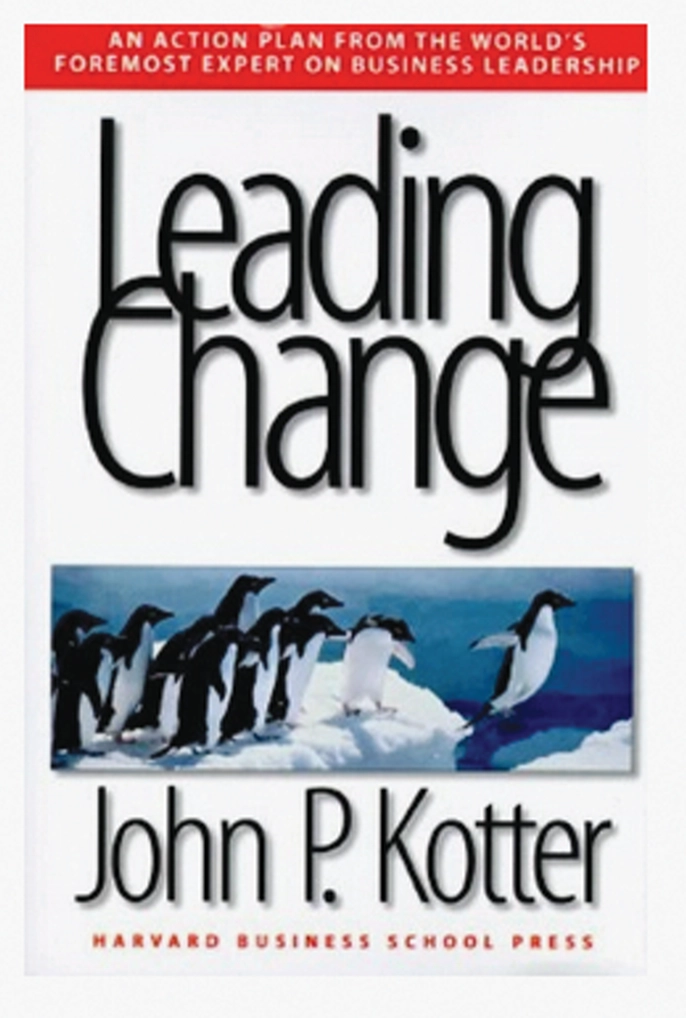
Indeed, if there is no compelling need to change, why should you change? In Change Management (‘The Eight Steps for Leading Change’, John P. Kotter, Harvard), if the crisis is not clear to everyone, the approach is even to articulate it clearly to pave the way for change. We have no such issue right now in Mauritius. Just like in the 70s, we are… blessed with the perfect storm. How can we respond as well as we did 50 years ago? What should we DO NOW? Below we will focus on short term measures and savings.
- ‘Vision 2050’
To be cancelled ASAP. “In the long run, we will all be dead.”, John Maynard Keynes. See more about Vision in the last point.
- ‘Free Education’
It is neither free, nor is it education. Education without Values is not education. We have free ‘schooling’ and everyone – well, those who can afford it – pays for private tuition. Accounting for 10% of total government expenditure in the current budget, the education sector… ‘can do better’. It is high time to re-introduce school fees, even partly subsidised, with zero cost to parents (ie. in lieu of paying for private tuition). Schools will then have to show better results, making private tuition redundant. A system of grants and subsidies should be set up so that the most deprived households are the only ones to benefit from totally free education. And our most talented teachers should be redeployed to the most impoverished areas. Hurdle for implementation: teachers.
- Health
Health is the other large item in the budget at 9% of total expenditure. The same medicine as above is suggested. Patients should contribute, say, 20% towards the cost of their treatment. People will think twice before going to the hospital (eg. for a cough or a medical certificate). The remaining, fewer but real patients will also expect to be treated as customers – and the system will almost auto-regulate itself in terms of demand and supply and ultimately, service. Again, the neediest households are to be given a Health Card for free treatment. Hurdle for implementation: private doctors and clinics.
- Water
Seeking help from North Africa or Saudi Arabia is disingenuous. I have lived for 15 years in three Gulf countries, where it rains twice a year. When this happens, staff stop work and excitedly start making videos from the office windows. Not exactly Mauritius. In many places, they do not even have drains, they do not need them, except for the highly urbanised part of Dubai or Qatar. Every problem looks like a nail to a hammer. In most of these super-rich Gulf countries, paradoxically, it is even recommended not to drink tap water. Mauritius is not a desert, far from it. Even Rodrigues is different from Mauritius. As a highly competent retired expert said, it is an ‘inverted funnel’. In Mauritius, it is a matter of collecting abundant rainwater and not wasting it through leakages. Hurdle for implementation: lack of management competence.
- Parastatals
The country can no longer afford the ‘jobs for the boys’ scheme. They will have to demonstrate the value they bring to the country, or else close down, saving taxpayers billions. Hurdle for implementation: ‘the boys’.
- Authorities
In various sectors, when civil servants can no longer manage within a fast-moving environment using modern tools, an Authority is set up. The very civil servants who proved incompetent in managing their industry become the regulators overnight, sometimes to outsourced contractors, without any real commercial acumen. These Authorities are required but they should be very small, almost with a think-tank approach. They will be ideally placed to advise Ministers on policy. I am against recruiting foreigners right, left and centre but a higher (by definition) regulating body is precisely where we need foreign expertise – albeit for a short term of 1-2 years for essential knowledge transfer. Hurdle for implementation: civil servants.
- Civil Service
Hire only frontline staff for now (eg. doctors, nurses, police) where practical value can easily be demonstrated, unlike ‘administration’. Stop automatic increments by finally setting up a highly overdue performance appraisal system. The private sector has to recruit from overseas. This is precisely the time to design a smaller and more performing Civil Service. Hurdle for implementation: civil servants, the private sector.
- Competition
There is little price competition in Mauritius, let alone customer service. We need a real Authority to regulate the retail sector. Staffed by only a handful of economists specialised in this topic, its task would be to demonstrate any abuse of monopoly or oligopoly by showing profiteering derived from a situation of ‘economic rent’. Unlike normal profit, economic rent arises when money is earned in the long run beyond what is economically or socially necessary, usuallly due to market imperfections (monopoly abuse, collusion, scarcity, asymmetric information). Hurdle for implementation: private sector cartels.
- Vision
Last but not least. Apart from rebounding from a crisis (let us call it ‘the stick’ for our purpose here), a Vision is essential (‘the carrot’). Contrary to what many think, a Vision is not a 20-page Business Plan. It is not even the articulation of the Strategy. A Vision is a ‘rallying cry’ to galvanise people with just a few words, words so simple and inspiring that you do not even have to memorise them. When a new mayor was elected decades ago for New York, a city riddled with crime, he started with a simple but very clear Vision: ‘No Grafitti’. Of course, it meant much, much more. It was a very revealing symbol to clean the city of its ills, esp. crime. For example, if we had ‘A Clean Mauritius’, that will mean a lot, eg. obviously clean water, clean beaches and rivers. But also, an island free of crime, corruption and drugs. A cleaner, better future…
The essential ingredient in all of the above is obviously political will. The opportunity for fundamental, structural change has been wasted many times. Was it unpreparedness, incompetence, lack of vision? All of the above? Let us not waste this one.