
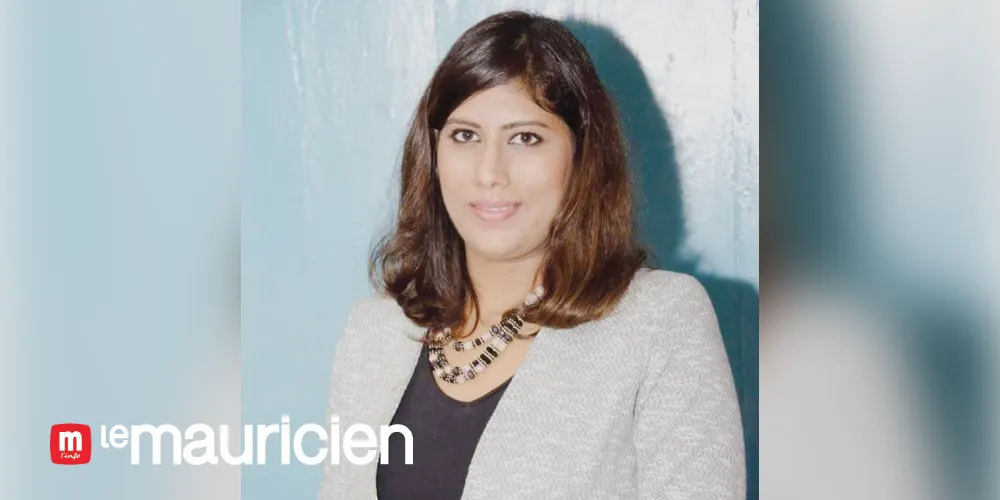
Vrindavanee Bhujun-Kutowaroo BEng(Civil) MBA (UK) Registered Professional Engineer of Mauritius. Secretary, Lucky Child Special Education Needs Association
In an age shaped by artificial intelligence, endless notifications, and fast-moving lifestyles, one truth remains timeless: no technology, institution, or wealth can replace a mother. Across cultures and civilizations, motherhood has always represented sacrifice, protection, tenderness, and resilience. Yet in the Vedic tradition, the idea of “mother” extends far beyond biology. It becomes a philosophy of gratitude, respect, and interconnectedness.
Every year, millions around the world celebrate Mother’s Day. Flowers are bought, family lunches are organised, and social media fills with emotional tributes. There is something beautiful about this collective pause to honour mothers. But ancient Vedic wisdom gently reminds us that motherhood cannot be confined to a single date on the calendar. Respect for mothers should be a daily culture rather than an annual ritual.
The modern celebration of Mother’s Day itself has an interesting history. The contemporary version largely traces its origins to the United States in the early twentieth century through the efforts of Anna Jarvis. Following the death of her mother, Jarvis campaigned for a special day dedicated to honouring the sacrifices mothers make for their children. In 1914, Mother’s Day was officially recognised in the United States. Ironically, later in life, Anna Jarvis herself became deeply disappointed by the commercialisation of the celebration, feeling that the sincerity of gratitude was being replaced by marketing and consumerism.
Her concern still resonates today.
A mother’s love cannot truly be measured by bouquets, greeting cards, or restaurant reservations. Nor should gratitude become a performance designed for social approval. Genuine respect is often found in simpler acts: listening patiently, spending time together, caring for ageing parents, or speaking with kindness during ordinary days.
In the Vedic worldview, the mother occupies one of the highest positions in human life. The ancient teaching “Mātṛ Devo Bhava” from the Taittiriya Upanishad means: “Regard the mother as divine.” This does not imply worshipping a human being as a god. Rather, it means recognising the sacred role of the mother in sustaining life, transmitting values, and shaping character.
Long before a child is introduced to society, a mother carries that child within her own body. Before language, there is her heartbeat. Before formal education, there is her voice. Before social identity, there is her sacrifice.
Modern medicine today openly discusses the physical and emotional realities of motherhood: pregnancy complications, hormonal changes, sleepless nights, postnatal depression, and the immense mental burden many women silently endure. Yet countless mothers continue to persevere with remarkable courage. Often, their sacrifices are normalised and therefore overlooked.
The Vedic civilisation understood this human reality deeply. Respect for motherhood was therefore woven into daily life and culture.
Interestingly, the Vedic understanding of “mother” is not limited to the woman who gives birth. Anything that nourishes, protects, educates, or sustains humanity can be approached with maternal reverence.
This is why many in the Indian tradition refer to the Vedas as Ved Mata, because they provide spiritual and intellectual nourishment. Rivers such as the Ganges are lovingly called Ganga Mata because water sustains civilisation itself. The cow is referred to as Gau Mata due to its historical role in agriculture, nutrition, and rural life.
The philosophy here is subtle but important. Vedic culture does not necessarily promote blind ritualism or superstition. It encourages gratitude toward sources of life and wellbeing. We bow not out of fear, but out of recognition and humility.
This broader understanding of respect also extends into family relationships. In many Vedic traditions, elder brothers and elder sisters are treated with a dignity similar to that of parents, carrying the spirit of Pitar, meaning protectors or guardians. The underlying message is clear: societies remain stable when relationships are treated with honour rather than convenience.
Today, however, modern life often pushes families toward emotional fragmentation. Many elderly parents experience loneliness despite living in crowded cities. Children may spend hours on digital devices yet barely exchange meaningful conversations with their parents. Some people know the personal lives of online influencers better than the emotional struggles of their own mothers.
This is one of the great contradictions of modern civilisation. Humanity has become hyperconnected technologically while becoming emotionally distant socially.
Yet the answer is not to reject modernity. The Vedic approach does not ask us to abandon progress, science, or innovation. Rather, it asks us to humanise them.
A modern society that truly respects mothers would move beyond symbolic celebrations. It would invest seriously in maternal healthcare, emotional support systems, work-life balance, childcare facilities, and protection against domestic violence. It would ensure dignity for single mothers, widows, caregivers, and women facing economic hardship.
Respect must move from slogans into structures.
Even small cultural gestures can carry deep meaning. In many families, touching the feet of one’s mother before leaving home may appear old-fashioned. Yet behind such gestures lies an important psychological truth: humility strengthens character. Gratitude stabilises the human mind.
Interestingly, many contemporary mental health experts now encourage practices centred around appreciation, emotional connection, and mindfulness. Ancient traditions understood these principles centuries ago in their own cultural language.
Motherhood also transcends biology. A teacher who patiently guides struggling students, a grandmother raising grandchildren, a caregiver tending to vulnerable persons, or a social worker dedicating her life to neglected communities can all embody maternal qualities. Motherhood, in its highest sense, represents nurturing energy.
Perhaps this explains why the image of the mother resonates universally. Whether one lives in Mauritius, London, Mumbai, Nairobi, or New York, the memory of a mother’s sacrifice remains one of the few human experiences capable of transcending religion, politics, class, and nationality.
Mauritius itself reflects this multicultural understanding beautifully. In our homes, one can often see traditions blending naturally: respect for mothers in Hindu households, devotion to Mary in Christian traditions, honour for parents in Islamic teachings, and deep family-centred values across Chinese and Creole cultures. Though expressions may differ, the emotional truth remains remarkably similar.
The modern world urgently needs this reminder.
Strength is not found only in political speeches, corporate boardrooms, or economic statistics. Sometimes real strength is a mother quietly staying awake beside a sick child at two in the morning. Sometimes courage is a woman carrying the burdens of an entire household without losing hope. Sometimes leadership begins not with authority, but with compassion.
The Vedic worldview teaches that civilisation survives not merely through infrastructure and economics, but through values. And among those values, reverence for motherhood occupies a central place.
At a time when societies everywhere are debating identity, mental health, family breakdown, and social isolation, perhaps the simple act of restoring dignity to motherhood can itself become a form of social healing.
Mother’s Day therefore remains meaningful, but its spirit should not end after one Sunday in May. It should continue throughout the year in the way we speak to our parents, the patience we show our elders, the opportunities we create for women, and the gratitude we cultivate daily.
For long before the world recognised us, a mother already had.