
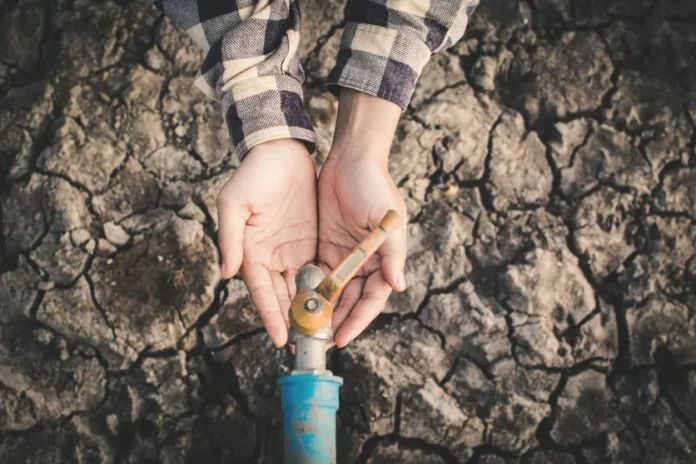
Pani Nayba – Bhojpuri phrase meaning ‘no water’ – also forming part of the lyrics of a famous Mauritian folkloric song
By Prof. Ashleigh. K Chanakaya
There was a time when “Pani Naiba” was almost a song of childhood. Around New Year, families would gather around a bonfire, the flames would rise, the sega would begin and, somewhere between laughter and smoke, somebody would sing “Pani Naiba”. It was folklore, a little bit of drama and a lot of Mauritian humour. Today, however, “Pani Naiba” has lost its festive meaning. It is no longer simply a song around a bonfire. In parts of Mauritius, people are now gathering around actual fires in the middle of the streets because there is no water coming from the taps. St Paul, Camp Fouqueraux, Sadally, Castel and other areas have witnessed public frustration, while reports of shortages are being heard from the North as well. The irony is almost too perfect: once, we lit fires and sang about the lack of water; today, people are lighting fires because they genuinely lack water. One wonders whether the Fire and Rescue Service would arrive with a water tanker to put out the fire. If so, perhaps somebody has accidentally discovered Mauritius’ most innovative water distribution system.
The situation, of course, is not a laughing matter. Behind every joke is a household trying to cook, wash, clean and simply live normally. Water is not a luxury infrastructure project to be unveiled with a ribbon and a photograph. It is a basic public service. And this is where the conversation inevitably moves from rainfall to governance. Are our reservoirs sufficient? Are our distribution systems properly maintained? Are leakage and wastage being tackled seriously? Are investment decisions being made according to long-term public need rather than short-term convenience? And, perhaps most importantly, are our parastatal institutions being managed primarily in the public interest? These are legitimate governance questions, not accusations against any individual. There will always be political explanations, technical explanations and historical explanations. We can blame climate change, old infrastructure, previous administrations, changing rainfall patterns or exceptionally dry weather. But there is an amusing little constitutional problem with blaming only the previous Government: the present Government is, eventually, also part of the previous Government. Governments change; pipes remain. Ministers change; reservoirs remain. Political slogans change; water shortages have an irritating habit of remaining. I still remember the suggestion once made by Mr Malin that, during droughts, our reservoirs should be dredged and made deeper so that they could retain more water. Today, while citizens are waiting for water, perhaps those responsible for solving the problem are themselves finding themselves in rather deep waters.
Mauritius therefore needs something more substantial than another temporary political tap. We need a serious national water strategy that survives elections, personalities and changes of administration. We need proper reservoir management, investment in storage capacity, reduction of leakage, modern monitoring, transparent procurement, efficient distribution and accountability for performance. Most importantly, we need to stop treating water as an emergency whenever the tap runs dry and start treating it as a national security and governance issue long before the first street fire is lit. Social media comments may produce some rather creative solutions, including the wonderfully circular idea of setting a bigger fire and then asking whether the Fire and Rescue Service has enough water to extinguish it. But perhaps the real joke is that citizens should not have to become comedians, protesters or amateur water engineers to remind the State that water must come out of a tap. Mauritius has survived cyclones, droughts, political arguments and enough commissions of inquiry to fill several reservoirs. Surely we can also manage a reliable water supply. Otherwise, “Pani Naiba” may soon stop being an old New Year song and become the unofficial national anthem of a country standing beside a dry tap
