BHAWNA ATMARAM
The wreaths have been laid. The ceremonies are over. The speeches have been delivered and once again, we have paid tribute to the men and women whose arrival transformed the history of Mauritius. But when the crowds disperse and the commemorative songs fall silent, an uncomfortable question remains: Are we truly worthy of our ancestors?
Close your eyes for a moment. Stand by the sea and imagine a ship approaching an unfamiliar shore. On board are men and women who have left behind their homes, their families, their villages and everything familiar. Ahead lies an uncertain future. Behind them lies a life they may never see again. They carry their hopes across the vast expanse of the ocean, perhaps wondering what awaits them on the other side.
This was their Kala Pani, their crossing of the black waters, a journey that separated them from the world they knew and brought them towards a new and uncertain life in Mauritius. But their journey did not end when their feet touched Mauritian soil. In many ways, their real struggle was only beginning.
The Human Cost
The history of indentured labour cannot be reduced to hard work and perseverance. It must also confront humiliation and the struggle to preserve human dignity.
Following the abolition of slavery in the British Empire in 1834, Mauritius became a major destination for indentured labour. According to UNESCO, more than 462,000 migrants passed through Aapravasi Ghat between 1834 and 1920, most of them from India. Their arrival and labour profoundly influenced the development of the island.
Behind these figures were human beings, each with a story that no monument or official data can fully capture. Many indentured labourers endured demanding work, difficult living conditions and circumstances in which their ability to challenge mistreatment was limited. They faced the indignity of unequal treatment and the uncertainty of living under a system in which their labour was essential, yet their dignity was not always respected.
Imagine being far from home, separated from familiar surroundings, expected to work despite exhaustion and confronted with indignities you have little power to challenge. Imagine having to gather your strength each morning, not knowing whether the day ahead would bring relief or another struggle. They were not merely workers. They were parents, children, husbands, wives and individuals with dreams of their own. They had fears and ambitions. Nevertheless, many had to endure hardship while finding the strength to keep their families and hopes alive.
Their resilience did not make their suffering acceptable; it revealed the strength of their humanity. And they continued. They formed relationships, raised children, preserved traditions and adapted to unfamiliar surroundings. They supported one another, rebuilt their lives and passed on values and memories to generations they might never live to see. They found ways to keep going when circumstances offered little reassurance.
Their courage should never become an excuse to romanticise their suffering. We must recognise both what they endured and what they achieved despite it. Aapravasi Ghat preserves an important part of this history. However, the stones of a monument cannot fully convey the exhaustion and uncertainty experienced by those who passed through it. To remember our ancestors honestly, we must look beyond commemorative speeches and acknowledge the human cost of their journey. We owe them more than admiration for their endurance; we owe them an understanding of what it meant to endure.
The Reality of Prosperity
Our ancestors laboured in the hope of a better future. Their descendants have inherited opportunities that were not available to them. We have schools, universities, modern infrastructure and a society shaped by generations of effort. Progress must be measured not only by what a country possesses but also by how its people experience life within it.
For many Mauritian families, the cost of living remains a daily concern. Official economic indicators reported that the Consumer Price Index increased by 4.5% between December 2024 and December 2025. More recent figures put year-on-year inflation at 5.7% in September 2026, while headline inflation for the twelve months ending that month stood at 4.1%. These measures describe different aspects of price movements but both underline the importance of household purchasing power.
The Household Budget Survey 2023 recorded an average monthly household disposable income of Rs 55,578 against an average monthly consumption expenditure of Rs 35,344. These are national averages, not a reflection of every family’s circumstances. Nevertheless, they provide a starting point for considering the financial pressures families face and the challenge of making ends meet.
Food, transport, education, healthcare and other essentials compete for a share of household income. For some families, even full-time employment does not guarantee financial security. Parents work hard, yet worry about the next bill. Young people study, qualify and enter the workforce but may still struggle to establish independent lives.
Housing presents another challenge. National real estate indices recorded a Residential Property Price Index of 248.9 in the second quarter of 2026 (using 2019 as the base year of 100), representing a 3.3% rise compared to the previous quarter. Although prices vary across properties and locations, the figures highlight the importance of examining whether home ownership remains accessible to ordinary working families.
What does progress mean if owning a home becomes increasingly difficult for those who work and save? What does prosperity mean if the security that families seek remains beyond the reach of many? The hardships faced by our ancestors were different in nature and magnitude from Mauritians today. Their history should not be used to equate indenture with modern economic difficulties. Their determination to build a future gives us reason to question whether the opportunities inherited by their descendants are being protected and shared fairly. We cannot honour their labour while remaining indifferent to the insecurity experienced by hardworking families today.
A Fragile Heritage
There is another inheritance we risk taking for granted: the land and natural resources that sustain us. Mauritius is blessed with natural beauty but beauty alone cannot guarantee our future. Water security, waste management, pollution and pressure on the environment demand serious attention. These are not merely technical concerns for government departments; they affect the quality of life we leave to our children.
Official environmental monitoring reported that Mauritius received 3,402 million cubic metres of rainfall in 2025, a 16.6% decline compared to 2024. Total water utilisation was estimated at 913 million cubic metres. Of this, 37% was attributed to domestic, industrial and tourism use, 31% to agriculture and 32% to hydropower.
Rainfall naturally varies from year to year. Still, these figures underline the importance of careful planning, maintaining infrastructure, reducing wastage and protecting our water resources. Water is too essential to be managed only when reservoirs decline and public anxiety rises. We must ask whether our storage and distribution systems are sufficiently resilient, whether water losses are being reduced and whether the protection of catchment areas receives the attention it deserves.
Our waste presents another challenge. According to published environmental figures, 582,798 tonnes of solid waste were sent to the Mare Chicose landfill in 2025, compared with 498,309 tonnes in 2024, an increase of 17%. These numbers should encourage us to reconsider our consumption habits and demand practical efforts to reduce waste, improve recycling and strengthen environmental responsibility.
We must also take the monitoring of pesticide residues and other contaminants seriously. Reliable testing, transparent reporting and appropriate action are essential to public confidence in food and water safety. Protecting the environment requires vigilance and accountability, not simply expressions of concern.
Our ancestors worked the land to sustain their families and build their lives. Today, our responsibility is to ensure that the land and resources we have inherited remain capable of sustaining future generations. A country cannot claim lasting progress while treating the foundations of its own survival as though they were inexhaustible.
Beyond Resilience
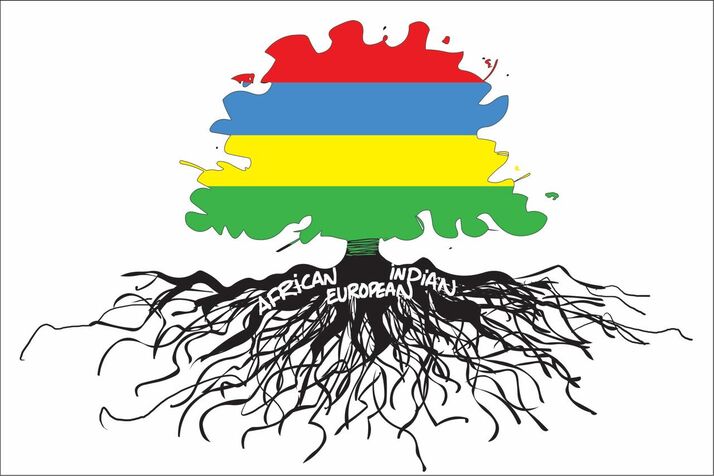
The inheritance we were bestowed was never merely material; it was cultural, social and moral. Our ancestors brought traditions, languages, beliefs, skills and memories that became part of the rich fabric of Mauritian society. They helped establish families and communities, adapted to unfamiliar circumstances and contributed to the making of a nation whose identity is shaped by many histories.
However, we must be careful not to turn their resilience into a convenient excuse for our own inaction. There is a difference between admiring people who endured hardship and accepting hardship as inevitable. There is a difference between praising sacrifice and expecting future generations to sacrifice unnecessarily. There is a difference between celebrating hard work and creating a society in which hard work offers a fair chance of security and dignity.
Our ancestors endured humiliation and uncertainty. They struggled to hold their families together and preserve their hopes in circumstances they did not always control. Their descendants should not have to accept preventable hardship simply because previous generations endured far worse. Being worthy of our ancestors does not mean proving that we can suffer as they did. It means learning from their experiences and using the opportunities they helped create to build something better.
It means working towards a society in which dignity is not determined by income or influence, in which opportunities are not reserved for a privileged few and in which public resources are managed with accountability. It also means preserving our history honestly. We must neither diminish the indignities our ancestors experienced nor reduce their lives to suffering. Their legacy deserves to be remembered in its full humanity.
The Real Test
When the next commemoration arrives, we will once again speak of courage and hope. We will remember the crossing of the ocean, the hardships of indenture and the generations who helped shape Mauritius.
But what will have changed by then?
Will families have a fairer chance of securing a home? Will water management be more resilient? Will we have reduced the waste we produce? Will environmental monitoring and public accountability inspire greater confidence? Will young people feel that their future offers more than the struggle to keep up with the demands of daily life?
No generation can resolve every problem. However, every generation chooses what it confronts, what it improves and what it leaves unresolved. Maybe, that is the real test of whether we are worthy of our ancestors.
It is not enough to say that they were strong; we must remember what their strength cost them. It is not enough to praise their ability to hold their families and hopes together; we must build a society in which families are not unnecessarily pushed to the limits of their endurance. It is not enough to commemorate their arrival in Mauritius; we must make the most of the future their sacrifices helped make possible.
The wreaths have been laid. The ceremonies have ended. But our responsibility has not. We have inherited a history of separation, humiliation, resilience and hope. We have inherited a country shaped by the labour and determination of generations before us. We have also inherited the power to make choices that many of our ancestors could not.
Perhaps being worthy of our ancestors means this: that we no longer measure progress by how much suffering people can endure but by how much dignity we can make possible for them. That would be more than a tribute. It would be a legacy worthy