
Ashveen Kutowaroo FCG PMP® LLM MSc – Founder and Policy Advocate – JP Narayan Centre for Sustainable Development and World Peace
There are books we read and forget. Others remain in our minds, quietly influencing how we see the world. Occasionally, we meet the person behind a book that influenced us. My association with Shiv Khera began long before I met him, when I was a university student in Bangalore.
I remember discovering his book You Can Win in the university library. I was trying to understand my ambitions and what it takes to build a meaningful life. Like many students, I sought answers about success, confidence, discipline and the future. I could not have imagined meeting the author years later in Mauritius.
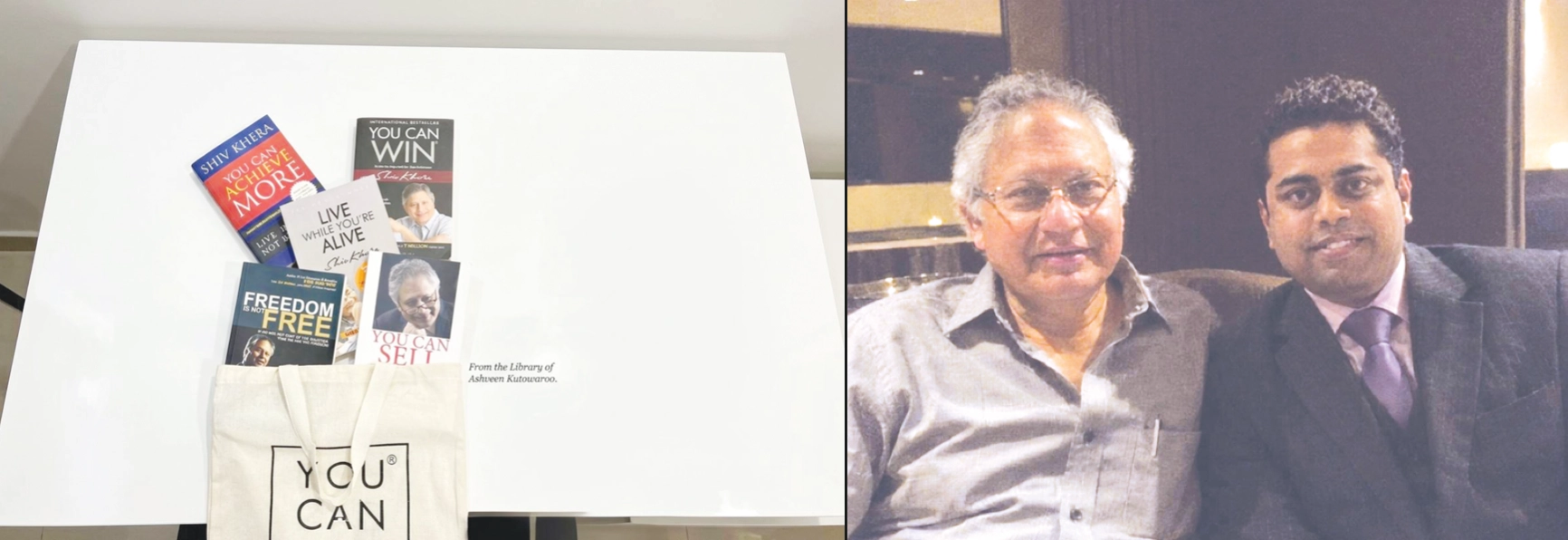
On 31 October 2019, I met Shiv Khera at Le Méridien Hotel in Mauritius, accompanied by my family. It was more than meeting a well-known speaker: I was sitting across from someone whose ideas I had encountered in a university library. Since then, we have remained in touch. Books can connect people across time and distance.
Our association later developed through a programme themed “Turning Setbacks into Comebacks”, which Khera partnered with me to support after COVID-19. The theme was especially relevant. The pandemic disrupted businesses, careers, education, families and plans people had taken for granted. Some faced financial hardship or uncertainty; others experienced loss, isolation or the task of beginning again. The question was how we would respond.
That question runs through much of Khera’s writing. I would not claim that a book, or any one person, made me successful. Our decisions, circumstances, opportunities, effort and relationships all shape our journeys. Books can offer ideas that become part of how we think, helping us examine our choices and respond deliberately.
You Can Win is probably the title most closely associated with Khera. Its emphasis on attitude, habits, discipline and personal responsibility is direct. Perhaps that simplicity is its strength. Success is rarely the result of one dramatic moment. More often, it grows from small decisions repeated over time: whether to prepare or procrastinate, learn or complain, accept responsibility or look for someone to blame, and recover from disappointment or let it define us.
The lesson I took from the book was not that positive thinking guarantees success. It was that our response to circumstances matters. We cannot control every event, but we can often choose how we approach it and what we learn. Such choices accumulate, and lessons from our formative years can stay with us without our noticing.
Another of Khera’s books, You Can Achieve More, explores living by design rather than by default. The distinction has become increasingly relevant to me. It is possible to have a busy life without a purposeful one. Meetings, responsibilities and commitments can fill every hour, yet busyness alone is not achievement. Living deliberately requires us to ask why we do what we do, what we hope to contribute and whether our actions reflect our priorities.
My professional and community responsibilities have taken me into law, governance, education, writing, public speaking and social initiatives. Their value cannot be measured only by titles or milestones. Achievement also concerns what we build, whom we help and what remains after our involvement ends.
You Can Sell addresses persuasion, a skill relevant far beyond commercial transactions. Lawyers persuade, teachers influence, leaders seek support for decisions, and community organisations encourage people to work towards a shared purpose. Persuasion can become manipulation when separated from ethics. People may listen to a compelling argument, but they are more likely to act when they trust the person making it. In professional life, reputation is part of one’s capital.
Living with Honour raises a fundamental question: what is achievement worth if the means of attaining it compromise our principles? Qualifications can be earned, positions held and awards displayed, but character cannot be borrowed. Integrity is easy to discuss when nothing is at stake. It is tested when doing the right thing is inconvenient or personal advantage conflicts with principle.
For those involved in governance and leadership, this is not abstract. Decisions affect institutions, colleagues, clients and the public. Honour is not about appearing virtuous; it is about consistency between what we say and do. It requires accountability, fairness and a willingness to examine our own conduct, not merely that of others.
Freedom Is Not Free moves from individual conduct to civic responsibility. Freedom is often discussed as a right, but its accompanying responsibilities deserve equal attention. Society cannot be built by governments and public institutions alone. Citizens must participate, contribute, question, volunteer, vote, educate themselves and speak up. Complaining is easier than contributing. Participation takes patience and a willingness to work with people whose views differ. Institutions grow stronger when citizens participate rather than remain spectators.
Live While You’re Alive offers a complementary reminder. We can focus so much on preparing for the future that we postpone the life we hope to enjoy. Professional ambition can consume time that should go to family, friendships, health and simple happiness. Meeting Khera with my family in 2019 remains significant not merely because of whom I met, but because experiences matter when shared with people who matter to us.
These books approach life from different directions, but their themes intersect: responsibility, purposeful action, ethical persuasion, integrity, citizenship and balance. They offer no magic formula. Their value lies in the questions they prompt and the chance to reflect before acting.
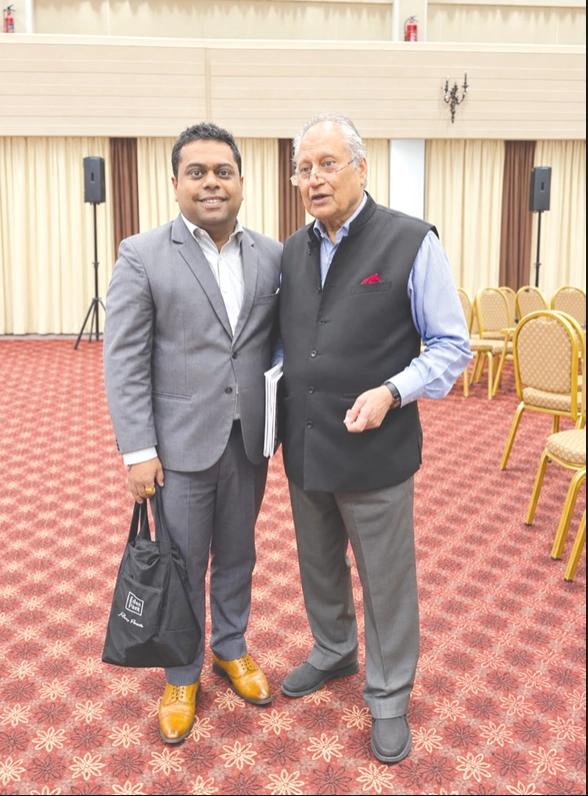
Recently, Khera invited me to join him at the Sir Harilal Vaghjee Memorial Hall, New Government Centre, in Port Louis, for an event themed “Guardians of Public Trust: Leadership with Character in the Service of Democracy”. The occasion brought ideas I had encountered in his books into a public discussion about leadership and democracy.
In his address, Khera highlighted the importance of combining professional competence with strong character and a clear sense of purpose. He stressed the need to nurture ethical values from an early age and underscored integrity in decision-making and everyday conduct. These principles matter when we consider the trust citizens place in those who lead public institutions. Competence is essential, but without character it cannot sustain confidence. Good intentions must also be matched by sound decisions and effective action.
The event gave us the opportunity to meet physically again after seven years. We had last met on 31 October 2019 at Le Méridien Hotel. I was struck by the same smile and the same respect I remembered from our first encounter. He was genuinely pleased that we had finally met in person again. It was a simple but meaningful moment: our contact had continued over the years, while an in-person meeting remained pending. That continuity mattered more than the formality of the occasion.
It reminded me that relationships do not always depend on frequent meetings. Sometimes they are sustained through mutual respect and occasional conversations until circumstances bring people together. Our earlier collaboration on “Turning Setbacks into Comebacks” addressed challenges after the pandemic; the recent event offered another context in which to consider personal values and public responsibility.
My journey from discovering You Can Win in a university library in Bangalore to meeting its author in Mauritius has become a thread through different stages of life. Between those encounters lie years of learning, work, family responsibilities, successes, disappointments and decisions. I would not attribute my achievements to any single book or individual. Yet reading can influence the questions we ask ourselves.
What does it mean to succeed without compromising our principles? How do we respond when things go wrong? Are we living deliberately or reacting to circumstances? Can we persuade without manipulating? What responsibility do we have towards society? Are we living, or merely preparing to live someday? These questions have no final answers. Their importance lies in revisiting them honestly as circumstances change.
Meeting Khera again after seven years brought those reflections into focus. It recalled where my interest in his work began and the continuing relevance of his books. Leadership with character matters to politicians and senior office-holders, but also to professionals, business leaders, educators, community organisations and citizens. Public trust is shaped by everyday decisions and conduct.
A book cannot answer these questions for us, and a motivational speech cannot replace the work of putting principles into practice. But both can encourage us to think and act with care. The measure of an idea is not whether we remember an author’s words, but whether we apply the principle when it becomes difficult.
For me, the journey from a university library to the Sir Harilal Vaghjee Memorial Hall represents more than an acquaintance with an author. It offers a chance to reflect on the relationship between ideas and action, and on a principle that applies in public life as much as in private: character is not measured by what we say we believe, but by how consistently we live by it.
